If you're wondering how fast a tan fades: most tan on Indian skin settles in over a few beach days and eases over roughly three to six weeks as your upper skin layers naturally renew. Tan removal is simply the gentle process of helping sun-triggered surface pigment fade evenly while protecting skin from picking up more — not bleaching your natural tone. These tan removal tips for Indian skin lean on Yuzu Vitamin C for daily brightness, kaolin and pink clay for weekly polish, and sunscreen as the actual hero. No lemon juice, no salon bleach, no shame about the colour you are.

How Long Does Tan Take to Fade on Indian Skin?
Tan on Indian skin usually fades over three to six weeks as the upper skin layers renew. To help it along gently, use a Yuzu Vitamin C brightening step daily, a kaolin or pink clay mask twice a week to lift dulling buildup, and broad-spectrum sunscreen reapplied through the day — and skip lemon juice and bleach.
The honest timeline
Sun exposure nudges your skin to produce more melanin, and that extra pigment sits largely in the upper layers of skin. Those layers turn over gradually, which is why a Goa tan looks stubborn for a fortnight and then quietly softens. Deeper, longer-standing unevenness can take longer, and that's normal. Nothing you buy will reverse a tan overnight, and anything promising that is asking you to trust marketing over biology.
What speeds it up safely
Three things genuinely help: consistent antioxidant brightening, gentle surface exfoliation or clay masking so dull, tan-heavy dead cells aren't hanging around longer than they need to, and — the big one — stopping fresh sun exposure from resetting the clock. If you're deep-diving the brightening side of things, our guide to vitamin C serums for tan removal through Indian summers breaks down how to layer it without irritation.
One more thing worth saying out loud: the aim here is even, healthy-looking tone. Not a different tone. Your baseline complexion is not the problem being solved.
Why Does Indian Skin Tan So Deeply — And Why Isn't That a Flaw?
Melanin is doing its job
Most Indian skin sits around Fitzpatrick III to V, which means it's melanin-rich and reacts to UV by producing more pigment fairly readily. That's a protective response, not a malfunction. Melanin-rich skin tends to tan before it burns — a genuine advantage — and the trade-off is that pigment can linger visibly and unevenly for weeks after a wedding weekend in Jaipur or a monsoon-free stretch of April heat.
Why patchiness bothers us more than depth
Here's the thing nobody says: hardly anyone actually minds being a shade deeper after a holiday. What bugs people is the map — the sunglasses shadow, the darker forehead, the sleeve line at the wrist, the neck that doesn't match the jaw. Patchiness reads as "tired" in photographs, and that's what we're really chasing when we type "de tan face pack" into a search bar at 1 a.m.
So the honest reframe: you're not correcting your skin tone, you're smoothing out the contrast. That's a much kinder project, and it's also the one that actually works. Even tone plus good hydration is what people read as glow — which is exactly the logic behind our step-by-step glass skin routine for Indian skin, where light-reflecting evenness matters far more than depth of complexion.
And a note on India's climate, because it changes the maths: high humidity means sweat and sebum lift sunscreen faster, dust and pollution settle into that film, and skin looks duller than the tan alone would explain. Half of what feels like "tan" in a Delhi September is actually surface buildup — which is very good news, because that part lifts quickly.
What Do Yuzu Vitamin C and Pink Clay Actually Do for a Tan?
Yuzu for daily brightness
Antioxidant brightening is a slow, cumulative game — think weeks, not days. Vitamin C is one of the most well-established cosmetic actives for helping skin look more luminous and more uniform, and yuzu delivers it in a bright, gentle-feeling form that layers easily under humid-weather moisturisers. This is your daily habit ingredient: not dramatic on any single morning, quietly transformative across a month.
Kaolin and pink clay for surface polish
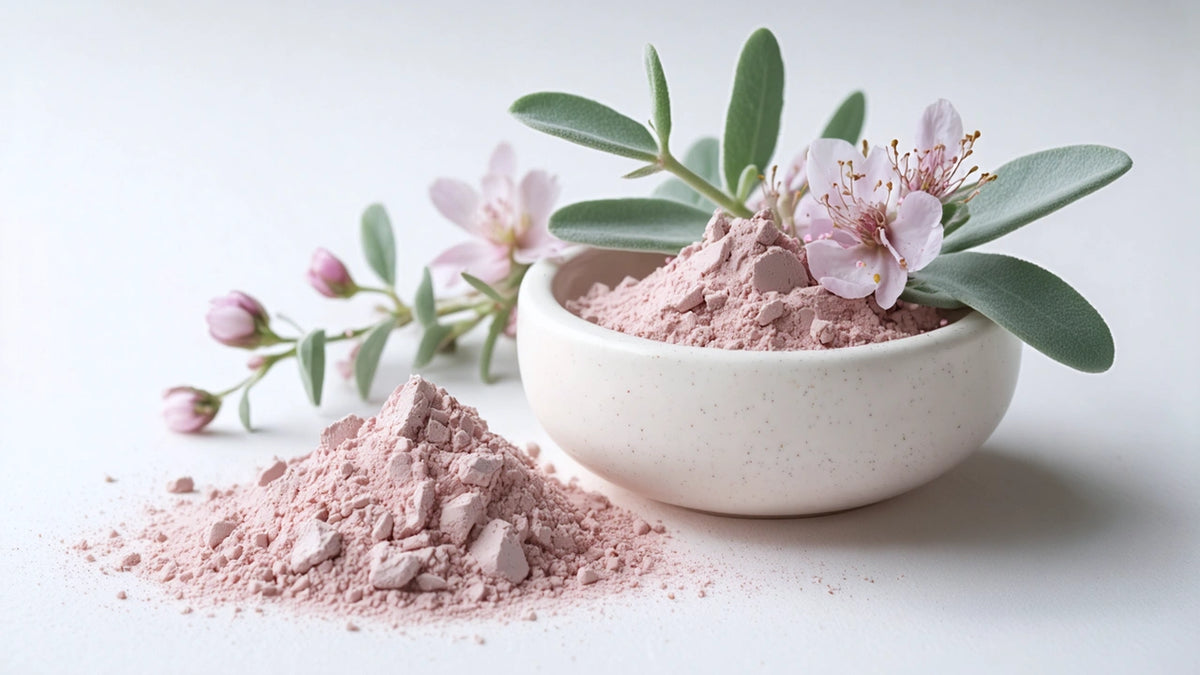
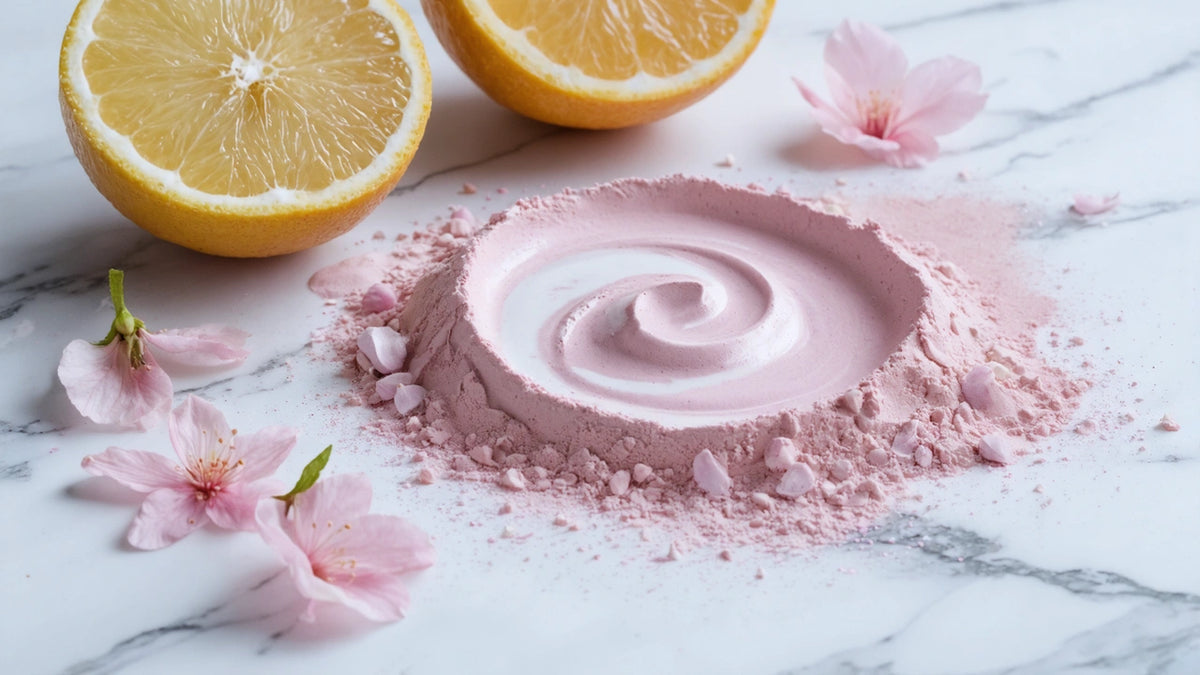
Clay works differently and faster. Kaolin and pink clay are absorbent mineral clays used in masks to bind excess oil and lift loose surface debris — that dulling film of sweat, sunscreen residue and city grime that makes a tan look heavier than it is. Rinse it off and skin instantly looks fresher, which is why a pink clay mask de-tan feels so satisfying on day one, even though the real tone work is happening slowly in the background.

Our Brightening Pink Clay Mask with Cherry Blossom Radiance is built exactly for this job — a twice-weekly reset that also helps with the blackheads humidity loves to leave behind on noses and chins.
Cherry blossom radiance boost
Cherry blossom extract earns its place here as a soft radiance botanical, pairing with clay so the mask doesn't leave skin feeling stripped or squeaky. That balance matters enormously on melanin-rich skin, where over-exfoliation and irritation can leave marks that outstay the tan you were trying to fade. Gentle really is the faster route.
How the two work together
| Step | What it targets | How often | When you'll notice |
|---|---|---|---|
| Yuzu Vitamin C | Overall tone, dullness, evenness | Daily, AM | Gradually, across weeks |
| Pink clay + kaolin mask | Surface buildup, oil, congestion | 2× a week | Same day, visibly fresher |
| Broad-spectrum SPF | Stopping new tan from layering on | Daily + reapply | Prevents the reset |
What Does a Weekly De-Tan Routine Look Like, Step by Step?
- Step 1 — Morning cleanse, kept soft Start with a mild face wash rather than anything foaming and squeaky. Tan-fading skin does better with an intact barrier; if yours is feeling tight or reactive, our post-monsoon barrier repair reset is the better first project.
- Step 2 — Yuzu Vitamin C, every single morning Sweep on the Brightening Toner with Yuzu Vitamin C on damp skin. This is the consistency step — daily beats intense. Follow with a lightweight hydrator so the brightness has something to sit on.
- Step 3 — Sunscreen, generously, before you leave A broad-spectrum SPF like the Ultra Light SPF 50+ sunscreen with Avocado Vitamins C & E is the entire foundation of any de-tan plan. Two finger-lengths, face and neck and ears, no negotiating.
- Step 4 — Evening double cleanse on sunscreen days Sunscreen and city dust need proper removal. An oil or balm first, then your gentle wash, so nothing dulling sits overnight.
- Step 5 — Night-time repair and hydration This is where barrier-friendly humectants and soothing botanicals earn their keep. Well-hydrated skin sheds and renews more comfortably, which is quietly part of why tan looks like it's fading faster.
- Step 6 — Mask twice a week, not nightly Pink clay mask on two evenings — say Wednesday and Sunday. Ten to fifteen minutes, rinse before it cracks bone-dry, moisturise straight after. Twice is plenty; more isn't better.
- Step 7 — Add a glow boost before big days For weddings, shoots or pandal nights, an Instaglow Sheet Mask with Yuzu Vitamin C the night before gives you plump, bounce-light skin that photographs beautifully.
- Step 8 — Reapply SPF, the step everyone skips Morning-only sunscreen quietly undoes weeks of effort, especially in Indian humidity where sweat lifts the film by lunch. Learn how to reapply sunscreen over makeup without ruining your base — it's the highest-return habit in this entire article.
Don't forget your lips and hairline, both of which tan and both of which get ignored. And if your scalp has been sun-exposed, flaky and irritated all season, a targeted scalp step belongs in the same weekly rhythm — face-to-hair care is one routine, not two.

Which Kitchen De-Tan Myths Should You Skip?
Every Indian family has a de-tan recipe passed down with total confidence. Some are harmless, some cost you more than the tan did. Here's the sorted version.
| The myth | What tends to actually happen | Gentler swap |
|---|---|---|
| Rub lemon juice on your face | Undiluted citrus juice is highly acidic and can leave skin stinging and sun-sensitive — a rough deal when you're already sun-exposed | A formulated Yuzu Vitamin C product, where the actives are buffered and stabilised |
| Salon bleach for instant fairness | It lightens facial hair and can leave skin feeling raw; the "brightness" is largely bleached fuzz, and irritation on melanin-rich skin can leave lingering marks | Consistent brightening plus a clay mask for genuine surface freshness — this is tan removal without bleach |
| Scrub hard with sugar, salt or besan grit | Aggressive scrubbing can cause micro-irritation and redness, which often looks worse than the unevenness you started with | Kaolin or pink clay masking twice a week for polish without abrasion |
| Toothpaste, baking soda, kitchen bleach | Wildly wrong pH for facial skin and a reliable route to stinging and flaking | Anything designed for faces, honestly |
| Skip sunscreen indoors, it's fine | Window light and long commutes keep adding pigment while you wait for the tan to fade | Daily SPF, reapplied — the actual shortcut |
None of this is a scolding — most of us have tried at least two of these. It's just that gentle, boring consistency genuinely outperforms drastic. For a deeper walkthrough of doing this the careful way, our guide on how to remove tan from your face without harsh shortcuts covers the sequencing in detail.
What about de-tan face packs?
A good de tan face pack should feel like a treat, not a punishment. If it burns, tingles sharply or leaves skin red for an hour afterwards, that's not "working" — that's irritation, and on Fitzpatrick III-V skin irritation is exactly what can leave uneven patches behind. Cool, comfortable, faintly tingly at most. That's the brief.
Why Gradual Always Beats Drastic
Give it four to six weeks of the same simple rhythm — yuzu daily, clay twice weekly, sunscreen religiously — and you'll notice the sleeve lines softening, the neck matching the face, the whole thing looking lit-from-within rather than patchy. That's the win. Not a different complexion; a comfortable, even, glowing version of the one you already have.
Frequently Asked Questions About tan removal tips Indian skin
What is tan removal for Indian skin?
Tan removal for Indian skin means gently fading excess melanin built up from sun exposure, using brightening ingredients and exfoliation instead of harsh bleaching. Because Indian skin tones tend to have higher baseline melanin, tan shows up as a warm, even darkening rather than patchy redness, so the goal is gradual fading, not stripping colour. Ingredients like vitamin C (from sources such as yuzu), niacinamide, and gentle clay-based masks help slough off tanned surface cells and calm inflamma
How do you use tan removal tips for Indian skin at home?
Start with a gentle exfoliating cleanse two to three times a week to lift dead, tanned skin cells, then follow with a vitamin C serum in the morning to brighten and protect against further darkening. Use a clay-based mask once or twice weekly to draw out impurities and even out tone, and always seal the routine with a broad-spectrum SPF 30+ during the day. At night, a hydrating, ingredient-rich moisturiser supports skin repair. Consistency matters more than intensity, so stick to this rhythm for
How long does it take for a tan to fade on Indian skin?
A typical sun tan on Indian skin fades in two to four weeks with consistent care, since skin naturally sheds tanned surface cells during its renewal cycle. Deeper or repeated tanning can take six to eight weeks to fully clear, especially if sun exposure continues during the fading process. Using gentle exfoliation, brightening actives, and daily sunscreen speeds up the visible improvement, while skipping SPF can stall or reverse progress. Patience is key, as trying to rush results with harsh scr
Does a clay mask actually help remove tan?
Yes, clay masks help with tan removal by drawing out excess oil, impurities, and dead surface cells, which can make tanned skin look duller and darker than it is. They don't bleach melanin directly, but the gentle exfoliating and detoxifying action reveals fresher skin underneath and improves how brightening serums absorb afterward. Pink clay in particular tends to be milder than harsher clays, making it suitable for regular use without over-drying. For best results, pair a weekly clay mask with
Are de-tan bleaches safe for sensitive skin?
De-tan bleaches can be risky for sensitive skin because they often contain strong chemical agents like hydrogen peroxide that strip melanin forcibly, leading to redness, burning, or patchy discolouration. Sensitive or reactive skin types are more prone to these side effects, and bleaching can also thin the skin barrier over repeated use, making it more vulnerable to further sun damage. Gentler alternatives like vitamin C, niacinamide, and mild exfoliation offer a slower but safer path to an even
Can I use a vitamin C serum and clay mask together in the same routine?
Yes, you can use a vitamin C serum and a clay mask together, but they work best at different steps rather than layered at the same time. Apply the clay mask first, usually once or twice a week, to exfoliate and clear the skin, then rinse it off before following with vitamin C serum once skin is dry and calm. Using them back-to-back on wet, freshly-masked skin can cause mild stinging for sensitive types, so waiting a few minutes helps. This combination supports both surface renewal and brightenin
Shop Quench Botanics
Ready to build your gentle de-tan duo? Start with the Brightening Pink Clay Mask with Cherry Blossom Radiance for your twice-weekly polish, pair it with the Avocado Barrier Repair Moisturizer so skin stays comfortable while it renews, and keep your SPF within arm's reach all day. Every Quench Botanics formula names its botanicals right on the label, and our routines are built for Indian humidity, tan and pollution — face to hair, minis included if you'd rather try before you commit. Come explore the full de-tan routine and pick the two steps you'll actually keep up with.