Sun tan on the face is a temporary darkening of skin caused by UV-triggered overproduction of melanin — your skin's natural defence against sun damage. If you're wondering how to remove tan from your face, the short answer is: consistent daily SPF, a Vitamin C brightening serum, and an overnight repair treatment. For Indian skin tones (Fitzpatrick III–V), which naturally carry higher melanin levels, this combination takes about 3–4 weeks to show visible results. This guide walks you through the exact routine — no lemon juice required.
What Causes Sun Tan on Indian Skin — and Why It's Harder to Remove Than You Think
When UV rays hit your skin, specialised cells called melanocytes produce melanin as a protective response. The result: a tan. But Indian skin, which predominantly sits in the Fitzpatrick III–V range, produces more melanin per stimulus than lighter skin tones — which is why that post-holiday tan can linger for weeks rather than days.
UVA vs UVB: Which Ray Tans Indian Skin the Most
UVB rays cause the immediate reddening and burning you feel after beach exposure, but it's UVA rays — which penetrate deeper into the dermis and are present year-round, even through glass — that are responsible for the stubborn, long-lasting pigmentation Indians deal with. India's tropical latitude means UVA intensity stays high from March through September, making daily broad-spectrum SPF non-negotiable, not optional.
Why Melanin-Rich Skin Holds Pigment Longer
Research published in the Journal of Investigative Dermatology has demonstrated that melanosomes (the organelles that store melanin) in Fitzpatrick IV–VI skin are larger, more dispersed, and degrade more slowly than in lighter skin types. This means pigment lingers at the surface longer after UV exposure — which is precisely why a one-week brightening mask won't cut it, but a targeted daily routine absolutely will.
Why Popular Home Remedies for Tan Removal Don't Work (And Can Harm Skin)
Indian kitchens are full of time-honoured beauty rituals, and many do offer genuine skin benefits — just not the ones most people claim for tan removal. Here's what the science actually says.
Lemon Juice: The Skin Barrier Disruptor
Lemon juice has a pH of around 2 — far too acidic for facial skin, which thrives at a pH of 4.5–5.5. While its Vitamin C content sounds promising, the citric acid concentration is unpredictable, and direct application disrupts your acid mantle, causing irritation, dryness, and — crucially — post-inflammatory hyperpigmentation. For Indian skin already prone to PIH, this can deepen existing tan rather than fade it. Cosmetic scientists consistently advise against undiluted citrus on skin for this reason.
Besan and Turmeric: Temporary Brightness vs. Real De-Tanning
Besan (gram flour) acts as a mild physical exfoliant, which can temporarily brighten dull skin by removing dead cells. Turmeric contains curcumin, a genuine anti-inflammatory compound. But exfoliation alone doesn't inhibit melanin production — it simply removes surface cells. The tan comes back within days because the underlying melanin signal is untouched. These remedies address the symptom, not the cause.
Curd and Papaya: What the Science Actually Says
Curd contains lactic acid in very low, unstable concentrations, and papaya contains papain enzyme, which has mild keratolytic (skin-softening) properties. Both can improve skin texture with regular use, but neither has clinically demonstrated melanin inhibition. For genuine tan fading, you need actives with proven mechanisms — and that means turning to formulated skincare.
The 3-Step Science-Backed Anti-Tan Routine for Indian Skin
To remove tan from your face, apply SPF 50 PA++++ sunscreen every morning, use a Vitamin C serum (ideally Yuzu Vitamin C) to inhibit melanin production, and finish with a Snail Mucin overnight treatment for barrier repair — this 3-step routine shows visible tan fading in 3–4 weeks for Indian skin.
This routine is built on The Quench Botanics Botanical Method: pairing clinically studied actives with botanical co-ingredients that support the skin barrier, reduce irritation risk, and make long-term consistency feel effortless — even in India's humid summers.
Step 1: Protect — Avocado SPF 50 PA++++ as Your Daily Shield
You cannot fade a tan you keep adding to. Every morning — regardless of whether you're working from home or stepping outside — apply a broad-spectrum sunscreen as the final step of your morning routine. The Ultra Light SPF 50+ PA++++ Sunscreen with Avocado is formulated with Avocado oil (rich in oleic acid for barrier nourishment), plus Vitamins C and E for antioxidant protection against free radical damage triggered by UV exposure. Its ultra-light, non-greasy finish makes it genuinely wearable through humid Indian summers without the dreaded white cast.
- How much to apply: A full two-finger-length amount for the face and neck — anything less significantly reduces SPF protection.
- When to reapply: Every 2–3 hours if you're outdoors, or after swimming or sweating.
- Expected result: Stops new tan from forming within the first week, allowing brightening actives to do their job uninterrupted.
Step 2: Brighten — Yuzu Vitamin C Serum for Melanin Control
Vitamin C (L-ascorbic acid and its stable derivatives) is the gold standard for tan fading because it works directly at the source: it inhibits tyrosinase, the enzyme that triggers melanin synthesis. Yuzu Vitamin C — derived from the Korean yuzu citrus — is a particularly potent source of ascorbic acid and bioflavonoids, which stabilise the Vitamin C molecule for deeper, more consistent delivery. Apply your Vitamin C serum in the morning after cleansing and before SPF, or in the evening after cleansing for maximum absorption without UV degradation risk. Expect noticeable brightness within 2 weeks and measurable tan fading by week 3–4.
Step 3: Repair — Snail Mucin for Overnight Barrier Recovery
Every night, active tanning, environmental stress, and even your brightening actives place a load on your skin barrier. Snail Mucin — secreted filtrate from snails, used extensively in Korean skincare — is rich in glycoproteins, hyaluronic acid, and allantoin, which collectively speed up cell turnover, repair micro-damage, and deeply hydrate. Apply the 96% Snail Mucin Collagen Boost Serum as the last step of your evening routine and let it work overnight. By accelerating skin cell renewal, it helps push pigmented cells to the surface faster — which is what makes the 3–4 week tan-fading promise realistic rather than aspirational.
Ingredients That Actually Remove Tan: What to Look for in Products
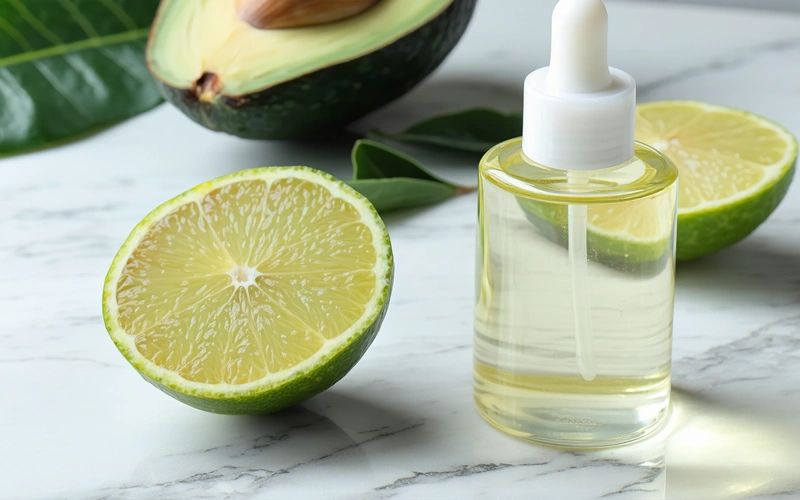
When scanning an ingredient list for genuine tan-removal credentials, these are the actives that have earned their place through dermatological research.
Vitamin C: The Gold Standard for Tan Fading
Dermatologists recommend Vitamin C as a first-line topical for acquired hyperpigmentation and tan removal because its tyrosinase-inhibiting action is well-established in clinical literature. Stable derivatives like ascorbyl glucoside and sodium ascorbyl phosphate are preferable for daily use in Indian climates, as pure L-ascorbic acid oxidises quickly in heat and humidity. The 3x Vitamin C Duo from Quench Botanics delivers a triple-source Vitamin C formulation — one of the most effective ways to ensure consistent brightening without irritation.
Niacinamide: Pigment Transfer Blocker
Niacinamide (Vitamin B3) works differently from Vitamin C: instead of stopping melanin production, it blocks the transfer of melanosomes from melanocytes to surrounding skin cells. Research published in the British Journal of Dermatology found that 5% topical niacinamide significantly reduced hyperpigmentation versus placebo over 8 weeks. It also strengthens the skin barrier — crucial for Indian skin exposed to high UV and humidity. Look for it alongside Vitamin C for a complementary, non-competing brightening effect. (Curious how these two actives interact? Read our guide on whether you can use Niacinamide with Vitamin C together for the definitive answer.)
Alpha Arbutin and How It Stacks Up
Alpha Arbutin is a gentler tyrosinase inhibitor derived from bearberry, often recommended for sensitive skin that finds Vitamin C irritating. It's slower-acting than Vitamin C but very well-tolerated, making it a good addition for those with reactive Indian skin. For most people, the most efficient approach is a Vitamin C + Niacinamide combination, with Alpha Arbutin as a sensitive-skin alternative or addition.
Anti-Tan Tips for Different Indian Skin Types
The right tan removal routine isn't one-size-fits-all — your skin type changes how your barrier responds to actives and how quickly visible fading occurs.
Oily and Acne-Prone Skin: Avoid Occlusive DIY Packs
If you have oily or acne-prone skin, thick DIY pastes (think besan mixed with oil) can clog pores and worsen breakouts while doing nothing for your tan. Stick to lightweight, water-based serums and gel-texture moisturisers. Niacinamide is your best friend here — it simultaneously regulates sebum and addresses pigmentation. Choose an oil-free, non-comedogenic sunscreen formulation to keep pores clear through the summer.
Dry and Sensitive Skin: Prioritise the Barrier-First Approach
For dry or sensitive skin types, a compromised barrier will make brightening actives sting and cause more harm than good. Start by hydrating consistently — hyaluronic acid benefits for Indian skin include deep moisture binding that primes the barrier before actives like Vitamin C are introduced. Once your skin feels comfortable and resilient, layer in your brightening serum — starting every other day to build tolerance gradually.
How to Prevent Tan from Coming Back This Summer
Fading a tan without preventing new UV exposure is like bailing out a boat with the tap still running. Prevention is the most underrated part of an anti-tan routine.
Daily SPF Application: The Non-Negotiable Step
Dermatologists agree: SPF is the single most effective anti-ageing and anti-pigmentation intervention available over the counter. For Indian summers, SPF 50 PA++++ (the PA++++ rating indicates very high protection against UVA, the tan-forming ray) is the minimum recommended standard. Apply it every single morning — not just when you plan to go outdoors. Indoor UV exposure through windows accounts for a meaningful portion of cumulative skin pigmentation over time.
Physical Sun Protection Habits for Indian Outdoor Life
- Timing matters: UV index in Indian cities peaks between 11am and 3pm — if possible, limit direct sun exposure during these hours.
- Cover up strategically: A wide-brimmed hat and UV-protective sunglasses aren't just accessories — they meaningfully reduce cumulative UV exposure on the face.
- Reapplication in transit: Keep a travel-size sunscreen in your bag. Two-minute touch-ups when commuting outdoors make a significant cumulative difference.
- After-sun recovery: On high-exposure days, apply your Snail Mucin serum as soon as you get home — the sooner you repair the barrier, the less melanin signal is sustained.
Frequently Asked Questions About how to remove tan from face
How do you remove tan from your face naturally?
Removing tan naturally requires consistent use of gentle, science-backed ingredients like Vitamin C, niacinamide, and alpha-arbutin — all derived from botanical sources — that inhibit melanin production over time. While home remedies like lemon juice or turmeric masks are popular, they can disrupt your skin barrier, especially on Indian skin which is more reactive to harsh actives. Pairing a brightening serum with daily SPF and a mild exfoliating toner gives you the best natural-route results wi
Which ingredients actually help with sun tan removal on Indian skin?
The most effective ingredients for sun tan removal on Indian skin are Vitamin C (brightens and evens tone), niacinamide (reduces dark patches and controls pigmentation), alpha-arbutin (gently blocks melanin synthesis), and tranexamic acid (targets post-sun discolouration). Botanical extracts like Jeju green tea and centella asiatica also help calm inflammation that worsens tan on deeper skin tones. Look for these in serums and moisturisers formulated specifically for melanin-rich skin, where ove
Does sunscreen prevent tanning completely?
Sunscreen significantly reduces tanning but does not prevent it completely. Even a broad-spectrum SPF 50 PA++++ filters out most UV radiation, but factors like sweat, reapplication gaps, and high UV index days mean some melanin stimulation still occurs. For Indian skin, which produces melanin more readily, sunscreen works best as the final layer of a layered defence — paired with antioxidant serums (like Vitamin C) that neutralise free radicals before UV damage can trigger tanning. Reapply every
How long does it take to remove sun tan from the face?
Visible sun tan on the face typically begins to fade within 2–4 weeks of a consistent anti-tan routine, though deeper or long-standing tan can take 6–8 weeks or more. Indian skin has higher baseline melanin, which means tanning tends to be more intense and slower to reverse compared to lighter skin tones. Using a brightening serum with Vitamin C or alpha-arbutin daily, exfoliating 2–3 times a week, and applying SPF every morning significantly speeds up the timeline — skipping any one step can st
What is an anti-tan routine for Indian skin in summer?
An effective anti-tan routine for Indian skin in summer follows three core steps: cleanse with a gentle, brightening face wash to remove pollution and sunscreen residue; treat with a Vitamin C or niacinamide serum to target active pigmentation; and protect with a broad-spectrum SPF 50 PA++++ every morning. At night, introduce a mild AHA toner 2–3 times a week to accelerate cell turnover and reveal fresher, more even-toned skin. This routine is designed to both fade existing tan and prevent new d
Start Your Tan-Free Summer With Quench Botanics
Summer in India is gorgeous — the mangoes, the festivals, the golden light. Your skin deserves to soak all of that in without the lingering tan. The 3x Vitamin C Duo pairs Yuzu Vitamin C brightening with proven skin-barrier actives to start fading tan from day one. Add the Ultra Light SPF 50+ PA++++ Sunscreen with Avocado to protect what you've worked for — and let this summer be the one where your skin glows on your terms.