
Let's start with the honest bit: pores don't have doors, so no product can permanently shut them. Open pores treatment in India is really pore-appearance care — a routine that keeps oil, sweat and product buildup from collecting inside pores so they cast less shadow and look smoother. That's it. The good news is that appearance is genuinely responsive, and the routine that works best in our sticky weather is refreshingly simple: a gentle gel cleanse, a kaolin or pink clay mask twice a week, a hydrating niacinamide layer, and daily sunscreen. No gadgets, no gritty scrubs, no drama.
Can Open Pores Be Closed? The Honest Answer First
Pores are simply the visible openings of your hair follicles and oil glands. They're supposed to be there — they're how sebum reaches the skin's surface and how your skin stays naturally lubricated. They don't open and close like windows, so any promise of "closing" them permanently is overselling.
Open pores cannot be permanently closed, but their appearance can look noticeably smoother. In humid Indian weather the most effective routine is a gentle gel cleanse, a kaolin or pink clay mask twice a week to lift oil and buildup, a hydrating niacinamide layer, and a lightweight sunscreen daily.
What actually changes
What shifts is how full and how shadowed each pore looks. A pore packed with oxidised oil and dead cells reads darker and wider to the eye. Clear it out, keep the surrounding skin plump and hydrated, and the same pore looks smaller — because light bounces off a smoother surface instead of dipping into a dark little well.
What doesn't
Pore count and baseline size are largely genetic. Oilier skin types tend to have more visible pores across the nose, inner cheeks and chin, and that's a skin-type trait, not a flaw or a hygiene failure. Nothing topical rewrites that blueprint — and honestly, nobody is looking at your nose as closely as you are.
Why Do Pores Look Bigger in Indian Humidity?
If your pores look fine in December and suddenly loom in July, the weather is doing most of the talking.
Oil flow and sweat
Heat and humidity increase sebum flow and sweating. More oil sitting in and around the pore opening means each one looks fuller and more defined by 3pm. Add city traffic and a mask-free-but-dusty commute, and buildup happens faster than your morning cleanse can account for.
Sunscreen plus pollution buildup
Sunscreen is non-negotiable, but a heavy formula layered over sweat, dust and pollution particles creates a mixed film that settles into pore openings. This is not a reason to skip SPF — it's a reason to cleanse properly at night and to choose lighter textures during monsoon and peak summer.
Genetics and texture
Many Indian skin tones fall in the Fitzpatrick III–V range, where skin is often oil-rich and pigment-responsive at the same time. That combination means visible pores frequently arrive with a side of post-blemish darkening, so pore care and gentle brightening tend to work best as one routine rather than two separate projects. If you're chasing that smooth, lit-from-within finish, our at-home glass skin routine for Indian skin covers the layering order in detail.
One more underrated factor: dehydration. When skin lacks water, it looks crepey and slack, and pore edges become more obvious. Strip your skin with harsh foaming washes and you often end up with more visible pores, not fewer.
How Do Kaolin and Pink Clay Help With Pores?
How clay lifts buildup
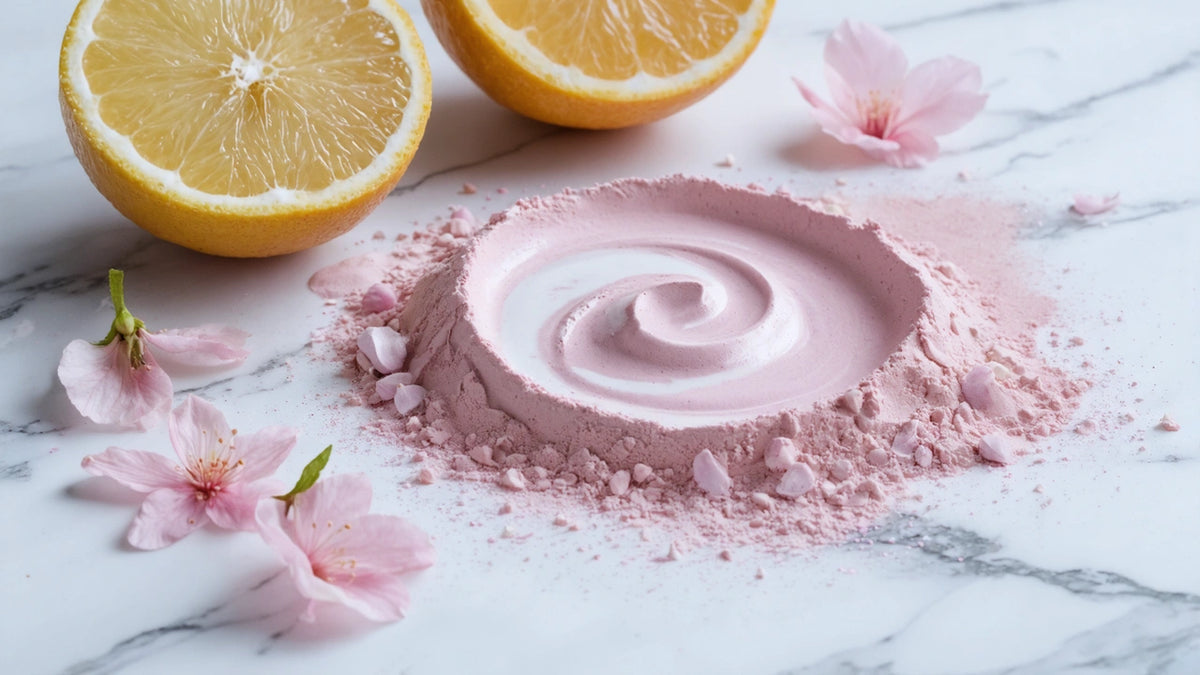
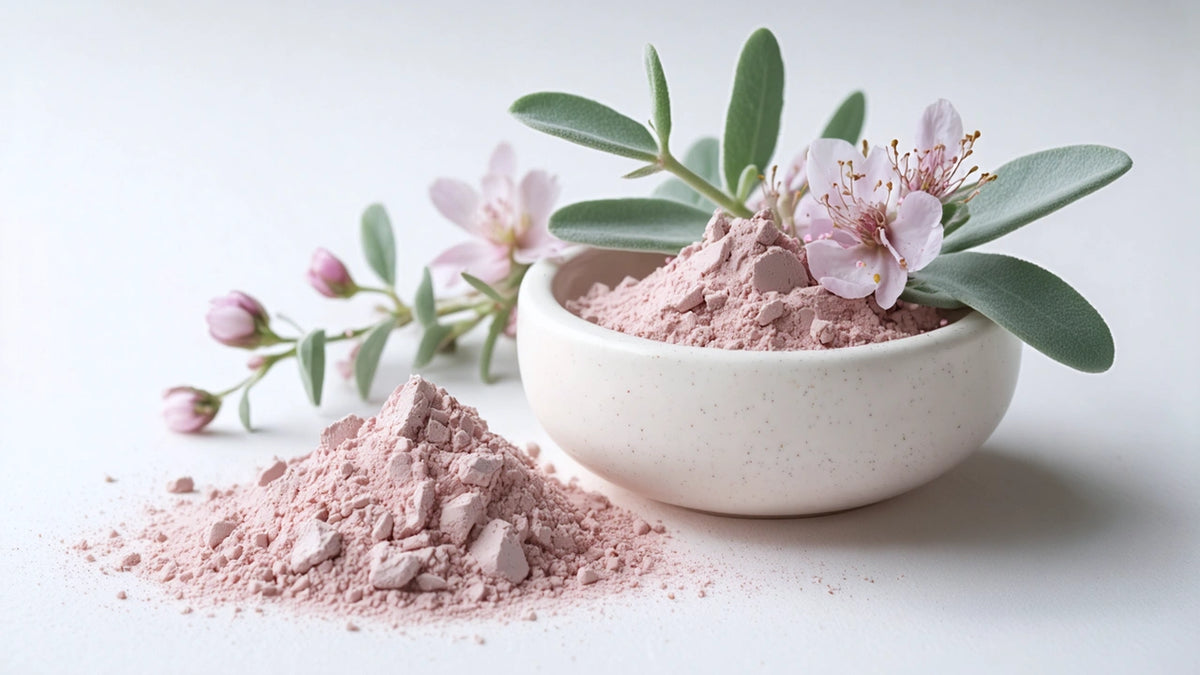
As a clay mask dries on the skin, its fine particles absorb surface sebum and help loosen the mix of oil and dead cells sitting in pore openings. Rinse it off and you've removed a layer of congestion without scrubbing at your barrier. That's the whole mechanism — unglamorous and quietly effective.
Cherry blossom radiance in the mix
Because pores and dullness usually travel together in Indian weather, our Brightening Pink Clay Mask with Cherry Blossom Radiance pairs the clay with cherry blossom extract for a fresher, more even-looking finish after rinsing. It's the same logic behind our gentle Yuzu and pink clay plan for tan-prone skin: clear the surface first, then let brightening botanicals do their thing.

Why gentle beats gritty
Kaolin is one of the milder clays, which matters if you've ever left a mask on until it cracked and then regretted it. Rinse while the mask is still slightly tacky, not bone dry, and you get the oil-absorbing benefit without the tight, squeaky aftermath. Twice a week is plenty.
The budget angle is the best part: one 50ml jar of clay mask outlasts and out-performs a drawer of suction gadgets and single-use strips. Every botanical is named on the label, so you know exactly what's doing the work.
What Is the Best Pore Care Routine for Humid Weather?
- Cleanse with a matcha gel wash, morning and night. Gel textures rinse clean without leaving a film, which is exactly what oily, humid-weather skin wants. Our Skin Detox Gel Face Wash with Matcha Green Tea lifts sweat, sunscreen and pollution buildup while staying kind to the barrier. Massage for a full 40 seconds — most of us cheat this step and then blame our pores.
- Layer hydration with niacinamide-rich snail mucin. Hydrated skin looks smoother, and smoother skin makes pore edges less obvious. Our 96% Snail Mucin Collagen Boost Serum brings niacinamide and hyaluronic acid together in a lightweight, slippy layer that sinks in fast. Niacinamide is a long-standing favourite for skin that leans oily — there's more on that in our niacinamide guide for oily skin in humid India.
- Mask with pink clay twice a week. Apply an even, thin layer to the T-zone and cheeks after cleansing, leave it for 8–10 minutes, and rinse before it goes fully powdery. Twice weekly keeps buildup from accumulating; daily masking just dries you out. On off-days, a hydrating sheet mask is a nicer choice.
- Seal lightly, then finish with sunscreen. A gel-textured moisturiser keeps the routine breathable — if you're torn between formats, our comparison of gel vs cream moisturizer for oily, humid skin makes the call easy. Then apply a lightweight sunscreen every morning. Sun exposure over time affects skin firmness, and slacker skin makes pores look more pronounced, so SPF is genuinely part of pore care.
When congestion turns into an actual raised spot, spot-treat instead of attacking your whole face. Our Matcha Tea Clarifying Acne Patches sit quietly on top while you get on with your day, and they keep your fingers away from the area.

What Helps Pore Appearance vs What's a Waste of Money?
Here's the head-to-head, minus the marketing.
| Approach | What it actually does | Verdict |
|---|---|---|
| Kaolin / pink clay mask, 2x week | Absorbs surface oil and loosens buildup sitting in pore openings, so pores look less shadowed | Worth it — the highest-value step per rupee |
| Gentle gel cleanser, twice daily | Removes sweat, sunscreen and pollution film before it settles in | Non-negotiable |
| Niacinamide + hyaluronic acid hydration | Keeps skin plump and smooth-looking; niacinamide is widely used in oil-balancing formulas | Worth it — pairs perfectly with clay |
| Peel-off pore strips | Pulls out some surface plugs along with skin cells; the openings refill within days | Skip — brief satisfaction, possible irritation |
| Home suction/vacuum devices | Applies negative pressure to skin; can leave temporary marks if overused on Fitzpatrick III–V skin | Skip — not worth the risk |
| Very hot water and gritty scrubs | Strips oil aggressively, which often triggers more oil and a compromised barrier | Skip — usually makes texture look worse |
| Daily lightweight sunscreen | Helps protect skin from cumulative sun exposure that affects firmness over time | Worth it — quietly the most important step |
Why we're not fans of strips and suction
Both give you an immediate "look what came out" moment, which is genuinely fun. The problem is the follow-up: pores refill, and repeated pulling or suctioning can leave skin irritated. For deeper skin tones, irritation has a habit of leaving behind darkening that takes far longer to fade than the pore ever looked large. Slow and gentle is the shortcut.
And about that squeaky-clean feeling
Tightness after washing is not proof of a good cleanse — it's usually a sign your barrier just took a hit. If your skin's already feeling reactive or stripped, pause the actives and follow our post-monsoon skin barrier reset for a week before restarting clay.
How Long Until Pores Look Smoother?
Give the routine two to four weeks of consistency before you judge it, and judge it in the same light at the same time of day — bathroom mirror at noon versus phone camera at 11pm are two different sports. What people usually notice first is less midday shine and fewer visible dark specks around the nose, followed by a generally smoother-looking surface. Nothing about this is instant, and it doesn't need to be.
Frequently Asked Questions About open pores treatment India
What is open pores treatment in India, and how is it different from treatments in drier climates?
Open pores treatment in India refers to skincare routines and ingredients aimed at minimizing the visible size of pores, adapted to manage the extra oil and sweat that humid Indian weather triggers. Unlike routines built for drier climates, it leans on lightweight, oil-absorbing ingredients like pink and kaolin clay rather than heavy creams, since excess sebum combined with humidity is what makes pores look more stretched and visible. The focus is on regular gentle deep-cleaning and oil control
How do you use an open pores treatment for the best results?
Use an open pores treatment by first cleansing your face, then applying a clay mask like pink or kaolin clay to clean, dry skin for 8-10 minutes, avoiding letting it crack completely dry which can strip moisture. Rinse with lukewarm water, pat dry, and always follow with a lightweight, oil-free moisturizer to keep skin balanced. Consistency matters more than intensity, so pair the mask with a gentle daily cleanser and a non-comedogenic sunscreen to prevent buildup that can make pores appear larg
Can open pores be closed permanently?
No, open pores cannot be closed permanently because pore size is largely determined by genetics and skin structure, not something skincare can reshape. What products and treatments can do is temporarily minimize their appearance by keeping pores clear of oil, dead skin, and debris that stretch them out visually. Think of it as pore-care maintenance rather than a one-time fix; consistent gentle exfoliation and oil control will keep pores looking tighter, but the underlying pore size itself stays
Does a clay mask actually reduce pore size?
A clay mask doesn't shrink pore size physically, but it does reduce how visible pores look by absorbing excess oil and pulling out trapped debris that makes pores appear stretched and larger. Once that gunk is cleared, skin looks smoother and pores appear tighter almost immediately after rinsing, though this effect is temporary and needs regular upkeep. For lasting visual improvement, clay masking works best as part of a routine alongside gentle exfoliation and daily oil control rather than as a
How often should I use a clay mask for open pores?
Most skin types do well with a clay mask for pores once or twice a week, giving enough time between uses for skin to rebalance without becoming dry or irritated. Oilier skin in humid conditions may tolerate it up to three times a week, while drier or sensitive skin should stick to once weekly and always follow with a hydrating, oil-free moisturizer. Overusing clay masks can strip natural oils and actually trigger more oil production, so moderation paired with consistency gives the best long-term
Shop Quench Botanics
Smoother-looking skin doesn't need gadgets — it needs two good habits and a little patience. Start with the Brightening Pink Clay Mask with Cherry Blossom Radiance twice a week for a gentle deep clean, and keep the Matcha Green Tea Gel Face Wash in your shower for daily buildup control. Add snail mucin hydration on top and your pore-care routine is complete. Every botanical is named on the label, the formulas are barrier-friendly, paraben-free and cruelty-free, and the minis make lovely little gifts. Come explore the full face-to-hair routine at Quench Botanics.