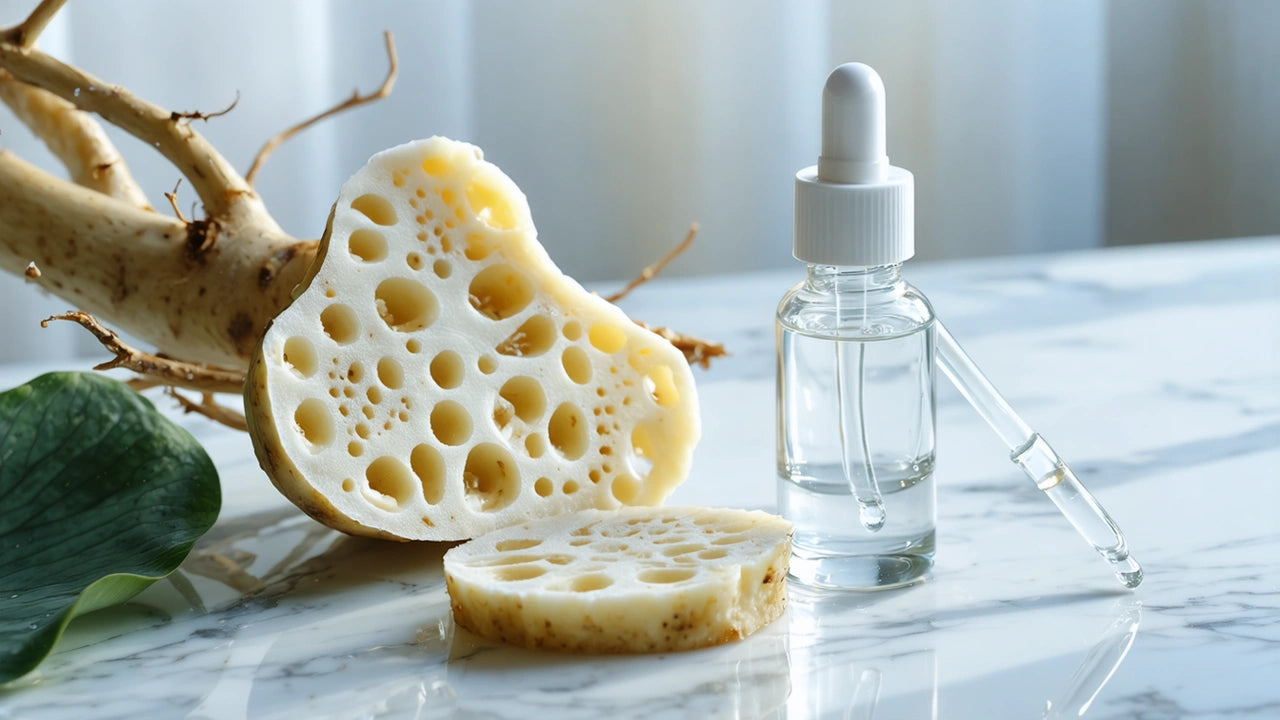

Lotus root benefits for skin include brightening uneven tone, defending against pollution-driven free radicals, refining the look of pores and gently fading tan for a fresher, more radiant complexion. Lotus root is the crisp underwater stem of the sacred lotus plant (Nelumbo nucifera), naturally rich in vitamin C, polyphenols and minerals that brighten and protect skin. Long revered in Ayurveda and now celebrated in K-beauty, this humble botanical bridges ancient Indian wisdom and modern Korean skincare science — making it a perfectly natural fit for ingredient-aware Indian skin. If you have been chasing that lit-from-within K-glow without harsh actives, lotus root is the gentle, antioxidant-rich brightener worth knowing.
What Is Lotus Root and Why Does Skincare Love It?
Lotus root is the rhizome — the thick, edible stem — of the water-grown lotus plant, prized across Asia as both food and medicine. In skincare, lotus extract is valued for its naturally high concentration of vitamin C, B-group vitamins, polyphenols and pore-refining tannins. These compounds work together to brighten, calm and protect, which is exactly why clean beauty botanicals like lotus are having a quiet moment in serums, masks and toners.
Ayurveda Meets K-beauty
In Ayurveda, the lotus (kamal) has long symbolised purity and renewal, used in formulations to cool, soothe and revive tired skin. K-beauty took that heritage and met it with cosmetic science, isolating lotus root extract for its measurable brightening and antioxidant action. The result is a botanical that feels both familiar to Indian skincare rituals and right at home in a modern Korean glass-skin routine — a quiet meeting point of two beauty philosophies.
The Antioxidant Profile
What makes lotus root extract genuinely useful isn't folklore — it's chemistry. The rhizome contains catechins, gallic acid and vitamin C, all of which mop up the reactive oxygen species generated by UV exposure and urban pollution. For skin living through Indian city air, that daily antioxidant buffer matters more than most of us realise.
What Are the Key Lotus Root Benefits for Skin?
The standout lotus root benefits for skin centre on three things: brightening, antioxidant defence and pore refinement. Together they make lotus a multitasking botanical that addresses dullness from several angles at once — without the sting or sensitivity that stronger acids can bring.
Brightening and Tan Fading
Lotus root benefits for skin include brightening uneven tone, antioxidant protection against pollution, refining pores and supporting a fresher, more radiant complexion. Its natural vitamin C content helps interrupt excess melanin production, gradually fading tan and dark patches, while polyphenols defend against the environmental stress that dulls skin and accelerates uneven pigmentation over time.
The vitamin C in lotus root works much like other forms of the nutrient: it helps slow the activity of tyrosinase, the enzyme that drives melanin production. Research published in the Journal of Cosmetic Dermatology has shown that vitamin-C-rich botanical extracts can meaningfully improve skin radiance and even out tone with consistent use. For tan-prone Indian skin, that translates to a gentler, more sustainable path to brightness than aggressive bleaching agents.
Antioxidant Free-Radical Defence
Free radicals are unstable molecules generated by sun, smoke and pollution that break down collagen and trigger dark spots. The polyphenols in lotus root neutralise these molecules before they can do damage. Cosmetic scientists note that pairing antioxidant botanicals with daily SPF gives skin a layered defence — one that's especially valuable in India's high-UV, high-pollution environment.

Pore Refining and Oil Balance
The tannins in lotus root have a mild astringent effect, gently tightening the appearance of enlarged pores and helping balance excess surface oil. This makes lotus a friendly botanical for combination and oily skin types who want brightness without heaviness — a common request in humid, tropical Indian climates where oil control and glow have to coexist.
How Does Lotus Root Compare to Other Brightening Botanicals?
Lotus root sits comfortably among the best botanical brightening ingredients, but it plays a slightly different role than the heavy hitters. Think of it as the gentle, supportive brightener — one that amplifies stronger actives rather than competing with them.
| Botanical | Primary Strength | Best For |
|---|---|---|
| Lotus Root Extract | Gentle brightening + antioxidant defence | Sensitive, tan-prone, dull skin |
| Yuzu Vitamin C | Potent radiance + tone correction | Visible dullness and uneven tone |
| Niacinamide | Pigment control + barrier support | Dark spots, oily and acne-prone skin |
| Avocado Vitamins | Nourishing brightening + hydration | Dry, fatigued, lacklustre skin |
Lotus Root and Yuzu Vitamin C
Lotus root and Yuzu Vitamin C are natural teammates. Where yuzu delivers a concentrated burst of brightening vitamin C, lotus root reinforces that work with steady antioxidant support, helping the results hold and the complexion stay calm. A nourishing botanical serum like the Bravocado Brightening Serum layers beautifully alongside lotus-rich steps for a fed, glowing finish.
When to Layer With Niacinamide
If stubborn dark spots are your main concern, lotus root pairs wonderfully with niacinamide, which targets pigment transfer and strengthens the skin barrier. The Intense Brightening Serum with Niacinamide brings bakuchiol into the mix too, making it a smart partner for lotus-led brightening on Indian skin prone to post-acne marks and pigmentation.
How Do You Add Lotus Root Benefits to Your Routine?
The beauty of lotus root is its flexibility — it slots into both morning and evening routines without drama. The Quench Botanics Method favours layering gentle botanicals in thin, breathable steps so skin can actually absorb the goodness rather than feeling suffocated.
Daytime Antioxidant Defence
Use lotus-powered or brightening botanical steps in the morning, then always seal with SPF. Antioxidants and sunscreen are a two-part defence: the botanical neutralises free radicals while the SPF blocks the UV that creates them. For Indian skin, daily broad-spectrum protection is non-negotiable — it's the single biggest factor in keeping brightening results visible and tan at bay.

Pairing With Brightening Serums
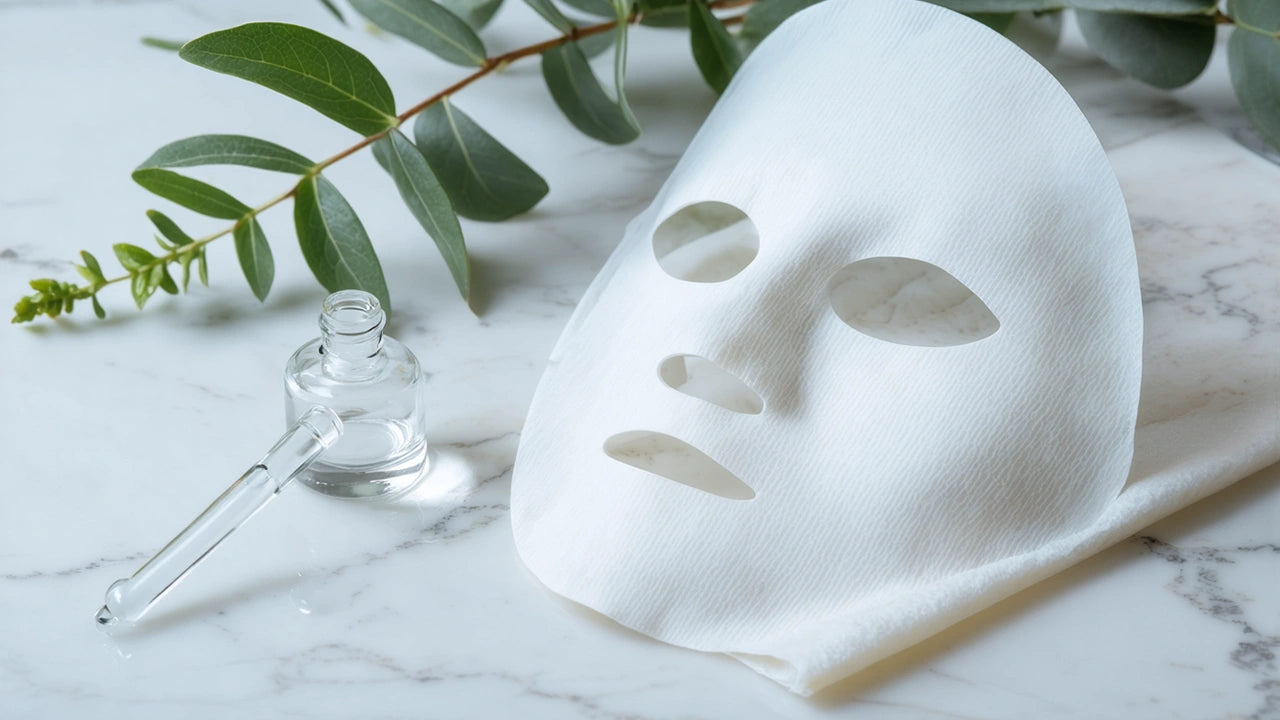
For deeper results, layer lotus benefits beneath a targeted brightening serum, then lock everything in with a lightweight moisturiser. Twice a week, swap in a brightening or clarifying mask for an extra glow boost. If you're new to building a brightening routine, our sheet mask glow guide for Indian skin walks through how to slot masks in without overwhelming your skin.
Who Should Try Lotus-Powered Brightening?
Lotus root is one of the most universally friendly botanical brighteners, gentle enough for most skin types including reactive, sensitive complexions. It's especially suited to Fitzpatrick III–V Indian skin tones that tan easily and are prone to uneven pigmentation.
Dull, Tanned Skin
If your complexion looks tired, grey or unevenly tanned after time in the sun, lotus root's vitamin C and antioxidants help revive that lost radiance gradually and gently — no harsh peeling required. It's a kinder route to the coveted lotus root glow.
Oily, Congested Skin
Thanks to its pore-refining tannins and lightweight feel, lotus root suits oily and congested skin that struggles with richer brighteners. Dermatologists recommend gentle, non-comedogenic botanicals for humid-weather oily skin, and lotus fits that brief neatly — brightening without clogging.
Frequently Asked Questions About lotus root benefits for skin
What is lotus root extract in skincare?
Lotus root extract is a botanical ingredient derived from the rhizome of the lotus plant, rich in vitamin C, antioxidants, and minerals that brighten and soothe skin. In skincare, it's prized for fading dullness, evening out tone, and calming irritation without harshness. Unlike aggressive synthetic brighteners, lotus root works gently, making it suitable for sensitive and reactive skin. Its naturally cooling, hydrating properties also help refresh tired complexions, which is why K-beauty formul
Is lotus root safe for sensitive skin?
Yes, lotus root is generally safe and well-tolerated by sensitive skin because it brightens gently without harsh acids or strong exfoliants. Its naturally soothing and anti-inflammatory properties help calm redness and irritation rather than triggering it, making it a kinder alternative to potent brighteners like high-strength vitamin C or retinol. As with any new ingredient, patch-test first on your inner forearm and introduce it gradually. Most people find lotus-powered formulas comfortable fo
How long does it take to see results from lotus root for skin?
Most people notice a fresher, more hydrated, slightly brighter complexion within 2 to 4 weeks of consistent use, with more visible tone-evening around the 6 to 8 week mark. Like most gentle botanicals, lotus root works gradually rather than overnight, so daily application is key. Skin cell turnover naturally takes about four weeks, which is why brightening ingredients need time to reveal their full effect. For best results, pair lotus root with sunscreen by day, since UV exposure can undo bright
Can I use lotus root with vitamin C?
Yes, you can safely use lotus root with vitamin C, and the two actually complement each other beautifully for brightening. Lotus root already contains natural vitamin C and antioxidants, so pairing it with a dedicated vitamin C serum can amplify glow and antioxidant protection. Apply your thinnest, water-based products first, followed by serums, then seal with moisturiser. If your skin is sensitive, introduce one active at a time to monitor tolerance. Always follow with SPF in the morning, as an
What is the difference between lotus root and niacinamide for brightening?
The main difference is that lotus root is a whole-plant botanical extract delivering antioxidants and gentle brightening, while niacinamide is a single active (vitamin B3) that targets uneven tone, pores, and barrier strength. Lotus root suits those who prefer plant-based, soothing formulas, whereas niacinamide is a well-studied multi-tasker that pairs with almost everything. They aren't rivals — using both can give layered benefits, with lotus root calming and antioxidant-protecting while niaci
Brighten the Botanical Way With Quench Botanics
Ready to chase that gentle, lit-from-within glow? Pair lotus-inspired brightening with our botanical heroes for visibly fresher, more even-toned skin. Start with the nourishing Bravocado Brightening Serum, and if you love a vitamin C deep-dive, read our Yuzu Vitamin C serum brightening guide to build your perfect K-glow routine with Quench Botanics.