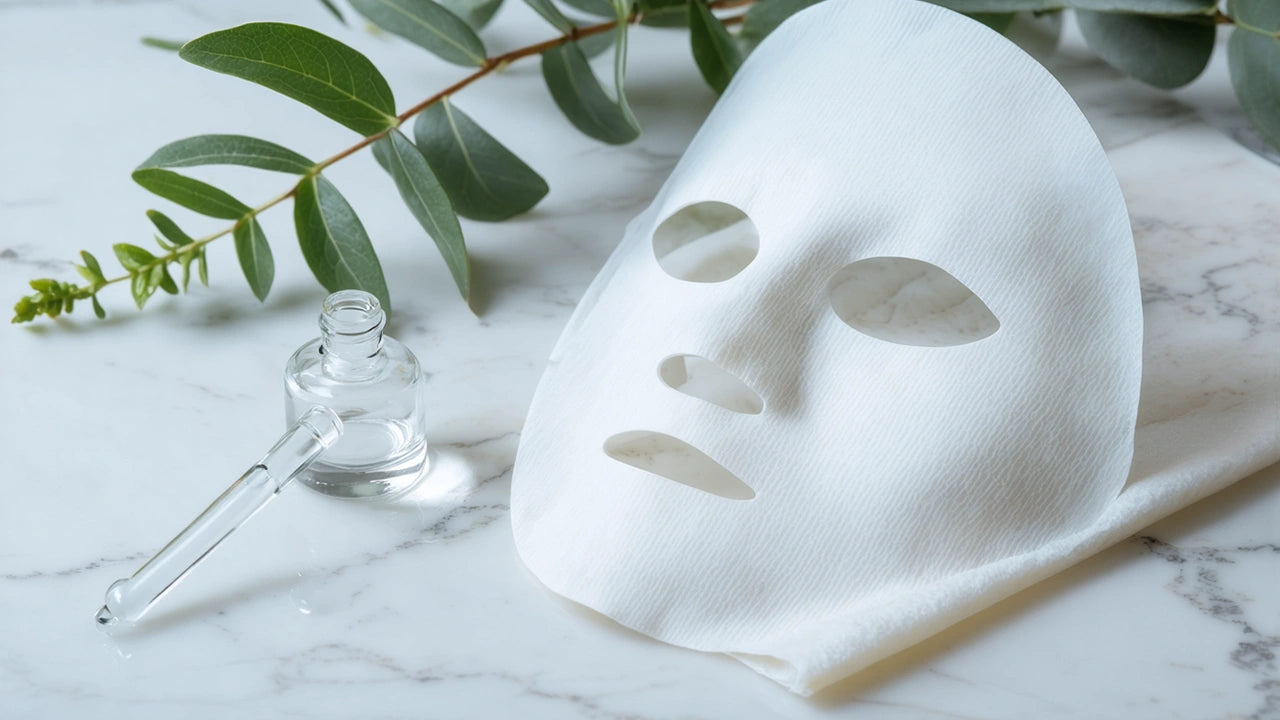

If you've ever wondered whether sheet masks actually work or if they're just a pretty 15-minute selfie moment, here's the honest answer: they genuinely do, especially in India's heat and humidity. A sheet mask is a single-use cotton, hydrogel, or bio-cellulose sheet soaked in a concentrated botanical essence that floods skin with active ingredients while sitting flush against your face. That snug fit creates a temporary seal, so instead of evaporating into Mumbai's muggy air, the essence sinks in. For Indian skin contending with tanning, pollution, and sticky humidity, this is one of the fastest routes to visible, dewy glow.
What Is a Sheet Mask and Why Does It Work?
A sheet mask works because it pairs a high-potency essence with occlusion — two things that supercharge how much your skin actually absorbs. Most of your daily serums lose a chunk of their actives to evaporation. A mask stops that from happening.
The Essence-Soaked Science
Each Quench Botanics mask is saturated with roughly a full bottle's worth of essence packed with botanical actives like Yuzu Vitamin C, Snail Mucin, or Matcha polyphenols. Because the sheet holds this liquid against your skin, the actives have time and contact to penetrate rather than dry off. It's a delivery system, not just a treat.
Why Occlusion Boosts Absorption
The physical barrier of the sheet gently raises skin temperature and hydration at the surface, which loosens the outermost layer and helps water-loving ingredients travel deeper. Research published in the Journal of Cosmetic Dermatology found that occlusive masking measurably increased stratum corneum hydration and improved the penetration of humectant actives compared with leave-on application alone. Cosmetic scientists note this is why a 20-minute mask can outperform days of casual serum use for instant plumping.
What Are the Top Sheet Mask Benefits for Indian Skin?
The biggest sheet mask benefits for Indian skin come down to three things our climate constantly challenges: hydration, brightness, and barrier calm. Here's how each one plays out.
Instant Hydration and Plumping
Air-conditioning, sun exposure, and hard water quietly dehydrate skin even when it feels oily. A single hydrating mask drenches the surface with humectants like Hyaluronic Acid and Snail Mucin, instantly softening fine dehydration lines and giving that just-pressed bounce. Dehydrated skin and oily skin are not the same thing — and masking fixes the first without the heaviness oily types fear.
Brightening and Tan Support
Indian skin tones (Fitzpatrick III to V) are richer in melanin, which means we tan deeply and hold pigment longer after sun exposure. A Vitamin C-led mask helps interrupt that by topping skin up with antioxidants that visibly even tone and revive dullness. It won't bleach your skin — and it shouldn't — but it brings back the fresh, lit-from-within look after a long day outdoors.
Soothing Post-Sun and Post-Pollution
City pollution and UV both generate free radicals that stress the skin barrier. A cooling, antioxidant-rich mask calms redness, replenishes moisture, and supports recovery. If your monsoon routine already leans on tea tree and matcha, a soothing mask slots in beautifully — our monsoon skincare reset for oily skin walks through how to layer these without congestion.
How Do You Use a Sheet Mask Step by Step?
How to use a sheet mask: cleanse your face thoroughly, then tone to balance and prep the skin. Apply the mask, smoothing out air bubbles, and leave it on for 15-20 minutes. Remove it, then gently pat the remaining essence into your skin instead of rinsing. Finally, seal everything in with your moisturiser.
Step 1: Cleanse and Tone First
Masking on a clean canvas is non-negotiable — essence can't penetrate through sunscreen and grime. Double cleanse if you've worn makeup or SPF, then sweep on a toner to rebalance and prime. New to double cleansing? Our guide on cleansing balm vs face wash breaks it down simply.
Step 2: Apply and Relax for 15-20 Minutes
Unfold the mask, align the eye and mouth holes, and press it flat from the centre outwards to chase out air pockets. Then genuinely relax. Don't leave it on past 20 minutes — once the sheet starts drying, it reverses and draws moisture back out of your skin.
Step 3: Pat in the Essence, Don't Rinse
The leftover essence on your face and neck is the good stuff. Tap it in with your fingertips until it absorbs. Resist washing it off — that's the whole point.
Step 4: Seal With Moisturiser
Lock in all that hydration with a moisturiser suited to your skin type. In humid weather, a light gel formula keeps things breathable — our edit of the lightest moisturisers for humid skin has monsoon-friendly picks.
Which Quench Sheet Mask Should You Choose for Your Goal?
Choosing the right Quench sheet mask is simply about matching the botanical to your skin goal. Here's the quick map.
| Skin Goal | Mask to Reach For | Hero Botanical |
|---|---|---|
| Plump, bouncy, firmer skin | Snail Mucin Collagen Boost | Snail Secretion Filtrate |
| Glow, radiance, tan support | Yuzu Vitamin C Instaglow | Yuzu-derived Vitamin C |
| Clarity for oily, congested skin | Matcha Bubble Mask | Matcha Green Tea antioxidants |
Snail Mucin Collagen Boost for Plump Skin
Snail Secretion Filtrate is rich in glycoproteins, hyaluronic acid, and glycolic acid that hydrate, smooth, and support repair. For layered, lasting plumpness, follow your mask with the matching Snail Mucin Collagen Boost Serum while skin is still damp.
Yuzu Vitamin C for Glow
If radiance is your goal, the Yuzu Vitamin C Instaglow Sheet Mask is your fastest friend — a hit of antioxidant brightness that's perfect before an event or after a sun-soaked weekend.

Mask regularly? The Instaglow Sheet Mask Pack of 3 keeps your glow ritual stocked and is the easy pick for a twice-weekly habit.

Matcha Bubble for Clarifying
Oily and acne-prone? The fizzing Matcha Green Tea Bubble Sheet Mask uses antioxidant-rich green tea to gently clarify, lift away impurities, and refresh congested skin without stripping it.
How Often Should You Sheet Mask in Humid Weather?
In India's humid climate, 2-3 sheet masks per week is the ideal frequency for most skin types. That's enough to keep skin hydrated and glowing without overdoing it. This is the heart of The Quench Botanics Method — generous botanical hydration matched to your real-world climate, never excess for its own sake.
The 2-3x Weekly Guideline
Dry or mature skin can comfortably mask 3 times a week. Oily and combination skin in muggy weather usually does best at 2 times, ideally with a clarifying or antioxidant mask rather than a heavy hydrating one.
Avoiding Over-Hydration Congestion
Yes, too much moisture is a real thing. Daily occlusive masking in high humidity can leave the barrier waterlogged, trapping sweat and oil and triggering tiny bumps. Dermatologists recommend spacing masks out and always sealing with a breathable moisturiser. If clogging is a recurring worry, our glass skin routine without congestion shows how to glow safely in the heat.
Frequently Asked Questions About sheet mask benefits and how to use India
How long should you leave a sheet mask on?
Leave a sheet mask on for 15 to 20 minutes — never longer. While it's tempting to keep it on until fully dry, an over-stayed mask actually reverses the benefit: as the sheet dries out, it begins drawing moisture back out of your skin instead of delivering it. In India's humid climate, 15 minutes is usually plenty. Once the time's up, remove the mask while it's still damp and gently press the leftover essence into your skin rather than rinsing it off. That last step locks in all the goodness.
Should you wash your face after using a sheet mask?
No, you shouldn't wash your face after a sheet mask. Once you remove it, gently pat the remaining essence into your skin with your fingertips and let it absorb — rinsing it away would wash off the active ingredients you just spent 15 minutes layering on. Instead, follow up with a moisturiser to seal everything in, and sunscreen if it's daytime. The only time you'd cleanse beforehand is right before applying the mask, so the essence sinks into clean, prepped skin rather than sitting on top of dir
What is the difference between a sheet mask and a clay mask?
The key difference is direction: a sheet mask delivers hydration and nutrients into the skin, while a clay mask draws impurities and excess oil out. Sheet masks are soaked in essence and sit flush against the face to push moisture, antioxidants, and brightening actives inward — ideal for plumping, glow, and dehydration. Clay masks, by contrast, are detoxifying and absorbent, best for oily or congested skin that needs a deep clean. Many people use both: a clay mask to purify once or twice a week,
Can you use a sheet mask every day?
Yes, you can use a hydrating sheet mask every day if your skin tolerates it well, but it isn't necessary for most people. Daily masking can be a lovely ritual during dry spells, post-travel, or before a big event when your skin needs an extra moisture boost. However, masks with strong actives like exfoliating acids or high-strength brightening agents are better used 2–3 times a week to avoid irritation. Listen to your skin — if it feels happy and hydrated, daily gentle masking is fine; if it fee
Can I use a sheet mask with retinol or vitamin C?
Yes, you can pair a sheet mask with retinol or vitamin C — just mind the order and timing. Apply your active serum first on clean skin, let it absorb for a minute, then layer the sheet mask on top to boost hydration and buffer any potential irritation. Hydrating sheet masks pair especially well with retinol, since they calm the dryness it can cause. With vitamin C, choose a soothing, fragrance-free mask to avoid overload. Avoid sheet masks that themselves contain strong acids on the same night a
Shop Quench Botanics
Ready to turn 15 quiet minutes into visible, dewy glow? Start with the Yuzu Vitamin C Instaglow Sheet Mask for an instant brightness boost, then weave masking into your full how to get glass skin at home ritual. With Quench Botanics, K-glow that holds up to Indian heat and humidity is genuinely 20 minutes away.