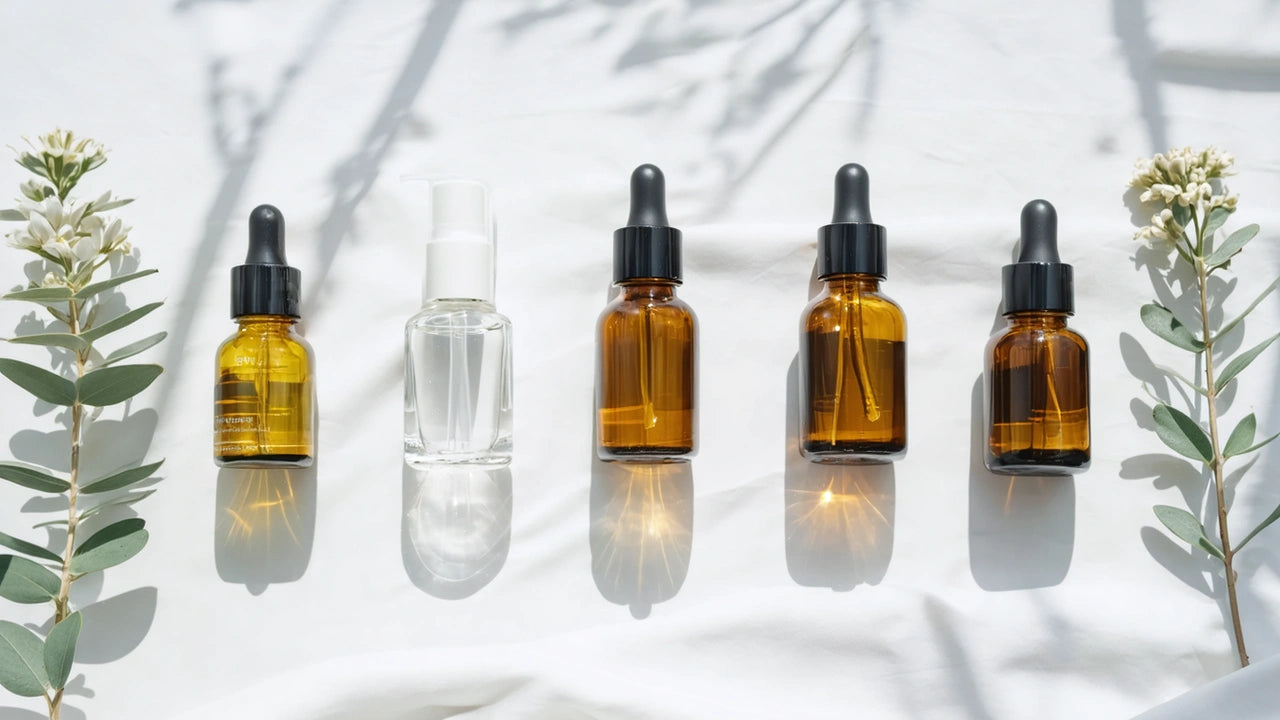
The best SPF sunscreen for oily acne-prone Indian skin is a lightweight, non-comedogenic formula with a matte finish that delivers broad-spectrum SPF 50 PA++++ protection — without a white cast, without grease, and without triggering a single new breakout. If you've ever skipped sunscreen because it made your skin feel like a frying pan by noon, this guide is for you. Sunscreen is your single most important skincare step, especially if you're dealing with active acne, post-acne marks, or uneven skin tone — and the good news is that the right formula won't just protect your skin, it will actively help it heal. If you're also building a full warm-weather routine, our summer skincare routine for oily skin India guide is a great place to start before diving into the SPF specifics here.
The best sunscreen for oily acne-prone Indian skin is a lightweight, non-comedogenic formula with a matte finish that provides broad-spectrum SPF 50 PA++++ protection without a white cast. Look for botanical actives like avocado, zinc oxide, and niacinamide that protect without clogging pores or triggering breakouts.
Why Oily, Acne-Prone Indian Skin Needs SPF More Than Any Other Skin Type
Let's address the biggest myth in Indian skincare head-on: that oily or acne-prone skin doesn't need sunscreen, or worse, that sunscreen causes breakouts. This misconception leads thousands of people to skip the one step that could actually speed up their skin's recovery. Oily skin produces excess sebum, yes — but UV radiation doesn't discriminate. In fact, if you have active acne or post-acne marks, unprotected sun exposure can make everything significantly worse, and faster than you'd expect.
How UV Exposure Worsens Acne Scars and Post-Inflammatory Hyperpigmentation
Every time an acne lesion heals, it leaves behind a patch of inflammation in the deeper layers of your skin. When UV rays hit that inflamed spot, they stimulate melanocytes — the cells responsible for pigment production — to produce even more melanin, deepening and darkening the mark. This is called post-inflammatory hyperpigmentation (PIH), and it is one of the most common and frustrating skin concerns for Indian consumers. Research published in the Journal of Investigative Dermatology has demonstrated that UV exposure significantly prolongs the resolution of PIH in darker Fitzpatrick skin types (III–V), precisely the skin tones most common across India. Simply put: every day you skip SPF is a day your acne scars get a chance to darken further.
Dermatologists consistently recommend broad-spectrum sunscreen as the first line of defence against PIH — before any brightening serum, before any chemical exfoliant, before anything else. Protecting the inflammation from UV is the foundation of every effective post-acne treatment plan.
India's UV Index: Why Daily SPF Isn't Optional
India's tropical and subtropical geography places most of the country under a UV Index of 8–11+ for a significant portion of the year — a range classified as "very high" to "extreme" by the World Health Organization. Cities like Mumbai, Chennai, Bengaluru, Hyderabad, and Delhi regularly hit UV Index 10 between 10 am and 3 pm, even on overcast days. UVA rays — the ones responsible for long-term pigmentation and skin ageing — penetrate clouds and glass. That means sitting by a window in your home office still exposes your skin. PA++++, the highest Asian rating for UVA protection, is the standard you need. SPF 50 handles UVB; PA++++ handles UVA. Together, they give your skin complete, year-round defence.
What Makes a Sunscreen Non-Comedogenic and Safe for Acne-Prone Skin?
Non-comedogenic is a term that gets thrown around a lot in skincare marketing, so let's define it properly. A non-comedogenic sunscreen is one formulated without ingredients that are known to block pores or create the conditions for comedones (blackheads and whiteheads) to form. This doesn't mean it's oil-free — it means that the oils and emollients used are chosen specifically because they don't disrupt the follicular canal. Knowing what to look for — and what to avoid — is the difference between a sunscreen that works with your skin and one that fights against it. For a broader breakdown of sunscreen types and how they perform on Indian skin, our SPF guide for Indian skin covers the full spectrum.
Ingredients to Look For (and Avoid) in Sunscreens for Oily Skin
Cosmetic scientists note that the texture and elegance of a sunscreen formula matter as much as its UV filters. Here's what to look for — and what to put back on the shelf:
| Ingredient | Why It Helps | Verdict for Oily Skin |
|---|---|---|
| Zinc Oxide (ZnO) | Mineral UV filter with natural anti-inflammatory and antimicrobial properties; calms redness around breakouts | ✅ Look for it |
| Niacinamide (Vitamin B3) | Regulates sebum production, minimises pore appearance, and actively fades PIH | ✅ Look for it |
| Avocado Oil (Persea Gratissima) | Rich in oleic acid and phytosterols; absorbs quickly without leaving residue; supports the skin barrier | ✅ Look for it (in lightweight formulas) |
| Hyaluronic Acid | Lightweight humectant that draws moisture into skin — hydration without any greasiness | ✅ Look for it |
| Coconut Oil (Cocos Nucifera) | High in lauric acid but rated comedogenic index 4/5 — known to clog pores in most skin types | ❌ Avoid |
| Isopropyl Myristate / Isopropyl Palmitate | Common texture-smoothing agents rated comedogenic — frequently linked to clogged pores and milia | ❌ Avoid |
| Heavy mineral oils / Petrolatum | Create an occlusive film that can trap sebum and bacteria under oily skin | ❌ Avoid |
| Fragrance / Parfum | Common trigger for contact dermatitis and inflammation — particularly problematic on active acne | ❌ Avoid |
Why Botanical SPF Formulas Are Gentler on Acne-Prone Skin
Plant-derived actives bring more than just marketing appeal to a sunscreen formula. Botanical ingredients like avocado, green tea extract (Camellia Sinensis), and aloe vera (Aloe Barbadensis Leaf Juice) offer documented anti-inflammatory and antioxidant activity that complements UV protection rather than simply sitting alongside it. A study published in Photodermatology, Photoimmunology & Photomedicine found that polyphenol-rich plant extracts enhance the skin's antioxidant defences against UV-induced oxidative stress — meaning they help neutralise the free radicals that UV exposure creates, reducing the downstream inflammation that leads to breakouts and PIH. For skin that's already sensitised by acne, this botanical buffer can make a meaningful difference to how the skin feels at the end of a long day outdoors.
How Quench Botanics' Avocado SPF Works for Oily and Acne-Prone Indian Skin
The Quench Botanics Avocado SPF is the brand's answer to one of the most persistent skincare problems in India: finding a quench sunscreen that genuinely works for oily, acne-prone skin without compromise. It delivers SPF 50 PA++++ broad-spectrum protection in a formula that was built from the ground up to address the specific concerns of Indian skin — including the texture objections, the white cast problem, and the very real fear of triggering new breakouts.
The Quench Botanics Method centres on pairing clinically-proven UV filters with skin-beneficial botanical actives so that your sunscreen does more than just protect — it actively contributes to your skin's health. The Avocado SPF embodies this approach: every ingredient is either protecting, calming, or maintaining the skin barrier, with nothing in the formula that has a reason to be there other than to benefit your skin.
Matte Finish That Controls Midday Shine
For oily skin in India's humid climate — think Mumbai in July or Chennai in April — a sunscreen that sits matte at 8 am but turns into a greasy film by noon is essentially useless. The Avocado SPF uses a lightweight, water-resistant matte base that is designed to stay put through heat and humidity. It absorbs quickly into skin without pilling over serums or moisturisers, and it controls sebum production rather than adding to it. This is what distinguishes a genuinely oil-skin-appropriate formula from one that simply markets itself as "lightweight."
No White Cast for Fitzpatrick III–V Skin
White cast is arguably the biggest barrier to consistent SPF use among Indian consumers. Mineral sunscreens containing titanium dioxide and zinc oxide are notorious for leaving a chalky, grey, or purple tinge on medium-to-deep skin tones — the Fitzpatrick III, IV, and V range that encompasses the vast majority of Indian skin. The Avocado SPF is formulated to deliver the protective benefits of its UV filters while leaving an imperceptible, skin-tone-neutral finish. That means no white haze in photos, no ashy finish in daylight, and no self-consciousness about wearing SPF every single day.
How Avocado Nourishes Without Clogging Pores
The concern that avocado oil will clog pores is understandable — it's a rich, fatty oil — but it's also a misunderstanding of how avocado oil actually behaves in a well-formulated skincare product. In the correct concentration within a lightweight emulsion, avocado's oleic acid absorbs rapidly into the skin, delivering phytosterols and antioxidants to the barrier without leaving behind any occlusive residue. The result is skin that feels nourished and comfortable — not stripped, not oily — after application. For acne-prone skin that often deals with a damaged or compromised barrier (a side effect of aggressive acne treatments like benzoyl peroxide or salicylic acid), this barrier-supporting nourishment is genuinely useful, not just cosmetic.
If your skin is in active repair mode — dealing with post-acne marks or a weakened barrier — consider pairing the Avocado SPF with the 96% Snail Mucin Collagen Boost Serum as your serum step. Snail mucin is one of K-beauty's most celebrated actives for barrier restoration, wound healing, and PIH fading — and it layers beautifully under SPF without adding any greasiness.

If you're dealing with active breakouts alongside your SPF routine, Quench Botanics' Zit Away Treatment Patches with Cica Herb Repair are a brilliant overnight companion — targeting individual blemishes while your skin rests, so your morning SPF application goes on a calmer, clearer canvas.
How to Apply Sunscreen Correctly for Maximum Protection (Most People Get This Wrong)
The most effective sunscreen in the world will underperform if it's applied incorrectly. Studies consistently show that most people apply only 20–50% of the amount of sunscreen needed to achieve the SPF stated on the label. That means your SPF 50 is actually functioning closer to SPF 10–15 in real-world use. Here's how to fix that.
The Two-Finger Rule for SPF Quantity
For your face and neck, dermatologists recommend what's known as the two-finger rule: squeeze sunscreen along the length of your index and middle fingers — from base to tip — for the face alone, and repeat for the neck. This approximates the 2mg per cm² dosage used in clinical SPF testing, which is the amount needed to achieve the labelled protection. Most people use about a third of this, which is why "SPF 50 but still getting dark" is such a common complaint.
- Face: Two finger-lengths of product — more than you think you need
- Neck and décolletage: A separate two-finger application — this area ages and pigments quickly
- Ears and hairline: Often forgotten, frequently sunburnt — use the remaining product on your fingertips
- Lips: Lips have almost no melanin and burn easily — always follow with an SPF lip product
Speaking of lip protection — don't forget that your lips need UV defence too. The Brightening Lip Balm SPF 60 delivers the highest lip SPF in the Quench Botanics range, with a bare, skin-like finish that works under any lip colour.

When to Reapply SPF During an Indian Summer Day
SPF degrades with UV exposure, sweat, and sebum — and in India's climate, it degrades faster than the two-hour reapplication window recommended for temperate climates. In practice:
- Indoors with no direct sun exposure: One morning application is sufficient
- Commuting or limited outdoor exposure: Reapply after your midday commute, ideally using a lightweight SPF mist or powder SPF over makeup
- Outdoor activities (sports, travel, beach): Reapply every 80–90 minutes, or immediately after sweating heavily or towelling off
- Post-swimming: Reapply immediately — water-resistant formulas protect during swimming but are significantly diminished afterwards
Building an Oily Skin Summer Routine Around Your SPF
Your sunscreen works best when it's the final step of a well-considered morning routine — not something you're reaching for on the way out the door. For oily and acne-prone skin in India, the goal is a minimal, efficient morning stack that preps skin, manages sebum, and ends with a protective matte finish.
Cleanser → Toner → Lightweight Serum → Moisturiser → SPF: The Minimal Morning Stack
Here's the order that makes every product work harder:
- Cleanser: Start with the Foaming Face Wash with Yuzu Vitamin C — a brightening, gentle foam that removes overnight sebum without stripping the barrier. The Yuzu Vitamin C delivers a brightening antioxidant boost right from step one, setting up your skin to better absorb everything that follows.
- Toner (optional): A hydrating, alcohol-free toner balances skin pH after cleansing and improves subsequent product absorption. Keep it simple and lightweight.
- Serum: Layer a targeted treatment serum for your specific concern — barrier repair, PIH fading, or pore refinement. The Snail Mucin Serum works beautifully here for anyone in active post-acne recovery.
- Moisturiser: Use a lightweight, gel-cream moisturiser. Even oily skin needs hydration — dehydrated oily skin actually produces more sebum to compensate for the dryness. A well-hydrated skin base also helps your SPF apply more evenly and adhere better.
- SPF: The final, non-negotiable step. Apply the Avocado SPF with the two-finger rule, blend well into hairline and neck, and you're protected for the day.
For more on how to build a complete seasonal routine around this stack — including evening steps and targeted treatments for Indian skin in summer — the summer skincare routine for oily skin India guide has everything you need.
Frequently Asked Questions About SPF sunscreen for oily acne-prone Indian skin
What is SPF sunscreen for oily acne-prone Indian skin?
SPF sunscreen for oily acne-prone Indian skin is a lightweight, non-comedogenic sun protection formula specifically designed to shield melanin-rich skin from UV damage without clogging pores or triggering breakouts. Unlike regular sunscreens, these are typically water-based or gel-textured, free from heavy occlusive oils, and enriched with ingredients like niacinamide or centella asiatica that actively calm acne-prone skin. For Indian skin tones, broad-spectrum SPF 50+ PA++++ is the recommended
Does sunscreen cause breakouts on oily skin?
Sunscreen can cause breakouts on oily skin, but only when it contains pore-clogging ingredients like mineral oils, lanolin, or heavy silicones — not sunscreen itself. The right formula, labelled non-comedogenic and oil-free, will not trigger acne. In fact, unprotected UV exposure worsens post-acne hyperpigmentation (PIH), which is especially stubborn on deeper Indian skin tones. Switching to a lightweight, gel-based or water-fluid SPF eliminates the grease-and-breakout cycle while keeping your s
What is the difference between chemical and mineral sunscreen for acne-prone skin?
Chemical sunscreens absorb UV rays and convert them to heat, while mineral sunscreens (containing zinc oxide or titanium dioxide) sit on top of skin and physically reflect UV rays. For acne-prone Indian skin, mineral formulas are often gentler and less likely to cause irritation, but can leave a white cast on deeper skin tones. Modern hybrid sunscreens combine both filter types for broad-spectrum protection with a lighter, more skin-tone-inclusive finish — making them an excellent middle ground
How long does it take to see results from using SPF consistently on acne-prone skin?
Consistent daily SPF use can visibly reduce post-acne dark spots and hyperpigmentation in as little as 4–6 weeks on acne-prone Indian skin. Sun exposure is the number one trigger that deepens PIH on melanin-rich skin tones, so blocking UV rays daily essentially puts a pause on further darkening — allowing active ingredients like niacinamide or vitamin C in your routine to work more effectively. Full skin-tone evening and scar fading typically becomes noticeable between 8–12 weeks of uninterrupte
Can oily skin skip sunscreen in summer?
No — oily skin absolutely cannot skip sunscreen in summer, and is arguably the skin type that needs it most. High humidity and sweat in Indian summers may make skin feel greasier, but UV radiation levels are at their peak, accelerating acne scarring, uneven skin tone, and premature ageing. The solution is not to skip SPF but to upgrade to a matte, oil-controlling formula that absorbs excess sebum while protecting the skin barrier. Skipping sunscreen risks months of undoing any brightening or ant
No More Greasy Skin Days — Shop Quench Botanics SPF Today
Your skin has been waiting for a sunscreen that actually understands it. The Quench Botanics Avocado SPF 50 PA++++ was made for Indian skin that's oily, acne-prone, or carrying the weight of post-acne marks — and it's ready to become the step you'll never skip again. Lightweight, matte, zero white cast, and botanically nourishing. That's SPF done right, the Quench Botanics way.
While you're building your routine, explore the full Quench Botanics range — from barrier-restoring serums to brightening cleansers — and give your skin the seasonal care it deserves this summer.
Shop the 92% Snail Mucin Collagen Boost Moisturizer — the perfect lightweight moisturiser to layer under your SPF for all-day hydration without grease.