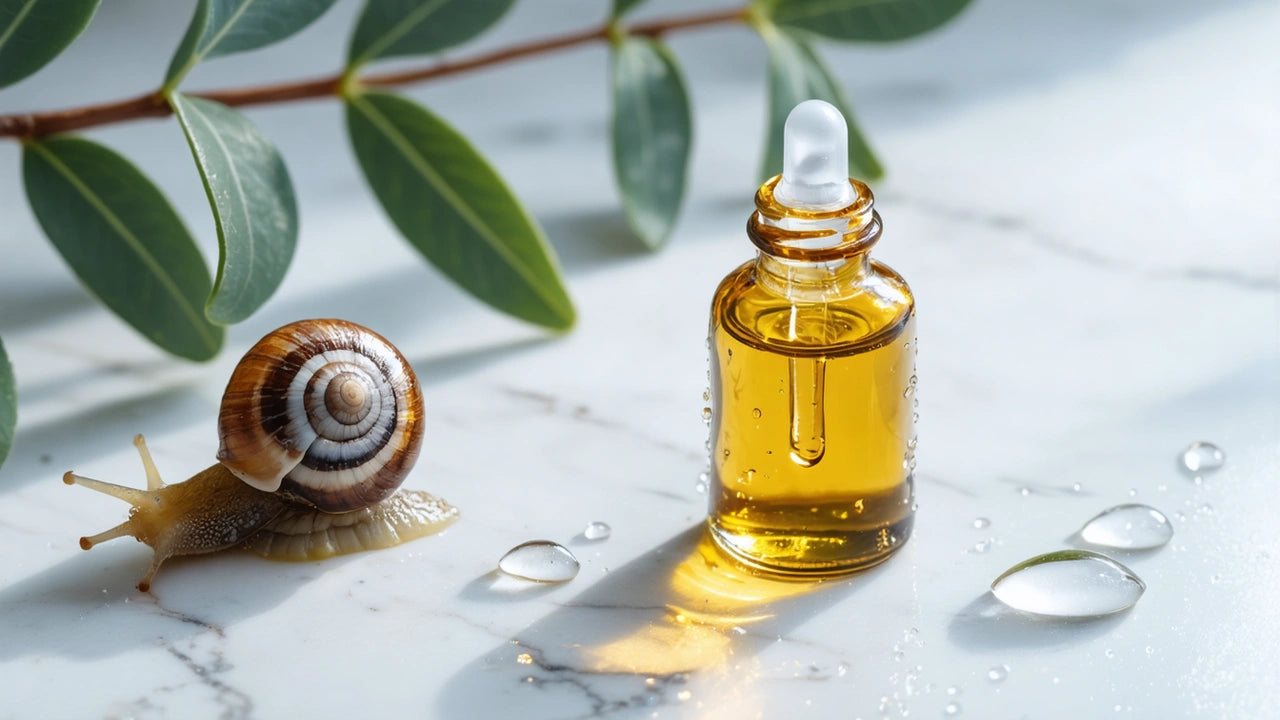

Here's the honest answer to what everyone's whispering about at the K-beauty aisle: snail mucin gives your skin a big drink of lightweight hydration, helps it look plumper and bouncier, and quietly supports your skin barrier so it feels calmer and more resilient. Snail mucin is the naturally secreted fluid (INCI name: Snail Secretion Filtrate) harvested without harming the snails, and it's packed with humectants, glycoproteins and skin-loving nutrients. For anyone chasing glass skin in India's sticky weather, the snail mucin benefits for Indian skin are genuinely worth the hype — because it hydrates without that heavy, greasy film you dread in humidity. If you're just starting to build a full regimen, our K-beauty routine order guide pairs beautifully with this deep-dive.
What Is Snail Mucin, Really?
A simple definition
Let's demystify it. Snail mucin is the gel-like secretion snails naturally produce to protect and repair their own bodies — and cosmetic scientists filter and purify it into the smooth, slightly sticky essence you see in your favourite serums. On your ingredient list it appears as Snail Secretion Filtrate. It's a clever cocktail of humectants (ingredients that pull water into the skin), glycoproteins, hyaluronic acid, glycolic acid in trace amounts, and antioxidant nutrients — all in one naturally occurring fluid. Think of it as a multitasker that hydrates, comforts and helps skin bounce back.
Why K-beauty loves it
In Korea, snail mucin became a cult hero because it delivers that signature dewy, "just-drank-a-litre-of-water" finish without weighing skin down — exactly the aesthetic behind glass skin. Korean formulators love ingredients that do a lot while feeling like almost nothing, and snail mucin fits that brief perfectly. It plays nicely with other actives, rarely causes drama for most skin types, and gives you that lit-from-within glow that's less about makeup and more about genuinely hydrated, healthy-looking skin. That's the philosophy behind everything we do — what we call the Quench Botanics Method: K-beauty actives, retuned for real Indian weather.
What Are the Real Benefits of Snail Mucin for Indian Skin?
Snail mucin hydrates the skin by drawing in and holding moisture, helps it look plumper and bouncier, and supports the skin barrier so it feels calmer and more comfortable. Rich in glycoproteins and naturally occurring hyaluronic acid, it delivers a dewy, glass-skin glow without a heavy, greasy finish — making it ideal for humid weather.
Lightweight hydration
The number-one reason snail mucin suits India is its texture. It hydrates through humectants that attract water into the upper layers of skin, yet it sinks in fast and leaves no oily residue. In cities where the air is already thick with moisture — Mumbai, Chennai, Kolkata — you want hydration that feels like water, not like a blanket. Snail mucin delivers exactly that.
Plumping and bounce
When skin is well-hydrated, fine dehydration lines soften and the surface looks fuller and more even. Snail mucin's glycoprotein and naturally occurring hyaluronic acid content help skin hold onto water, so your complexion looks plumped and bouncy rather than flat or tired. This is where the snail mucin collagen boost conversation comes in — it doesn't literally inject collagen, but by keeping skin deeply hydrated and comfortable, it creates the ideal environment for skin to look and feel its healthiest.
Barrier support
Your skin barrier is the outermost protective layer that keeps moisture in and pollution, grime and irritants out. Indian city life — sun, dust, AC-to-humidity swings — puts that barrier under constant stress. Research published in the International Journal of Cosmetic Science has explored how snail secretion filtrate supports skin hydration and comfort, and dermatologists often recommend gentle, humectant-rich ingredients like this to help skin feel calmer and more resilient. It's a beautifully low-drama way to give a stressed barrier some love.
Dewy, not greasy
Here's the magic for our climate: snail mucin gives you glow without grease. Because so much of its action is water-based, you get that glass-skin sheen minus the shine that reads as "oily face" by lunchtime. For Fitzpatrick III to V skin tones — the medium to deep tones so common across India — this matters, because dewiness enhances your natural undertone and radiance instead of masking it or triggering excess oil.
Is Snail Mucin Okay for Oily, Humidity-Prone Skin?
Busting the 'too heavy' myth
Yes — and this is the myth we most want to bust. Because snail mucin has a slightly viscous, gel-like feel in the bottle, people assume it'll be heavy on the face. In reality, most of that texture is water-loving humectants that absorb quickly. It's generally non-comedogenic, meaning it's unlikely to clog pores for most people. So if you have oily or combination skin and you've been avoiding snail mucin for oily skin, you may have been missing out on lightweight hydration your skin actually craves — because oily skin can be dehydrated too.

Texture in humid weather
Is snail mucin good in humidity? Genuinely, yes. In humid air, heavy creams can feel suffocating, but a water-based snail essence or serum stays comfortable and breathable. If your skin skews oily, you can pair snail mucin with an oil-balancing niacinamide step like our Clear Skin Serum with Matcha Green Tea, which brings antioxidant matcha and pore-refining benefits to the party. The hydration from snail mucin plus the balancing act of niacinamide is a dreamy humid-weather combo. For a fuller oily-skin summer plan, our sweat-proof summer routine is a great companion read.
How Do You Use Snail Mucin in Your Routine?
Where it slots in
Snail mucin typically goes on after cleansing and toning, and before your heavier creams and oils. The general rule in K-beauty is thinnest to thickest — so a watery essence or lightweight serum like snail mucin comes early, letting it absorb before you seal everything in. Our 96% Snail Mucin Collagen Boost Serum is designed to slot in exactly here, giving you a concentrated hit of hydration right where the routine needs it.
Layering with niacinamide and HA
Layering just means applying products in order, letting each one settle for a few seconds before the next. Snail mucin loves company: pair it with hyaluronic acid for an extra hydration boost, or with niacinamide (a form of Vitamin B3 that helps balance oil and even out tone) for a clarifying, glow-building routine. There's no clash here — these are gentle, complementary friends. Apply snail mucin first, then your niacinamide serum, then moisturiser.

AM vs PM
Snail mucin works both morning and night. In the AM, use it under sunscreen for a hydrated, glowy base — never skip that SPF, especially in Indian sun. At night, it's a lovely comfort step after your active serums, helping skin feel soothed while you sleep. The delicate under-eye area loves it too — a dedicated eye serum with snail mucin is a gentle way to hydrate a zone that shows dehydration first.
How Does Snail Mucin Help You Get Glass Skin?
The dewy-glow connection
Glass skin — that smooth, luminous, translucent look — is built on deep, consistent hydration and a healthy barrier. That's precisely snail mucin's zone. By plumping the skin with moisture and encouraging that soft bounce, snail mucin for glass skin becomes one of the easiest single steps you can add. For the full method, our glass skin routine for Indian skin walks you through it without congestion.
Realistic expectations
Let's keep it real: glass skin is a look you build with consistent care, not an overnight switch. Give any hydrating step a few weeks of regular use to see your skin looking dewier and more even. Results depend on your skin, your climate and how consistent you are — and that's completely normal. Skincare is a ritual, not a magic trick.
What's the Quick Snail Mucin Routine Takeaway?
Your starter snail mucin step
- Cleanse with a gentle face wash so your skin is a clean canvas ready to absorb hydration.
- Tone to rebalance and prep the skin for the steps ahead.
- Apply snail mucin serum onto slightly damp skin — a few drops, patted in gently.
- Layer niacinamide or HA if your routine includes them, thinnest to thickest.
- Moisturise to seal it all in, then SPF every single morning.
That's it — one lightweight, humidity-friendly step that quietly does a lot. For a hydrating weekly treat, a sheet or mud mask makes a gorgeous glass-skin finish.
Frequently Asked Questions About snail mucin benefits for Indian skin
What is the difference between snail mucin and hyaluronic acid?
Snail mucin and hyaluronic acid both hydrate, but they work differently. Snail mucin is a complex fluid packed with glycoproteins, peptides, glycolic acid and zinc that hydrates while also repairing and soothing skin. Hyaluronic acid is a single humectant that pulls water into the skin for plumping but offers no repair or nourishment on its own. Think of hyaluronic acid as pure hydration and snail mucin as hydration-plus-healing. In humid Indian weather, many people layer a lightweight hyaluroni
Can I use snail mucin with niacinamide?
Yes, snail mucin and niacinamide layer beautifully together and are a popular combo for Indian skin. Apply niacinamide first to target oil control, enlarged pores and dark spots, then follow with snail mucin to lock in hydration and boost repair. Both ingredients are gentle, water-based and non-conflicting, so there's no risk of irritation when combined. This duo works especially well for oily, humidity-prone skin because niacinamide balances sebum while snail mucin keeps the skin barrier hydrat
How long does it take to see results from snail mucin?
Most people notice softer, more hydrated skin within the first week of using snail mucin, while visible results like fading marks and smoother texture take four to eight weeks. Because snail mucin works by supporting your skin barrier and cell repair over time, consistency matters more than quantity. Use it once or twice daily as part of a regular routine for the best outcome. For Indian skin dealing with post-acne marks or dullness, give it a full skin cycle of six to eight weeks before judging
Is snail mucin safe for sensitive and acne-prone skin?
Yes, snail mucin is generally safe and well-tolerated by sensitive and acne-prone skin because it's soothing, non-comedogenic and barrier-supportive. Its calming properties help reduce redness and irritation, while its lightweight texture won't clog pores when used correctly. That said, everyone's skin is unique, so patch test on your inner arm or jaw for 24 hours before applying it to your full face. If you have a shellfish allergy, check with a dermatologist first, as snail mucin is a differen
What are the benefits of snail mucin for fading dark spots and acne marks?
Snail mucin helps fade dark spots and post-acne marks thanks to its blend of glycolic acid, allantoin and skin-repairing glycoproteins. The mild glycolic acid gently encourages cell turnover to lift pigmentation, while allantoin and peptides speed up healing and reduce inflammation that can worsen marks. Together they help even out skin tone and smooth texture over time. This makes snail mucin especially useful for Indian skin, which is prone to stubborn post-inflammatory hyperpigmentation. Pair
Shop Quench Botanics
Ready to give your skin that glass-skin drink of water? Start with our 96% Snail Mucin Collagen Boost Serum for lightweight, humidity-friendly hydration that layers under everything. Want a weekly glow-up too? Our Mud Sheet Mask with Cica Herb Repair is a soothing, hydrating add-on for that dewy finish. Your calmest, bounciest, most lit-from-within skin starts with one gentle step — take it whenever you're ready.