Lotus root extract is a botanical skincare active derived from the subterranean stem of Nelumbo nucifera — the same sacred lotus that blooms across Indian temples, mythology, and monsoon ponds. While India has revered the lotus as a symbol of purity and divine grace for thousands of years, Korean beauty laboratories have quietly been unlocking its skin-transforming potential. Lotus root benefits for skin include natural brightening, antioxidant defence, and gentle pore refinement — making it one of the most compelling new arrivals in botanical skincare for India. And just like we explored the not-so-prickly skincare benefits of cactus water, lotus root proves that the most powerful botanical actives are often hiding in plain sight.
What Is Lotus Root and Why Is It Suddenly in K-Beauty Skincare?
From Sacred Indian Symbol to K-Beauty Ingredient
The lotus has always meant something profound to India. Goddess Lakshmi is seated upon it. The Buddha achieved enlightenment beside it. Ancient Ayurvedic texts reference lotus preparations for cooling and purifying the skin. Yet somehow, when the lotus finally made its way into modern skincare formulations, it was Korean cosmetic scientists who first formalised it as a high-performance active — and now it is arriving back on Indian shelves as a K-beauty innovation.
That cultural familiarity is actually a powerful reason to pay attention. Unlike lab-synthesised actives that feel foreign and intimidating, lotus root carries an innate sense of trust for Indian consumers. It is clean, plant-derived, and deeply embedded in the country's own heritage. The bridge between sacred symbol and science-backed skincare ingredient is shorter than you might think.
What Lotus Root Extract Actually Contains
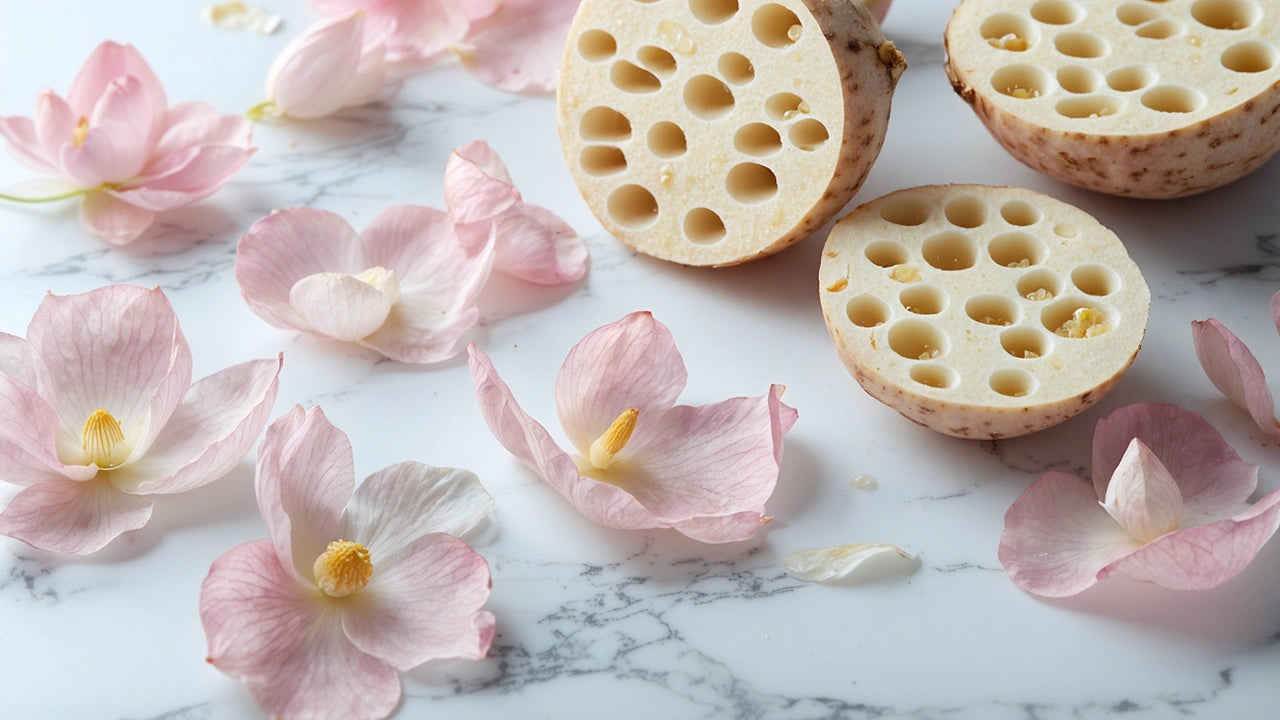
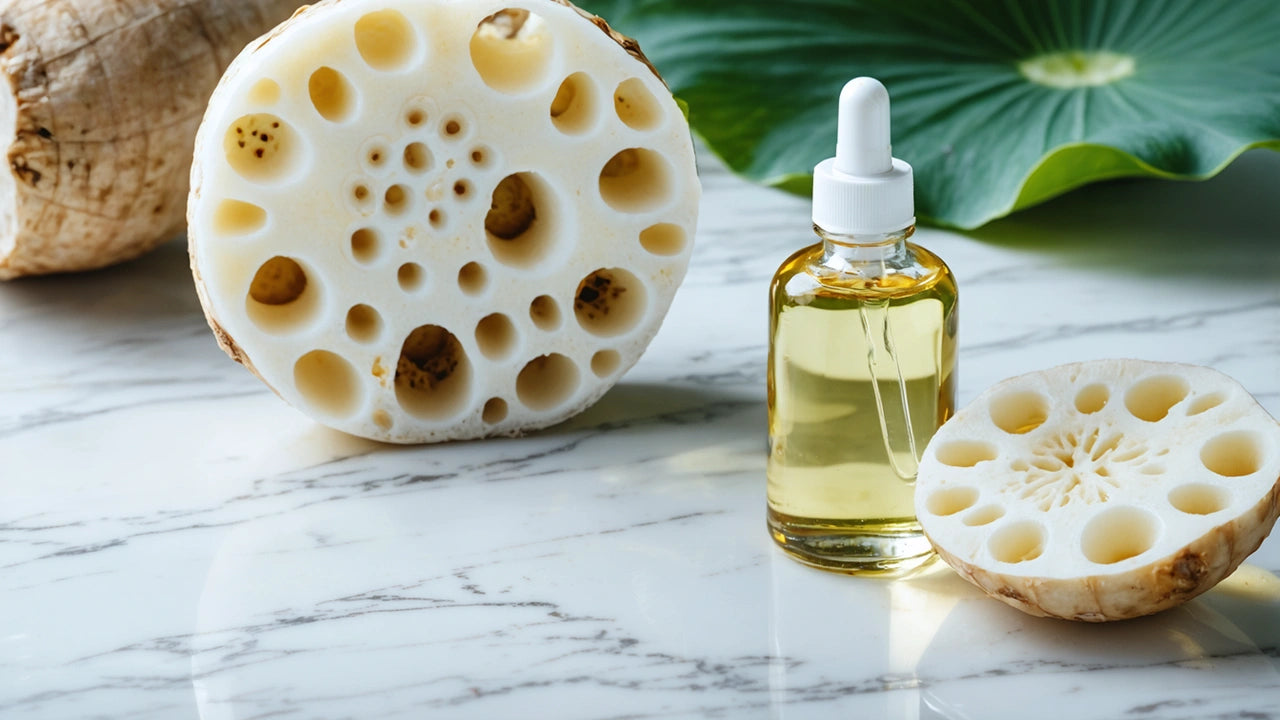
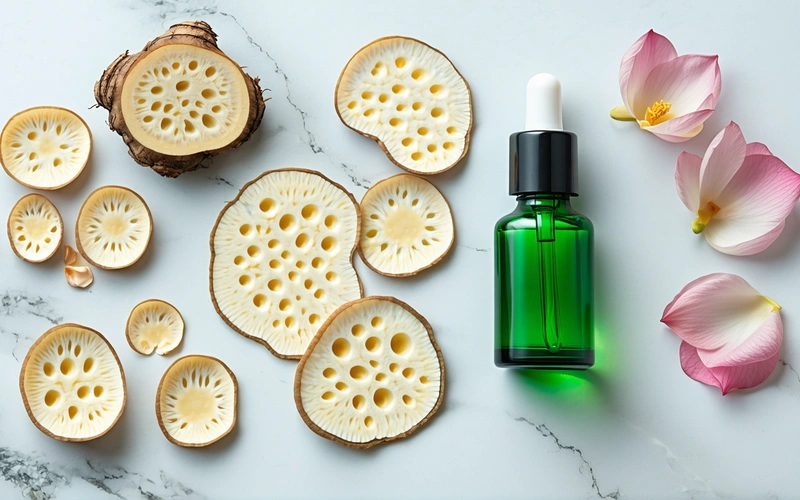
Lotus root extract is sourced from the rhizome — the thick, segmented underground stem of the Nelumbo nucifera plant. Unlike the flower, which is ephemeral, the root stores the plant's concentrated nutritional reserves. It is exceptionally rich in:
- EGCG (Epigallocatechin gallate) — a catechin antioxidant also found in matcha green tea, responsible for neutralising free radicals that accelerate skin ageing and uneven tone.
- Flavonoids — including quercetin and kaempferol, which calm inflammation, support the skin barrier, and inhibit the enzymes that trigger excess pigment production.
- Natural tannins — plant compounds with gentle astringent properties that temporarily tighten the appearance of pores without stripping moisture.
- Vitamin C precursors and polyphenols — which work synergistically to support a brighter, more even-looking complexion over time.
- Mucilage — a naturally occurring polysaccharide that delivers light surface hydration and a skin-smoothing effect, similar in feel to hyaluronic acid.
Lotus Root Benefits for Skin: What the Science Says
Lotus root benefits for skin include natural brightening by inhibiting melanin production, powerful antioxidant protection from flavonoids and EGCG, and gentle pore tightening — making it an ideal K-beauty ingredient for Indian skin dealing with hyperpigmentation, pollution stress, and enlarged pores.
Natural Brightening: How Lotus Root Inhibits Melanin
Hyperpigmentation — whether from sun exposure, post-acne marks, or hormonal shifts — is the number one skin concern cited by Indian consumers. The mechanism behind most brightening actives is tyrosinase inhibition: blocking the enzyme that converts tyrosine into melanin (the pigment responsible for dark spots). Research published in the Journal of Ethnopharmacology has identified flavonoid-rich plant extracts, including those from Nelumbo nucifera, as effective tyrosinase inhibitors comparable in activity to kojic acid — but with a significantly gentler skin tolerance profile.
What makes lotus root particularly compelling is that it inhibits melanin at the enzymatic level rather than through exfoliation or oxidation. This means it works quietly and consistently, without causing the flaking, redness, or photosensitivity that stronger actives can trigger. For skin that is already dealing with inflammation or sensitivity, that gentleness is not a compromise — it is the point.
Antioxidant EGCG and Flavonoids Protect Against Pollution
India's urban air quality poses a real and underacknowledged threat to skin health. Particulate matter and environmental pollutants generate free radicals that break down collagen, disrupt the skin's barrier function, and — critically for darker skin tones — trigger post-inflammatory hyperpigmentation through oxidative stress. Cosmetic scientists note that topical antioxidants applied before and after environmental exposure can measurably reduce this oxidative burden.
Lotus root's EGCG content makes it a meaningful antioxidant shield. EGCG is the same powerhouse catechin found in matcha, and a growing body of cosmetic research demonstrates its ability to intercept free radical chain reactions before they damage skin cells. A study by researchers at Seoul National University highlighted Nelumbo nucifera polyphenols as exhibiting strong DPPH radical scavenging activity — a standard measure of antioxidant potency in cosmetic formulation science. Paired with the flavonoid quercetin, lotus root delivers layered antioxidant protection that is genuinely useful for city-dwelling skin in Mumbai, Delhi, Bangalore, or Chennai.
Astringent Pore-Tightening Without Drying
Enlarged pores are a perennial concern for oily and combination skin types — which make up the majority of Indian skin profiles, especially in humid tropical and coastal climates. Lotus root's natural tannin content provides a gentle astringent action that temporarily minimises the appearance of pores and controls excess sebum, giving skin a smoother, more refined texture. Crucially, unlike alcohol-based toners or harsh clay masks used daily, lotus root achieves this without disrupting the moisture barrier. The mucilage content simultaneously delivers a light hydrating layer, so skin feels tightened and smoothed — not tight and stripped.
Is Lotus Root Good for Indian Skin Specifically?
Lotus Root for Melanin-Rich Fitzpatrick III–V Skin Tones
Indian skin predominantly falls within the Fitzpatrick III–V range — meaning it is naturally more melanin-rich and therefore more prone to post-inflammatory hyperpigmentation (PIH). When skin in this range is stressed by UV exposure, pollution, friction, or even a minor breakout, it responds by overproducing melanin in the affected area. This is why dark spots and uneven tone persist far longer on darker skin than on lighter complexions.
This is precisely where lotus root's gentle, non-irritating mechanism becomes an advantage rather than a limitation. Strong exfoliating actives like high-concentration AHAs or retinoids can temporarily worsen PIH in melanin-rich skin if used without adequate care. Lotus root, by contrast, addresses the enzymatic root cause of excess melanin without triggering the very inflammation it is trying to resolve. Dermatologists working with South Asian skin increasingly emphasise the importance of anti-inflammatory brightening pathways — and lotus root sits squarely in that category.
Gentle Enough for Sensitive and Acne-Prone Indian Skin
India's combination of high humidity, heat, and dietary diversity means that a significant proportion of Indian skin is simultaneously oily, sensitive, and prone to breakouts. Many brightening actives that work beautifully in temperate Korean climates can feel too aggressive for Indian skin during summer months. Lotus root is non-comedogenic, has an innate anti-inflammatory quality from its flavonoid content, and does not rely on acids or retinoids for its brightening effect. This makes it genuinely suitable for acne-prone skin — not just as a workaround, but as a thoughtful first choice.
How It Compares to Vitamin C and Niacinamide for Brightening
Vitamin C and Niacinamide are the two most trusted brightening ingredients among Indian skincare consumers — and rightfully so. But they come with caveats. Vitamin C in its active form (L-ascorbic acid) is notoriously unstable, oxidises quickly in India's warm climate, and can sting sensitive or compromised skin. Niacinamide is gentler but works through a different pathway — slowing the transfer of melanin to skin cells rather than inhibiting its production. Lotus root adds a third, complementary mechanism: blocking melanin synthesis at the enzyme level, while simultaneously defending against the oxidative triggers that cause new pigmentation to form. The three work best not in competition, but in layers — which is exactly what the best brightening routines do. (Wondering how to combine them? Read our guide on whether you can use Niacinamide with Vitamin C for the definitive answer on stacking these actives.)
How to Add Lotus Root to Your Indian Skincare Routine
Where Lotus Root Serum Sits in Your Layering Order
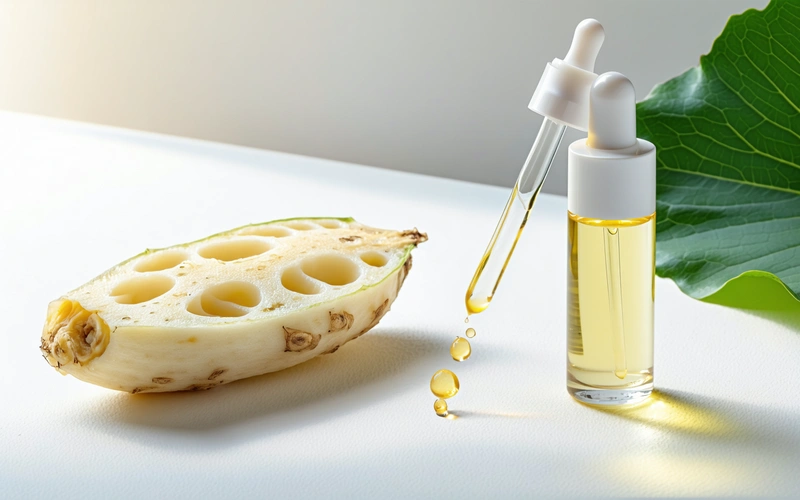
In a standard K-beauty layering routine, lotus root extract is typically delivered in a lightweight serum or essence — applied after cleansing and toning, before moisturiser. Because it is water-soluble and has a relatively low molecular weight in its bioactive form, it absorbs efficiently into clean, damp skin. The rule of thumb is: thinnest to thickest. Your lotus root serum goes on after your toner, gives it 30–60 seconds to absorb, and is followed by your moisturiser to seal in the actives.
If you use multiple serums, position lotus root before oil-based or thicker emulsion-type serums. It pairs beautifully with hyaluronic acid underneath (for hydration) and niacinamide on top (for a complementary brightening effect). In the morning, always follow with SPF — a non-negotiable for anyone using brightening actives in India's UV-intense environment.
Best Combinations: Lotus Root + Niacinamide, Lotus Root + SPF
The lotus root + Niacinamide pairing is arguably the most effective combination for Indian skin dealing with hyperpigmentation. Lotus root inhibits melanin production at the source; Niacinamide slows its transfer to the skin's surface. Together, they address pigmentation through two independent pathways — which means faster, more visible results than either ingredient alone. There is no ingredient conflict between them, no pH sensitivity, and no wait time required.
For morning routines especially, following with a broad-spectrum sunscreen is not optional — it is what protects all the brightening work you have done overnight. A Vitamin C–rich sunscreen adds another antioxidant layer on top of your lotus root serum, reinforcing the pollution-defence and brightening benefits throughout the day.
If you are looking for a botanical brightening routine that is already thoughtfully formulated, the Advanced Brightening Kit from Quench Botanics brings together the key brightening actives in a structured, skin-type-tested format — making it easy to add a complete routine without having to guess at layering order or compatibility. For a complementary serum that blends botanical brightening with soothing clarity, the Birch Please Skin Soothing Clarifying Serum brings birch water and calming botanicals to your routine — ideal for pairing with the lotus root philosophy of gentle, plant-powered clarity.
Lotus Root vs Vitamin C vs Niacinamide: Which Brightening Ingredient Wins?
The honest answer? None of them wins alone — but understanding what each does best helps you build a smarter routine.
| Ingredient | Primary Brightening Mechanism | Best For | Key Consideration for Indian Skin |
|---|---|---|---|
| Lotus Root Extract | Tyrosinase inhibition + antioxidant defence | Sensitive, acne-prone, melanin-rich skin; pollution defence | Gentle, non-irritating — ideal for Fitzpatrick III–V skin in humid climates |
| Vitamin C (L-Ascorbic Acid) | Antioxidant neutralisation of melanin precursors + collagen support | Dull, sun-damaged skin; anti-ageing brightening | Can oxidise in heat; may sting compromised or sensitive skin |
| Niacinamide | Inhibits melanosome transfer to keratinocytes | PIH, enlarged pores, oily or combination skin | Highly stable, broadly tolerated — excellent all-skin-type option |
Lotus root is not here to replace Vitamin C or Niacinamide — it is here to complete the picture. Think of it as the botanical, antioxidant-rich foundation that makes both of those actives work better, while offering its own gentle brightening action that specifically suits the Indian skin context. It is the ingredient that bridges ancient botanical wisdom and modern K-beauty science — and for Indian skin, that is a meaningful distinction.
Frequently Asked Questions About lotus root benefits for skin brightening India
What are the benefits of lotus root for skin brightening?
Lotus root brightens skin by inhibiting melanin production, fading dark spots, and evening out skin tone over time. Rich in Vitamin C, flavonoids, and polyphenols, it neutralises free radicals that trigger post-inflammatory hyperpigmentation — a common concern for Indian skin. Its natural enzymes also gently exfoliate dead skin cells, revealing a fresher, more luminous complexion. Unlike harsh brightening actives, lotus root works gradually and is well-tolerated by most skin types, making it a s
How does lotus root help with hyperpigmentation?
Lotus root helps with hyperpigmentation by naturally suppressing the activity of tyrosinase, the enzyme responsible for triggering excess melanin production in the skin. It also delivers a concentrated dose of antioxidants — including Vitamin C and quercetin — that calm oxidative stress, one of the key drivers of stubborn dark spots and uneven patches. For Indian skin tones, which are more prone to post-acne marks and sun-induced pigmentation, this dual action makes lotus root a particularly eff
Is lotus root safe for sensitive skin?
Yes, lotus root is generally considered safe and well-suited for sensitive skin. Unlike potent brightening actives such as high-concentration AHAs or retinoids, lotus root is a botanical ingredient with a naturally mild profile — it brightens without causing irritation, redness, or skin-barrier disruption. Its anti-inflammatory polyphenols may actually help soothe reactive or easily sensitised skin. As always, patch-testing a new product on your inner arm for 24 hours before full-face use is a g
What is the difference between lotus root and niacinamide for brightening?
Lotus root and niacinamide both brighten skin but work through different mechanisms. Niacinamide (Vitamin B3) is a clinically well-studied synthetic active that blocks melanin transfer between skin cells and visibly reduces dark spots with consistent use. Lotus root, a botanical extract, targets melanin at the source by inhibiting tyrosinase, while also delivering antioxidant and anti-inflammatory benefits. Niacinamide tends to show faster, more predictable results; lotus root offers a gentler,
How long does it take to see results from lotus root in skincare?
Most people begin to notice a subtle improvement in skin radiance and texture within 3–4 weeks of consistent use of lotus root skincare products. Visible fading of dark spots and more even-toned skin typically becomes noticeable around the 6–8 week mark. As a botanical brightening ingredient, lotus root works gradually rather than dramatically — think of it as a long-game ingredient that also strengthens skin health over time. For best results, pair it with daily SPF, since sun exposure can coun
Explore Quench Botanics Botanical Brightening Range
If lotus root's brightening, antioxidant-rich profile resonates with your skin goals, Quench Botanics has built an entire philosophy around exactly this kind of botanical-meets-science approach. We call it The Quench Botanics Botanical Method — pairing plant-powered actives with K-beauty formulation precision to create routines that are genuinely effective for Indian skin, in India's climate, for Indian skin tones.
Whether you are targeting stubborn post-acne marks, uneven tone from sun exposure, or simply chasing that lit-from-within K-glow, two products make an excellent starting point:
- The Anti-Pigmentation Duo is a targeted two-product pairing designed to tackle hyperpigmentation from multiple angles — a great companion to any lotus root serum you add to your routine.
- The Advanced Brightening Kit gives you a complete, step-by-step botanical brightening routine in one considered set — everything layered correctly, nothing guessed at.
Your skin already knows the lotus. Now let it work for you. Explore the full Quench Botanics botanical brightening range and find the routine your skin has been waiting for.