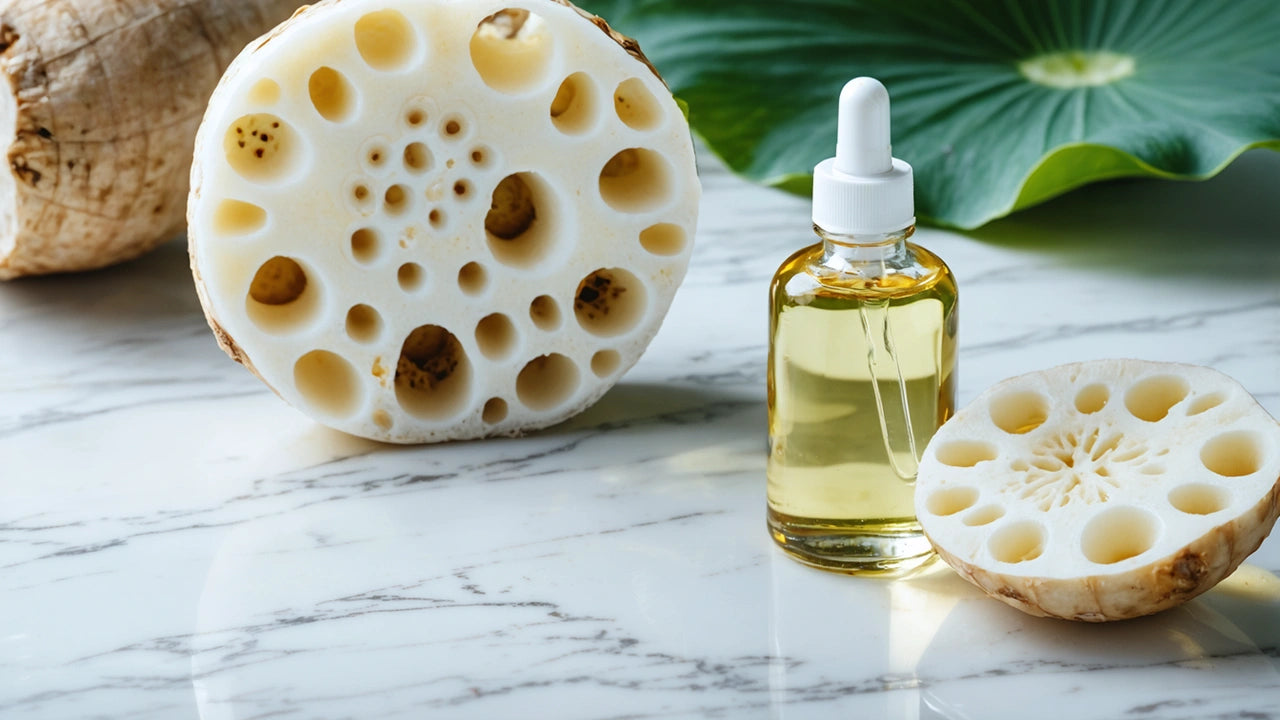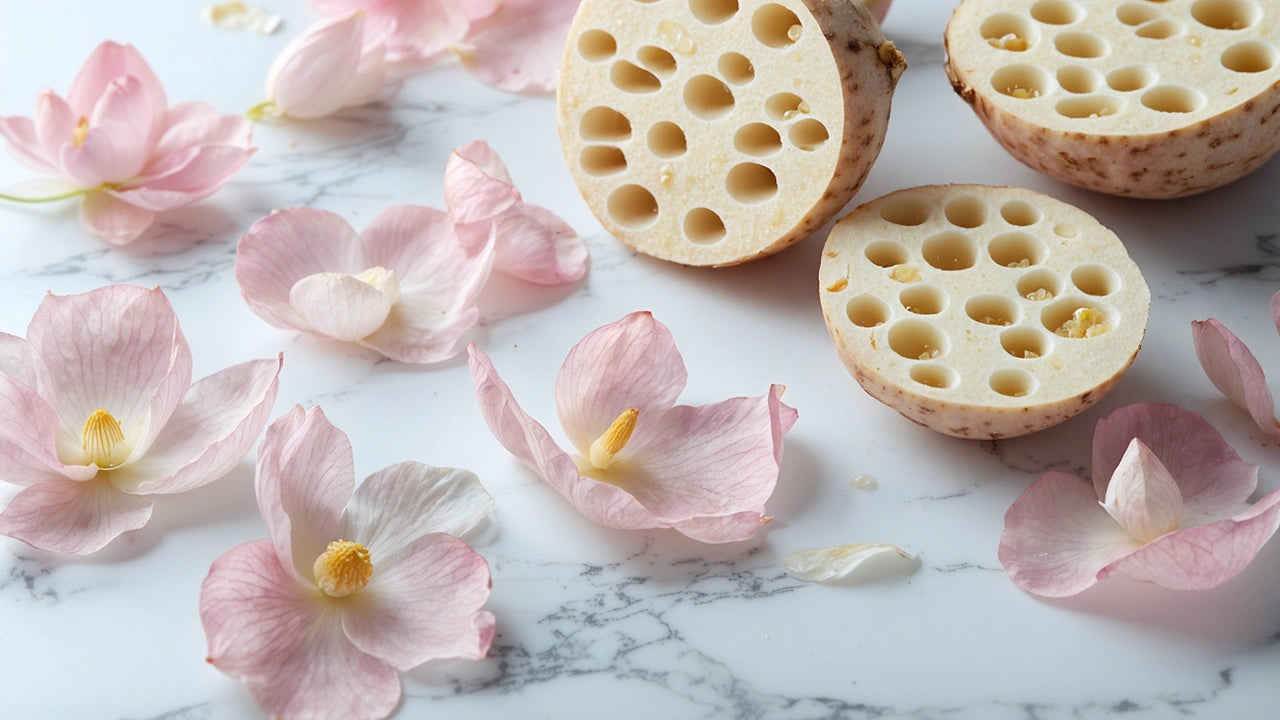
Lotus root extract is a plant-derived brightening active harvested from the submerged rhizome of Nelumbo nucifera — the same sacred lotus revered across Indian and East Asian traditions for thousands of years. In modern skincare, its superpower lies in tyrosinase inhibition: it slows the enzyme responsible for triggering dark spot formation, making it one of the most promising gentle-brightening ingredients for hyperpigmentation-prone skin. Whether you've encountered it in a Korean ampoule or a traditional Ayurvedic formulation, lotus root deserves a permanent place in your routine.
What Is Lotus Root and Why Is K-Beauty Obsessed With It?
Long before lotus root appeared in Korean beauty labs, it was documented in Ayurvedic texts as a cooling, anti-inflammatory botanical used to calm inflamed skin and promote an even complexion. In India, every part of the lotus plant — petal, seed, leaf, and root — has held both ritual and medicinal significance for centuries. Korean cosmetic scientists, working within the broader hanbang tradition of plant-based formulation, recognised this heritage and began isolating the root's bioactive compounds for use in serums, essences, and masks.
Lotus in Indian Ayurveda vs Korean Cosmetic Science
In Ayurveda, the lotus rhizome — known as bisa — is classified as a pitta-pacifying ingredient: cooling, binding, and astringent. Korean cosmetic science has since confirmed many of these traditional properties through controlled study, identifying specific polyphenols responsible for its skin-evening and antioxidant actions. This makes lotus root a genuinely compelling bridge ingredient for Indian consumers who value both traditional botanical heritage and evidence-backed K-beauty formulation.
Active Compounds: Catechins, Quercetin, and Mucilage
Lotus root's brightening credentials come from three key compound groups:
- Catechins — polyphenolic antioxidants that neutralise free radicals generated by UV exposure and urban pollution.
- Quercetin — a flavonoid demonstrated to inhibit tyrosinase activity and reduce melanin synthesis at the cellular level.
- Mucilage — a natural polysaccharide gel that forms a film on skin, delivering immediate soothing and mild moisture-binding effects.
How Lotus Root Extract Is Derived for Skincare
The rhizome is harvested, dried, and subjected to water or ethanol extraction to concentrate its polyphenols. Reputable K-beauty formulation favours low-temperature extraction to preserve heat-sensitive flavonoids, ensuring the final ingredient retains its full activity profile. You'll find it listed on INCI declarations as Nelumbo Nucifera Root Extract.
5 Skin Brightening Benefits of Lotus Root Extract
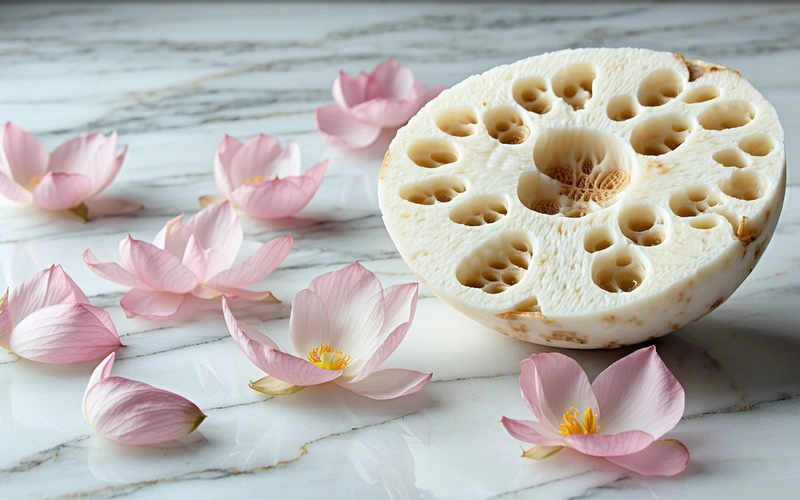
Lotus root benefits for skin include: inhibiting tyrosinase to reduce dark spot formation, delivering antioxidant protection against UV and pollution, soothing sensitive skin with natural mucilage, and tightening pores — making it a gentle yet effective brightening ingredient ideal for Indian skin tones.
1. Tyrosinase Inhibition: How Lotus Root Fades Dark Spots
Tyrosinase is the copper-containing enzyme that converts tyrosine into melanin. When skin is stressed by sun, hormonal changes, or post-inflammatory responses (think acne marks), tyrosinase goes into overdrive — producing excess melanin that surfaces as dark spots. Lotus root's quercetin binds to the copper ions within tyrosinase, effectively putting the brakes on that process. Research published in the Journal of Ethnopharmacology identified significant tyrosinase-inhibiting activity in Nelumbo nucifera rhizome extracts, supporting its traditional use as a complexion-evening botanical.
2. Antioxidant Protection from UV and Pollution Damage
India's urban environments combine intense UV radiation with high particulate pollution — a combination that accelerates oxidative stress and accelerates uneven pigmentation. The catechins in lotus root act as free-radical scavengers, intercepting reactive oxygen species before they can trigger inflammation or melanin overproduction. Cosmetic scientists note that polyphenol-rich botanical extracts are especially valuable in high-pollution climates precisely because they support the skin's own antioxidant defences.
3. Hydration and Soothing for Sensitive Indian Skin
Lotus root's natural mucilage creates a lightweight, film-forming layer that reduces transepidermal water loss without heaviness — ideal in India's humid coastal climates and harsh dry-season conditions alike. For Fitzpatrick III–V skin types, which are more prone to post-inflammatory hyperpigmentation, the anti-inflammatory action of mucilage reduces the redness and irritation that so often leads to lasting dark marks.
4. Pore-Tightening and Texture-Refining Effects
The natural tannins in lotus root have a mild astringent action — they temporarily contract skin proteins, creating a visibly smoother, more refined skin surface. This makes lotus root a particularly good fit for oily and combination skin types that struggle with enlarged pores and an uneven texture in India's warmer months.
5. Gentle Brightening Without Compromise
Unlike aggressive peels or high-percentage vitamin C formulas, lotus root brightens through cumulative, low-irritation action. Dermatologists recommend gentle tyrosinase inhibitors specifically for darker skin tones because they reduce melanin synthesis upstream, without provoking the rebound hyperpigmentation that harsh actives can trigger in melanin-rich skin.
Lotus Root vs Other Brightening Ingredients: Where Does It Rank?
| Ingredient | Primary Action | Speed of Results | Irritation Risk | Best For |
|---|---|---|---|---|
| Lotus Root Extract | Tyrosinase inhibition + antioxidant | Gradual (4–8 weeks) | Very low | Sensitive, darker skin tones, daily use |
| Vitamin C (Ascorbic Acid) | Antioxidant + melanin synthesis block | Moderate (4–6 weeks) | Moderate at higher % | Dull skin, oxidative damage |
| Niacinamide | Melanosome transfer inhibition | Gradual (6–8 weeks) | Low | Pores, texture, dark spots |
| Alpha Arbutin | Tyrosinase inhibition | Moderate (4–6 weeks) | Low | Spot-targeted brightening |
Lotus Root vs Vitamin C for Brightening
Vitamin C is arguably the best-studied brightening ingredient, but it can cause tingling, oxidation instability, and, in some cases, a paradoxical darkening in Fitzpatrick IV–VI skin when used at high concentrations. Lotus root works at a lower irritation threshold, making it an excellent pairing or a gentler alternative for reactive skin — especially during India's summer months when heat compromises the skin barrier.
Lotus Root vs Niacinamide for Dark Spots
Niacinamide works downstream of melanin production — it blocks the transfer of melanin-containing vesicles (melanosomes) from pigment cells to skin cells. Lotus root, by contrast, works upstream by reducing how much melanin is produced in the first place. Used together, they create a complementary dual-action brightening approach. For a deep dive into how niacinamide targets pigmentation specifically, read our guide on niacinamide for hyperpigmentation on Indian skin.
Why Lotus Root Is Gentler for Sensitive Skin Types
Unlike exfoliating acids or retinoids, lotus root does not disrupt the skin barrier or accelerate cell turnover. It simply reduces the enzymatic driver of pigmentation — which is why it's especially safe for skin that reacts to stronger actives, including acne-prone and post-procedure skin.
How to Use Lotus Root in Your Skincare Routine
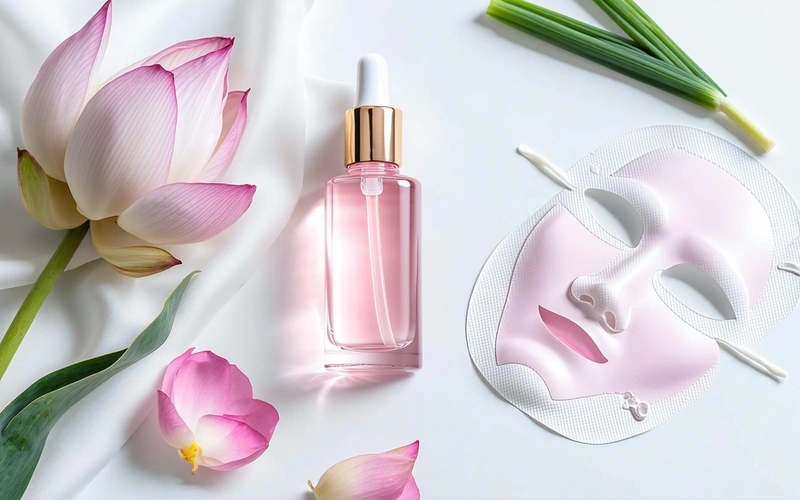
Toner, Serum, or Mask: Which Format Is Best?
Lotus root works across multiple formats, and the best choice depends on your skin goals:
- Toner/essence: Ideal for daily priming and lightweight, cumulative brightening — apply on cleansed skin before serums.
- Serum: Higher concentration for targeted dark spot work; suitable for morning and evening use.
- Sheet mask: Best for a weekly brightening reset. For an immediate radiance boost, the Brightening & Skin Clarifying Sheet Mask with Cherry Blossom pairs botanical brightening actives with a 20-minute at-home treatment.
Morning vs Evening: When to Apply Lotus Root Products
Lotus root is photostable, meaning UV exposure doesn't degrade it or create irritating by-products. This makes it safe for both morning and evening use. In the morning, layer it under SPF; in the evening, follow with a richer moisturiser to support the skin's overnight repair cycle.
Layering Lotus Root with Vitamin C and Niacinamide
For a complete brightening routine, consider lotus root at the toner/essence step, Yuzu Vitamin C serum in the morning, and niacinamide in the evening. The Advanced Brightening Kit from Quench Botanics is formulated around exactly this complementary layering philosophy — bringing together botanical brightening actives for a full morning-to-night glow routine. For more inspiration on K-beauty ingredient pairings, explore our roundup of 6 Korean skincare products for soft glowing skin.
Is Lotus Root Safe for Indian Skin? A Dermatology Perspective
Sensitivity Profile for Darker Skin Tones
Lotus root has an excellent safety profile across all skin tones. For Fitzpatrick III–V skin types — the range that encompasses most Indian skin — the chief concern with brightening actives is triggering post-inflammatory hyperpigmentation (PIH) through irritation. Because lotus root's mechanism is enzymatic inhibition rather than physical exfoliation or cellular acceleration, the risk of irritation-driven PIH is exceptionally low.
Patch Testing and Introducing Lotus Root Gradually
Even gentle botanicals can occasionally cause sensitivity in highly reactive skin. Apply a small amount to the inner arm for 24–48 hours before incorporating it into your full facial routine. Most users can begin daily use immediately, but if your skin is currently compromised — active breakouts, sunburn, or a disrupted barrier — give it a week to stabilise first.
Which Skin Types Benefit Most in Indian Climate
In India's predominantly humid and UV-intense climate, lotus root suits oily and combination skin especially well — its tannins manage sebum while its antioxidants defend against the daily environmental load. Dry skin types benefit from it in serum or essence formats rather than clay-based products. It's also an ideal year-round ingredient because it lacks the photosensitising effect of some AHAs.
The Quench Botanics Approach to Lotus Root Skincare
At Quench Botanics, our formulation philosophy is rooted in what we call The Quench Botanics Botanical Method — sourcing plant actives with proven ethnobotanical heritage and pairing them with the precision of Korean cosmetic science to deliver results without compromising on gentleness. Lotus root exemplifies this approach perfectly: a botanical that Indian tradition and K-beauty science both endorse, brought together in formulations designed specifically for the needs of Indian skin — its Fitzpatrick range, its climate stresses, and its tendency toward pigmentation and sensitivity.
Our Cherry Blossom brightening range and Yuzu Vitamin C line were built around the same principle: that the gentlest path to glass skin isn't aggression, it's intelligent botanical pairing. Lotus root, with its quiet enzymatic precision, fits seamlessly into that story.
Frequently Asked Questions About lotus root benefits for skin brightening
What are the benefits of lotus root for skin brightening?
Lotus root extract is rich in vitamin C, niacin, and antioxidant flavonoids that work together to visibly brighten skin and reduce dullness. It helps inhibit melanin production, making it effective for fading dark spots, uneven tone, and post-acne marks. Its anti-inflammatory properties also calm redness, while natural polyphenols protect against free radical damage — one of the leading causes of premature skin darkening. Regular use supports a more luminous, even-toned complexion over time.
Does lotus root brighten skin noticeably?
Yes, lotus root does brighten skin — and it does so through multiple mechanisms rather than a single action. Its natural vitamin C content suppresses tyrosinase, the enzyme responsible for melanin production, while flavonoids neutralise oxidative stress that triggers discolouration. Unlike harsh chemical brighteners, lotus root works gently and progressively, making it especially suitable for those who want visible brightening without sensitising the skin barrier. Most users notice a gradual imp
How is lotus root used in Korean skincare?
In Korean skincare, lotus root is primarily used as a botanical extract infused into essences, serums, and sheet masks to deliver concentrated brightening and antioxidant benefits. K-beauty formulators value it for its ability to enhance skin luminosity without disrupting the skin barrier — a core principle of the Korean skincare philosophy. It is often layered with hydrating actives like hyaluronic acid or soothing ingredients like centella asiatica, making it a versatile ingredient across mult
Is lotus root good for hyperpigmentation on Indian skin?
Lotus root is particularly well-suited for hyperpigmentation concerns common in Indian skin tones, including sun-induced dark spots, post-inflammatory hyperpigmentation (PIH) from acne, and melasma. Indian skin, which tends to have higher melanin activity, benefits from lotus root's gentle tyrosinase-inhibiting action — it reduces excess pigment without causing the irritation or rebound darkening that stronger actives like high-percentage AHAs or hydroquinone can trigger. Its anti-inflammatory p
How long does it take to see results from lotus root extract in skincare?
Most people begin to see early brightening and improved radiance from lotus root extract within 3–4 weeks of consistent daily use. Visible reduction in dark spots and hyperpigmentation typically takes 6–8 weeks, as the skin's natural cell turnover cycle needs time to surface newer, more evenly pigmented cells. Results accelerate when lotus root is paired with SPF during the day — sun protection prevents new pigmentation from forming while the extract works to fade existing discolouration beneath
Discover Quench's Brightening Botanical Range
Ready to add lotus root's gentle, science-backed brightening power to your routine? Quench Botanics brings together the best of K-beauty botanical formulation and Indian skin expertise — so your glow-up is built on real ingredients, not just good marketing.
- For a targeted approach to dark spots and hyperpigmentation, the Anti-Pigmentation Duo pairs complementary brightening actives for a complete two-step solution.
- Explore the full Advanced Brightening Kit for a curated morning-to-night brightening routine built on botanical science.
Your brightest skin starts with the right botanicals — and Quench Botanics has done the ingredient work for you.