Tinted Sunscreen for Indian Skin Tone: The Definitive Guide
Tinted sunscreen for Indian skin tone is a broad-spectrum SPF formula that blends UV filters with iron oxide pigments to simultaneously protect the skin from sun damage and provide sheer, skin-evening coverage — without leaving behind the dreaded white cast. If you have a medium-to-deep Indian complexion and have ever skipped sunscreen because it turned your face grey, a tinted SPF is the game-changer your routine has been waiting for. India's UV index regularly reaches 10–11 between March and September, making daily, properly applied SPF not optional — but the formula you choose matters enormously for how consistently you'll actually use it.
What Is Tinted Sunscreen and How Is It Different from Regular SPF?
Regular sunscreens — even excellent ones — are formulated purely to absorb or reflect UV radiation. A tinted sunscreen does everything a regular SPF does, and then goes further: it adds iron oxide pigments that both neutralise white cast on darker skin tones and provide an additional layer of protection against the visible light spectrum. Think of it as your SPF evolving from a shield into a multitasker.
Tinted SPF vs Regular Sunscreen: The Key Differences
| Feature | Regular Sunscreen | Tinted Sunscreen |
|---|---|---|
| UV Protection (UVB/UVA) | ✔ Yes | ✔ Yes |
| Visible light / HEV protection | ✘ No | ✔ Yes (via iron oxides) |
| White cast on dark skin | Often present | Neutralised by pigments |
| Light coverage / skin-evening | None | Sheer, buildable tint |
| Replaces foundation/BB cream? | No | On light-coverage days, yes |
How Iron Oxides in Tinted Sunscreen Protect Against Visible Light
Tinted sunscreen for Indian skin tone combines SPF 50 PA++++ UV protection with iron oxides that neutralise white cast and shield melanin-rich skin from visible light — making it the ideal daily SPF choice for medium to deep Indian complexions.
Iron oxides are the same mineral pigments found in cosmetics and foundations — but in a tinted SPF, they do double duty. Research published in the Journal of the American Academy of Dermatology found that iron oxide–containing sunscreens significantly reduced visible-light-induced pigmentation in patients with melasma compared to regular sunscreens. For Indian skin, where post-inflammatory hyperpigmentation (PIH) and melasma are among the most common concerns, this additional layer of visible-light defence is not a bonus — it is essential.
India's proximity to the equator means UV index levels routinely exceed 9 during summer months across cities like Mumbai, Chennai, Hyderabad, and Delhi. A formula that protects across the full radiation spectrum — UVB, UVA, and visible light — is the smartest daily defence you can apply.
Why Indian Skin Tones Need a Tinted Sunscreen
The White Cast Problem: Why It Hits Darker Skin Harder
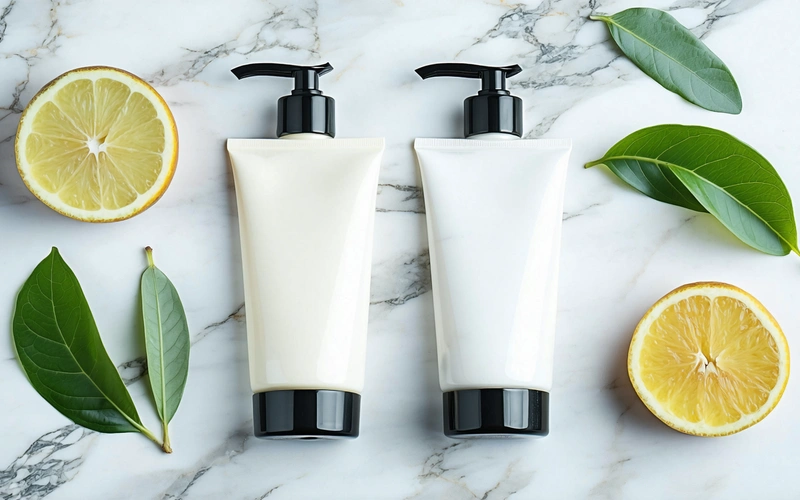
White cast is not a myth or an overreaction — it is physics. Mineral UV filters like zinc oxide and titanium dioxide work by physically scattering light. On fair skin, this scattering is less visible; on medium-to-deep Indian skin tones (Fitzpatrick III–V), the same scatter creates an obvious, ashy, grey-white finish that looks nothing like healthy skin. The result? Millions of Indian consumers skip SPF entirely or apply far less than the protective dose — leaving their skin genuinely exposed.
Iron oxides in tinted formulas absorb the excess light scatter and add warmth back into the finish, counteracting that ghostly effect. The Ultra Light SPF 50+ PA++++ Sunscreen with Avocado Vitamins C & E from Quench Botanics is designed precisely around this problem — a formula that sits invisibly on medium Indian skin tones while delivering full-spectrum protection.
Visible Light and Hyperpigmentation in Fitzpatrick IV–VI Skin
Here is something most sunscreen conversations miss: UV rays are not the only photon-driven trigger for pigmentation. Visible light — the part of the spectrum you can actually see — has been shown to stimulate melanin production independently of UV radiation. Cosmetic scientists note that in individuals with Fitzpatrick IV–VI skin, visible light exposure can exacerbate melasma and cause persistent hyperpigmentation even when UV protection is excellent. This means sitting near a bright window, working under fluorescent office lighting, or spending time on a screen-lit commute can all contribute to uneven skin tone if your SPF does not include iron oxide protection.
For the large population of Indian consumers navigating humid, high-UV cities while managing existing hyperpigmentation, melasma, or acne-related PIH, a tinted SPF with iron oxides is not a cosmetic upgrade — it is a clinically smarter choice.
Tinted SPF as a Light Coverage Everyday Base
Beyond protection, there is a genuine lifestyle benefit here. A well-formulated tinted sunscreen gives your skin a naturally even, healthy look — smoothing over minor redness, uneven tone, or blemish marks without the weight of foundation. For Indian consumers who deal with heat, humidity, and long commutes, the idea of one product that protects, evens, and feels weightless is simply the smarter way to start the day. Think of it as your K-beauty glass skin step zero — the base that makes everything look better, naturally.
How to Choose the Right Tinted Sunscreen for Your Indian Skin Tone
Understanding SPF 50 vs PA++++ Ratings for India
SPF — Sun Protection Factor — tells you how well a formula blocks UVB rays, the ones primarily responsible for sunburn and surface-level skin damage. SPF 50 blocks approximately 98% of UVB radiation. But in India, where UVA rays are intense year-round, the PA rating matters just as much. PA (Protection Grade of UVA) is a Japanese-origin rating system widely adopted across K-beauty and Indian sunscreens. The scale runs from PA+ to PA++++, with PA++++ indicating the highest available UVA protection. Dermatologists recommend choosing nothing less than PA+++ for daily Indian use, with PA++++ being the gold standard for those managing hyperpigmentation, melasma, or post-acne marks.
The bottom line: always look for SPF 50 PA++++ on your tinted sunscreen — this combination means you are protected against both UVB (burns, cell damage) and UVA (ageing, pigmentation) at the highest efficacy available in over-the-counter products.
Matching Tint Shade to Indian Medium and Deep Tones
Unlike foundation, tinted sunscreens do not come in 40 shades — and they are not supposed to. The best formulas use a universal-tone approach: a warm, neutral-beige tint with enough iron oxide concentration to blend sheerly across a range of medium to deep Indian skin tones. When selecting a tinted SPF, look for descriptions like "universal tint", "golden beige", or "warm neutral" — and avoid formulas described as "light" or "fair", which are often designed for lighter Western skin and will look powdery or mismatched on deeper complexions.
If you are unsure, the best approach is to trial a smaller size first. The Mini Ultra Light SPF 50+ PA++++ Sunscreen lets you test the texture and tint on your actual skin before committing to a full-size bottle — a smart move when trying any new SPF formula.
Texture: Gel, Lotion, or Stick — Which Suits Indian Climate?
Texture is not a vanity consideration — it directly affects how much SPF you apply and how often you reapply. In India's humid tropical climate (think Mumbai, Bengaluru, Kolkata, or Chennai in summer), heavy lotion textures can feel suffocating and prompt under-application. For oily and combination skin types, a lightweight gel or fluid-lotion hybrid absorbs quickly, controls shine, and feels breathable even in 35°C heat. Stick formats are excellent for targeted reapplication over the nose and forehead mid-day. For dry skin in drier climates (Delhi winters, Rajasthan) a creamier lotion texture provides additional emollient comfort. The universal recommendation for Indian summer skin: go as lightweight as possible without compromising on SPF dose.
Quench Botanics Ultra Light Tinted SPF 50 PA++++: Built for India
At Quench Botanics, our formulation philosophy — what we call the Quench Botanics Botanical Method — is rooted in combining clinically validated actives with high-performance botanicals that work in harmony with your skin rather than simply sitting on top of it. Our Ultra Light Tinted SPF 50+ PA++++ is the product that brings this philosophy to your daily sun protection step: a featherweight fluid that protects, evens, and nourishes in a single application.
Avocado Vitamins C & E: Why These Botanicals Belong in Your SPF
Avocado is more than a millennial brunch staple. Cold-pressed avocado oil is exceptionally rich in oleic acid, beta-carotene, and fat-soluble vitamins C and E — a trio that works synergistically in a sunscreen context. Vitamin E (tocopherol) is a potent antioxidant that neutralises free radicals generated by UV exposure — free radicals that UV filters alone cannot fully eliminate. Vitamin C supports collagen synthesis and helps fade existing pigmentation over time. Together, they transform a passive UV shield into an actively skin-repairing formula.
This botanical pairing also pairs beautifully with a brightening skincare routine. If you are building toward a more radiant, even-toned complexion, the Bravocado Brightening Wonder Pair is a complementary duo that works with the avocado SPF to target dullness and uneven skin tone from multiple angles.
Lightweight Enough for Oily Indian Summer Skin
Formulated as a fluid-lotion hybrid, the Quench Botanics tinted SPF absorbs in seconds without balling, pilling, or sitting on the skin's surface. It is non-comedogenic — meaning it will not clog pores — and its matte-satin finish makes it genuinely wearable for oily and combination skin types through a full Indian summer day. No heavy fragrance. No greasy residue. Just a clean, protected, naturally even complexion that works whether you are heading to a morning meeting or a weekend market.
How to Apply Tinted Sunscreen Correctly for Maximum Protection
The Two-Finger Rule and Why Most People Under-Apply SPF
Most people apply approximately 25–50% of the SPF dose needed to achieve the stated protection factor. The classic two-finger rule is one of the easiest ways to correct this: dispense sunscreen along the length of your index and middle fingers, then apply this amount to your face and neck. This approximates the 2 mg/cm² application density used in clinical SPF testing. Under-applying a SPF 50 product can effectively reduce your real-world protection to SPF 15 or lower.
- Step 1: Moisturise first. Apply your moisturiser and allow it 60 seconds to absorb before SPF — this prevents the tint from pulling unevenly across dry patches.
- Step 2: Apply with two fingers' worth. Dot across forehead, nose, cheeks, and chin, then blend outward gently using fingertips or a damp sponge.
- Step 3: Do not forget ears, neck, and hands. These are among the most sun-exposed and most neglected areas on Indian commuters and outdoor workers.
- Step 4: Reapply every 2 hours outdoors. For those working outdoors or commuting in direct sun, reapplication is not optional — SPF is photodegraded over time.
Layering Tinted Sunscreen Over Moisturiser
Tinted SPF works best as the final step in your skincare routine, applied after moisturiser but before any colour cosmetics. Resist the urge to mix it into your moisturiser — diluting the formula reduces the concentration of UV filters and compromises protection. If you wear the tinted SPF alone (on no-makeup days), it offers enough skin-evening coverage to stand on its own beautifully.
At the end of the day, a tinted SPF with iron oxides is slightly more resistant to regular cleansing than a clear SPF — which makes thorough removal important. We always recommend a proper double-cleanse routine: learn how to double cleanse based on your skin type to make sure your tinted SPF is fully removed and your pores stay clear.
Tinted Sunscreen vs BB Cream vs Foundation: What's the Difference?
With so many skin-tinting products on the market, it is worth understanding exactly where tinted sunscreen fits — and why it wins on a skin-health basis.
| Product | Primary Purpose | SPF Protection | Skin Benefit Actives | Best For |
|---|---|---|---|---|
| Tinted Sunscreen | Sun protection + sheer coverage | ✔ Full SPF (50 PA++++) | Yes (antioxidants, botanicals) | Daily use, active skin-first routines |
| BB Cream | Coverage + basic hydration | Sometimes (often SPF 15–30) | Variable | Light coverage days with SPF stacked on top |
| Tinted Moisturiser | Hydration + tint | Rarely adequate | Variable | Very low-sun-exposure days only |
| Foundation | Full or buildable coverage | ✘ Not a substitute for SPF | Rarely | Events, full-coverage looks with SPF applied beneath |
The K-beauty approach has always prioritised skin health over cosmetic coverage — and the philosophy is simple: protect first, perfect second. A tinted SPF 50 PA++++ is the only product in this list that genuinely earns its place as a skin-first, protection-first daily essential. And remember — SPF is a year-round commitment, not just a summer habit. If you are building a seasonal routine, take a look at our Winter Skincare Routine for Indian Skin to see how SPF integrates into a cooler-month regimen too.
Frequently Asked Questions About tinted sunscreen for Indian skin tone
What is tinted sunscreen for Indian skin tone?
Tinted sunscreen for Indian skin tone is a sun protection formula blended with skin-matching pigments designed to complement warm, dusky, and deep complexions without leaving a chalky or ashy finish. Unlike standard sunscreens that can look grey or white on darker skin, a well-formulated tinted SPF uses iron oxides and botanical actives to neutralise discolouration, even out tone, and shield skin from UVA/UVB rays — all in one lightweight step.
Does tinted sunscreen leave a white cast on dark skin?
A good tinted sunscreen should not leave a white cast on dark or medium-dark skin — and that's precisely what sets it apart from regular mineral SPFs. White cast is caused by high concentrations of zinc oxide or titanium dioxide sitting on the skin's surface. Tinted formulas counter this by incorporating iron oxide pigments that neutralise the grey-white tone and melt into deeper skin tones, making them a far better daily SPF choice for Indian, South Asian, and other melanin-rich complexions.
Is tinted sunscreen better than regular sunscreen for Indian skin?
Tinted sunscreen is generally a better daily choice for Indian skin because it offers everything regular SPF does — plus visible-light protection and a natural, skin-tone-enhancing tint. Regular sunscreens, especially mineral ones, can appear stark or ashy on warm and deep complexions. Tinted versions also contain iron oxides that help block high-energy visible (HEV) light, which research suggests can worsen hyperpigmentation and melasma — concerns particularly relevant to Indian skin types.
Can I use tinted sunscreen with my vitamin C serum?
Yes, tinted sunscreen layers beautifully over a vitamin C serum and the combination is actually a powerhouse pairing for Indian skin prone to hyperpigmentation. Apply your vitamin C serum first, let it absorb for 1–2 minutes, then follow with tinted SPF as the final step in your morning routine. Vitamin C boosts your skin's antioxidant defence while the tinted sunscreen blocks UV and visible light — together they deliver stronger protection against dark spots and uneven tone than either product
Does tinted sunscreen provide enough SPF protection?
Yes — tinted sunscreen provides full SPF protection as long as you choose a formula rated SPF 30 or higher and apply it generously. The tint is simply added through cosmetic pigments like iron oxides and does not dilute or interfere with the sunscreen's UV filters. For Indian skin exposed to intense tropical sun, dermatologists typically recommend SPF 50 PA++++ for broad-spectrum UVA and UVB coverage. The key is applying the right amount — roughly ¼ teaspoon for the face — and reapplying every t
Protect and Perfect Your Skin This Summer with Quench Botanics SPF
Your sunscreen should do more than just protect — it should work with your skin tone, not against it. If you have been skipping SPF because of white cast, greasy textures, or formulas that simply were not made with Indian skin in mind, Quench Botanics has built the answer. The Ultra Light Tinted SPF 50+ PA++++ with Avocado Vitamins C & E delivers full-spectrum UVB, UVA, and visible light protection in a featherweight, no-white-cast formula that looks and feels like nothing on your skin — until you see the difference it makes.
- Shop the Ultra Light SPF 50+ PA++++ Sunscreen with Avocado — your daily tinted sun protection, built for India.
- Try the Mini size first — test the tint and texture on your skin before going full size.
- Build a complete brightening routine with the Bravocado Brightening Wonder Pair — the perfect complement to your new tinted SPF.
Quench Botanics — Korean-inspired, botanically powered, and formulated for every shade of Indian skin.