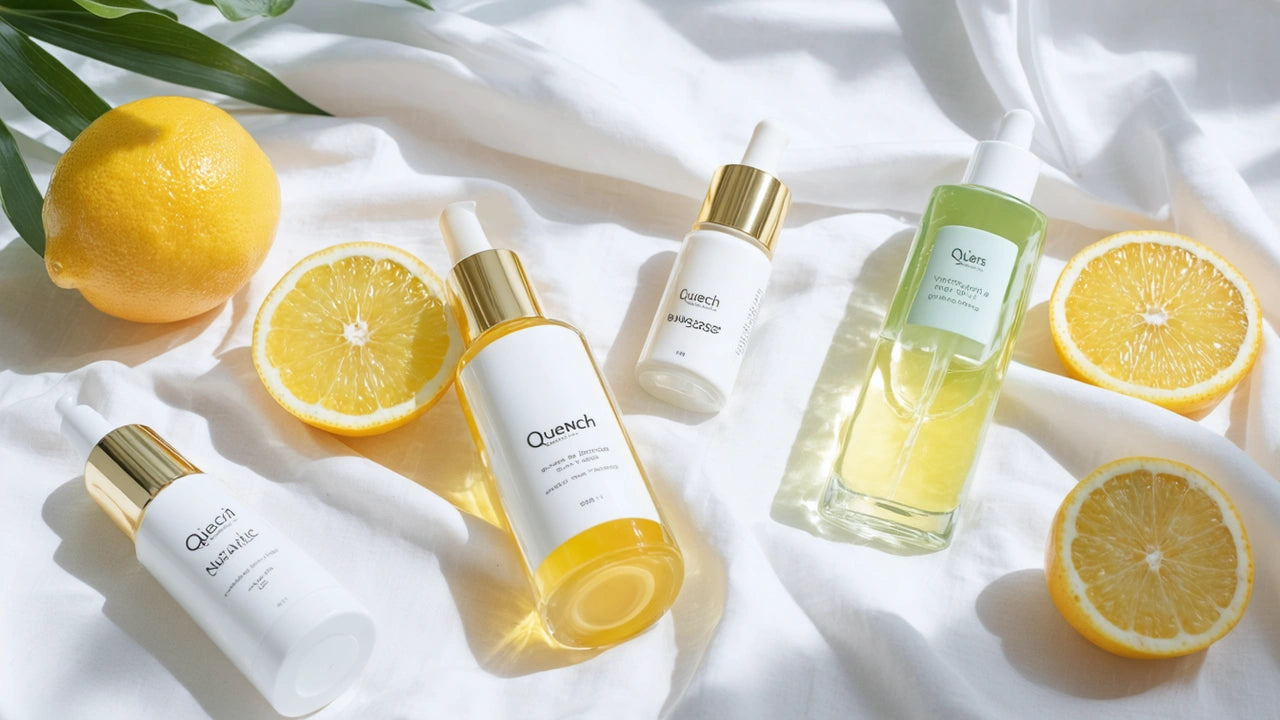

A summer skincare routine for India is a climate-adapted daily regimen that prioritises oil control, broad-spectrum UV protection, and lightweight hydration — because what works in January will absolutely betray you in May. India's peak summer months bring UV Index readings above 10, humidity levels that send your sebaceous glands into overdrive, and pollution that sits on your skin like a second layer. The fix? A streamlined four-step morning routine anchored by your Quench sunscreen collection and a Yuzu Vitamin C serum, plus a restorative double-cleanse night routine. Here's exactly how to build it.
Why Indian Summers Demand a Different Skincare Approach
Heat, humidity, and melanin-rich skin: the triple challenge
Indian skin types predominantly fall within Fitzpatrick III–V, meaning higher baseline melanin. That's a natural advantage against some UV damage — but it also means post-inflammatory hyperpigmentation (PIH) and sun-triggered tanning appear faster and linger longer. Pair that with May temperatures crossing 40°C and relative humidity above 70% in coastal and peninsular cities, and your skin is under compounding stress: excess sebum, enlarged pores, UV-induced oxidative damage, and a compromised skin barrier all happening at once.
Research published in the Indian Journal of Dermatology confirms that UVA exposure — the ray responsible for tanning and deeper skin ageing — remains intense even on overcast Indian summer days, making daily broad-spectrum SPF non-negotiable regardless of whether you step outdoors.
Why your winter routine fails in May
Rich creams, heavy oils, and occlusive formulas that felt perfect in December now clog pores, pill under SPF, and make your skin look greasy by 10 a.m. Dermatologists recommend switching to gel-textured, water-based formulas that deliver hydration without the lipid overload. The goal isn't less moisture — it's smarter moisture.
Step-by-Step: Your Quench Botanics Summer Morning Routine
The best skincare routine for Indian summers is a 4-step morning ritual: a gel cleanser to clear overnight sebum, a hydrating toner to prep the barrier, a Yuzu Vitamin C serum to brighten and defend against oxidative stress, and an SPF 50 PA++++ sunscreen as your final, non-negotiable shield — followed by a double cleanse and Snail Mucin repair at night.
-
Step 1: Lightweight Gel Cleanse
Start with a gentle, foaming gel cleanser that removes overnight sebum without stripping your acid mantle. The Foaming Face Wash with Yuzu Vitamin C does double duty here — the foaming base dissolves excess oil, while Yuzu extract (rich in natural citric and ascorbic acid derivatives) begins your brightening work at step one. Use lukewarm water; hot water disrupts the skin barrier on already heat-stressed skin.

-
Step 2: Hydrating Toner or Mist
Contrary to the myth that oily summer skin needs no hydration, dehydrated skin overproduces sebum to compensate. A lightweight, alcohol-free toner floods the skin with humectants — look for hyaluronic acid or beta-glucan on the INCI list — and preps a moist canvas so your serum absorbs properly. Pat, don't rub. -
Step 3: Yuzu Vitamin C Serum
This is the step that earns your glass skin. Yuzu (INCI: Citrus junos fruit extract) delivers Vitamin C in a gentler, more oxidation-stable form than pure L-ascorbic acid — critical in Indian summer heat, where open bottles of unstabilised Vitamin C can degrade within weeks. Apply 3–4 drops to damp skin, pressing gently into the cheeks, forehead, and chin. The antioxidant action neutralises free radicals generated by UV exposure before your SPF even has to work. For a deeper look at how to use Vitamin C to address existing sun tan, the Vitamin C Serum for Tan Removal: The Indian Summer Skin Guide breaks it down beautifully. -
Step 4: Quench Sunscreen — SPF 50 PA++++
The non-negotiable final step. Apply your sunscreen generously — the standard ¼ teaspoon for face and neck — at least 15 minutes before sun exposure. SPF 50 PA++++ means both UVB protection (the burn ray) and the highest available UVA protection rating under the Japanese PA system, which is the gold standard for Indian skin concerns like tanning and PIH. If you wear light-coverage makeup or prefer an evening-out effect, the tinted sunscreen option delivers all that protection with a soft, skin-tone-blurring finish — no white cast. Compare both options in our dedicated guide to tinted vs regular sunscreen for Indian skin.
The Science Behind Quench Sunscreen for Indian Skin
What PA++++ actually means for your UV exposure
SPF only measures UVB protection — the ray that burns. PA++++ measures UVA protection, the long-wave radiation that penetrates deeper into the dermis, drives pigmentation, and accelerates structural ageing. The PA system, developed by Japan's JCIA, uses ++++ as its highest tier, indicating a persistent pigmentation darkening (PPD) value of 16 or above. For Indian skin at Fitzpatrick III–V, where UVA-triggered melasma and tan accumulate rapidly, PA++++ isn't a premium — it's the baseline.
Cosmetic scientists note that hybrid sunscreens combining chemical UV filters (like Uvinul A Plus) with physical filters (zinc oxide or titanium dioxide) offer the broadest coverage and the most cosmetically elegant textures — avoiding the notorious white cast that has historically made physical SPFs unpopular with deeper Indian complexions.
Tinted vs untinted: which summer sunscreen is right for you?
| Feature | Tinted Sunscreen | Untinted Sunscreen |
|---|---|---|
| SPF / PA rating | SPF 50 PA++++ | SPF 50 PA++++ |
| White cast | None — skin-tone adaptive pigments | Minimal with hybrid formula |
| Best for | Uneven tone, no-makeup days, redness | Layering under foundation, all skin tones |
| Extra benefit | Iron oxides defend against visible light (HEV) | Lighter texture, easier reapplication |
How to Layer Yuzu Vitamin C for a Summer Glow
Morning vs evening Vitamin C use
Morning is the power slot for Vitamin C. Applied before SPF, it acts as a biochemical shield — neutralising the reactive oxygen species that UV and pollution generate on the skin surface. A study published in the Journal of Investigative Dermatology demonstrated that topical Vitamin C combined with SPF reduced UV-induced oxidative stress by significantly more than SPF alone. Evening use is still beneficial for brightening, but the morning window maximises its protective synergy with sunscreen.
Pairing Yuzu Vitamin C with SPF for maximum tan defence
Think of this duo as your summer skin's two-factor authentication. The Yuzu Vitamin C serum works at the cellular level, inhibiting tyrosinase activity to slow melanin synthesis before it starts. Your SPF works at the surface, physically and chemically blocking UV from reaching the skin in the first place. Together, they address tan defence from both ends — a pairing that the Korean skincare routine guide for Indian skin recommends as a summer non-negotiable.

If your skin is on the oilier side, consider swapping a heavy moisturiser for the Oil Control Moisturizer with Chia Seeds Omega-3 as your hydration step — its omega-3 fatty acids (linolenic acid) regulate sebum production while delivering anti-inflammatory benefits, keeping the T-zone in check through the most humid months.
Evening Repair: Your Summer Night Routine
Double cleanse to remove SPF fully
Sunscreen — especially high-SPF formulas — bonds to the skin surface and doesn't lift with a single water-based wash. Leaving it on overnight means clogged pores and a weakened barrier by morning. The double cleanse method, a K-beauty cornerstone, starts with an oil-based first cleanser (a cleansing balm works brilliantly here) to dissolve SPF and sebum, followed by your foaming gel wash to remove any residue. For a full breakdown of why this matters for Indian skin specifically, our guide on cleansing balm vs micellar water for double cleanse is essential reading.
Snail Mucin serum for barrier recovery
Once the skin is clean, it's time to repair. Heat, UV, and pollution collectively disrupt the skin's lipid matrix and deplete natural moisturising factors (NMFs). The 96% Snail Mucin Collagen Boost Serum earns its place in The Quench Botanics Method as the overnight workhorse: snail secretion filtrate (INCI: Snail Secretion Filtrate) contains glycoproteins, allantoin, and glycolic acid that collectively accelerate cell turnover, reinforce the barrier, and fade the micro-pigmentation events triggered by daily UV exposure. Apply 4–5 drops to clean skin, let it absorb fully, then seal with a lightweight moisturiser if your skin feels tight.
Frequently Asked Questions About summer skincare routine India 2026
What is the best skincare routine for Indian summers?
The best skincare routine for Indian summers focuses on lightweight hydration, antioxidant protection, and broad-spectrum SPF — applied every morning without fail. Start with a gentle foaming cleanser to clear sweat and excess sebum, follow with a Vitamin C serum like Quench's Yuzu Brightening Serum to fight UV-triggered pigmentation, then lock it all in with a non-greasy sunscreen of at least SPF 50 PA++++. In India's heat and humidity, skipping heavy creams and doubling down on SPF is the sing
Which sunscreen is best for oily skin in Indian heat?
For oily skin in Indian heat, you need a sunscreen that is water-based, non-comedogenic, and matte-finish — so it protects without adding grease or triggering breakouts. Quench Botanics' sunscreen is formulated with a feather-light texture that controls shine and sits invisibly under makeup, making it ideal for humid Indian climates. Look for labels that say 'oil-free,' 'gel-based,' or 'sebum-control' alongside SPF 50 PA++++ for complete UVA and UVB defence in high-UV-index Indian summers.
Does Quench Botanics have a tinted sunscreen for summer?
Quench Botanics offers sunscreen options designed to blend seamlessly with Indian skin tones, giving a natural, skin-like finish that works as a light complexion evening step. While a dedicated tinted SPF sits within the Quench innovation pipeline, their current sunscreen formula applies sheer and adapts to deeper skin undertones without leaving the white cast common to many Western sunscreens — a known pain point for Indian consumers. Pairing it with the Yuzu Vitamin C Serum underneath adds a l
How do I maintain glass skin in summer in India?
Achieving glass skin in Indian summers requires consistent exfoliation, deep yet lightweight hydration, and rigorous sun protection — all three working together. Gently exfoliate two to three times a week to clear dead cells worsened by sweating, then layer a hydrating Vitamin C serum (Yuzu extract is especially effective) to boost luminosity and target uneven tone. Finish every morning with a high-SPF sunscreen to prevent the UV-triggered dullness and hyperpigmentation that are the biggest enem
Should I use a Vitamin C serum in Indian summer?
Yes — Indian summers are actually one of the best times to use a Vitamin C serum, because UV exposure is at its peak and Vitamin C is a proven antioxidant that neutralises free radical damage caused by sun exposure. The key is to apply it in the morning underneath your sunscreen, not instead of it, so the two ingredients work synergistically as a dual-layer defence. Quench Botanics' Yuzu Vitamin C Serum uses yuzu citrus — a gentler, highly stable form of Vitamin C — making it suitable even for s
Build Your Summer Shield with Quench Botanics
India's summer is relentless — your skincare doesn't have to be complicated to keep up. The Quench Botanics summer routine keeps it to four focused steps in the morning and two at night, with every formula chosen for the specific realities of Indian heat, humidity, and melanin-rich skin. Start with the Quench sunscreen collection to find your perfect SPF match, then build your complete summer shield with Yuzu Vitamin C, Snail Mucin, and targeted oil control. Your K-glow isn't seasonal — it's a year-round commitment, and Quench Botanics is here for every step of it.