
Niacinamide Serum for Pigmentation on Indian Skin: 30-Day Guide
Niacinamide — the skin-brightening form of Vitamin B3 — is one of the most well-researched actives for reducing pigmentation, post-acne dark spots, and uneven skin tone. For Indian skin in particular, it offers a gentle yet measurable path to a clearer, more even complexion without the irritation risk of stronger acids. If you've ever wondered what a single serum ingredient can realistically do in 30 days, this guide is your answer.
Why Pigmentation and Dark Spots Are So Common on Indian Skin
If it feels like every pimple leaves a shadow, you're not imagining it. Indian skin, which sits predominantly in the Fitzpatrick III–V range, contains more active melanocytes — the cells responsible for producing skin pigment. This is brilliant for natural UV protection, but it also means any inflammation (a breakout, a scratch, even aggressive scrubbing) can trigger excess melanin production and leave behind a dark mark long after the original wound has healed.
Post-Acne Hyperpigmentation (PIH) on Fitzpatrick III–V Skin
Post-inflammatory hyperpigmentation, or PIH, is not a scar — it's a discolouration response. When skin in the Fitzpatrick III–V range experiences inflammation from acne, the melanocytes overreact. The result: flat, brown or grey-brown patches that can linger for months without targeted care. Understanding the full acne cycle for Indian skin is the first step, but treating what it leaves behind requires a different approach entirely — which is where niacinamide comes in.
Sun-Induced Pigmentation in the Indian Climate
India's tropical and semi-arid climate means UV exposure is year-round and intense, even on overcast days. Without daily SPF, any existing dark spots are continually reinforced — making them harder to shift. Sun-induced pigmentation compounds PIH, which is why any brightening strategy must combine an active ingredient like niacinamide with consistent sun protection.
What Does Niacinamide Actually Do for Pigmented Indian Skin?
Niacinamide serum works on pigmentation for Indian skin by inhibiting the transfer of melanin from pigment cells to skin cells, visibly reducing post-acne dark spots and uneven tone over 4–8 weeks — especially effective when combined with Snail Mucin for barrier support and SPF for daily protection.
Melanin Transfer Inhibition: How It Works
Research published in the British Journal of Dermatology found that 5% niacinamide significantly reduced hyperpigmentation and increased skin lightness after 8 weeks of use — outperforming some topical Vitamin C formulations in tolerability. The mechanism is precise: niacinamide doesn't bleach or strip pigment; it intercepts the signal that moves pigment from its production site into the surface skin cells. Less pigment delivered to the surface means a visibly more even tone over time.
Pore Minimisation and Sebum Regulation
For oily and combination skin types — extremely common in India's humid climate — niacinamide for pores is an underrated benefit. It regulates sebum excretion at the glandular level, reducing the appearance of enlarged pores and preventing the clogged follicles that lead to more breakouts and, consequently, more PIH.
Anti-Inflammatory Action for Acne-Prone Skin
Cosmetic scientists note that niacinamide's anti-inflammatory properties make it uniquely suited to acne-prone skin: it calms existing inflammation (reducing the severity of breakouts) while simultaneously fading the marks they leave. This dual action makes it more practical for daily use than acids like AHAs, which can sensitise skin and worsen PIH if used without adequate SPF.
Niacinamide + Snail Mucin: Why This Combination Outperforms Solo Niacinamide
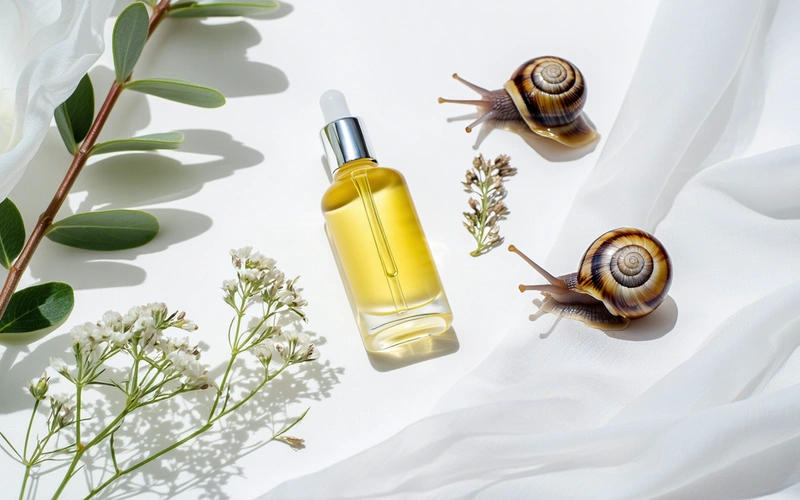
A standalone niacinamide serum brightens. A niacinamide serum formulated with Snail Mucin brightens and rebuilds. This is the core idea behind the Quench Botanics Botanical Method — pairing clinically-relevant actives with barrier-restorative botanicals so skin improves on multiple dimensions at once, not just one.
How Snail Mucin Strengthens the Barrier While Niacinamide Brightens
Snail Mucin (Snail Secretion Filtrate) is rich in glycoproteins, hyaluronic acid, and allantoin — a combination that accelerates cell renewal, deeply hydrates, and soothes irritated skin. When the skin barrier is compromised (think: post-breakout, post-sun exposure, or after using exfoliating acids), pigmentation tends to worsen because inflammation is ongoing. Snail Mucin addresses that inflammation at the barrier level, creating a calmer skin environment in which niacinamide's brightening action can actually take hold.
The 96% Snail Mucin Collagen Boost Serum with Niacinamide & Hyaluronic Acid from Quench Botanics combines these two actives in a single lightweight serum — making the routine simpler without sacrificing efficacy.
The 30-Day Synergy: Week-by-Week Skin Tone Improvement
Here's what you can realistically expect when using a Snail Mucin + Niacinamide serum consistently:
- Week 1: Skin feels more hydrated and calm. Redness around active breakouts begins to subside as Snail Mucin soothes inflammation.
- Week 2: Pores appear slightly refined. Existing dark spots haven't faded dramatically yet, but new breakout marks look less intense than usual.
- Week 3: Uneven tone begins to shift. Post-acne marks from 4–6 weeks ago show visible lightening. Skin texture smooths noticeably.
- Week 4: The cumulative brightening effect is visible in natural light. Complexion looks more uniform; existing dark spots are lighter than baseline.
Consistency is the only non-negotiable here — niacinamide does not produce overnight results, but it produces reliable ones.
How to Use Niacinamide Serum in Your Daily Indian Skincare Routine

AM vs PM: When Does Niacinamide Work Best?
Niacinamide is stable in both light and heat, making it a rare active that performs equally well morning and evening. In the AM routine, apply it after your toner and before SPF — it primes the skin and helps your sunscreen sit more evenly. In the PM routine, layer it after cleansing and before your moisturiser for overnight brightening and repair.
For Indian skin dealing with both pigmentation and oiliness, an AM application is particularly effective: niacinamide controls midday shine while SPF prevents UV from darkening existing spots.
Layering With Vitamin C, SPF, and Exfoliants
The pairing people ask about most is niacinamide and Vitamin C together — and it's far less complicated than the internet makes it seem. Modern, pH-stable Vitamin C formulations layer well with niacinamide without any adverse reaction. Use Vitamin C first (it works at a lower pH), allow it to absorb for a minute, then follow with your niacinamide serum. For the full breakdown, read our guide on can you use niacinamide with Vitamin C — it covers the science, the sequencing, and the myths.
When using exfoliating acids (BHAs, AHAs), apply them at night and use niacinamide in the morning to avoid over-layering actives on the same skin session.
Your 30-Day Niacinamide Skin Tone Correction Plan
| Week | Routine Adjustment | Expected Skin Response |
|---|---|---|
| Week 1 | Once daily (PM), niacinamide serum after toner | Improved hydration, reduced redness, calmer barrier |
| Week 2 | Add AM application; introduce SPF 50+ daily | Pores appear refined; new marks fade faster |
| Week 3 | Maintain AM + PM; consider adding Vitamin C in AM before serum | Visible brightening on older dark spots; smoother texture |
| Week 4 | Assess progress; maintain routine or add a weekly exfoliant | Noticeably more even skin tone; reduced PIH intensity |
Dermatologists recommend a minimum of 8 weeks for full niacinamide results on established hyperpigmentation — but most users notice meaningful improvements within the first 30 days, particularly in skin texture, oil control, and inflammation reduction.
Common Niacinamide Myths Debunked for Indian Skin
Myth: You Can't Use Niacinamide With Vitamin C
This myth originates from outdated chemistry concerns about the two forming a compound called niacin — a reaction that requires temperatures far higher than any skincare routine reaches. At room temperature, with modern formulations, niacinamide and Vitamin C together are not only safe but complementary: one inhibits melanin production while the other neutralises the free radicals that trigger it. The combination is well-tolerated even on sensitive Indian skin types.
Myth: Higher Percentage Always Means Faster Results
Concentrations above 10% are more likely to cause flushing or irritation — especially on skin that's already dealing with an impaired barrier from acne or sun damage. Research consistently shows that 4–5% niacinamide delivers comparable brightening results to higher concentrations with significantly better tolerability. Start in the 4–10% range and prioritise formula quality over percentage.
Frequently Asked Questions About niacinamide serum for pigmentation Indian skin
What is a niacinamide serum for pigmentation on Indian skin?
A niacinamide serum for pigmentation on Indian skin is a lightweight, water-based treatment that uses Vitamin B3 (niacinamide) to visibly reduce dark spots, post-acne marks, and uneven skin tone — concerns especially prevalent in Fitzpatrick Type IV–VI skin tones. Indian skin produces more active melanin, making it more prone to hyperpigmentation from sun exposure, hormonal changes, and inflammation. Niacinamide works by blocking melanin transfer to skin cells, calming inflammation, and strength
How long does niacinamide take to work on dark spots?
Niacinamide typically takes 4–8 weeks of consistent daily use to show a visible reduction in dark spots and pigmentation. Early improvements — like a calmer, less inflamed complexion — can appear within the first 2 weeks, but meaningful fading of stubborn hyperpigmentation, especially post-acne marks common on Indian skin, requires sustained use closer to the 8-week mark. For best results, pair niacinamide with a broad-spectrum SPF 30+ sunscreen every morning, as UV exposure can counteract brigh
Is niacinamide serum safe for sensitive and acne-prone Indian skin?
Yes, niacinamide serum is widely considered one of the safest actives for sensitive and acne-prone Indian skin. Unlike exfoliating acids or retinoids, niacinamide does not cause photosensitivity, peeling, or irritation at standard concentrations of 5–10%. It actively reduces redness, regulates sebum production, and helps fade post-breakout hyperpigmentation — a persistent concern for acne-prone melanin-rich skin. Those with a compromised skin barrier or rosacea-prone skin can also benefit, as ni
What is the difference between niacinamide and kojic acid for pigmentation?
Niacinamide and kojic acid both target pigmentation, but they work through different mechanisms and suit different skin profiles. Niacinamide (Vitamin B3) blocks melanin transfer to skin cells and reduces inflammation, making it gentle enough for daily use on sensitive or acne-prone Indian skin. Kojic acid directly inhibits tyrosinase, the enzyme that triggers melanin production, and can deliver faster brightening results — but it carries a higher risk of irritation and sensitivity, especially o
Can I use niacinamide with Vitamin C in my skincare routine?
Yes, you can absolutely use niacinamide with Vitamin C — the old myth that they cancel each other out has been debunked by modern cosmetic science. The concern stemmed from older, unstabilised Vitamin C formulas, but today's stabilised derivatives (like ascorbyl glucoside or ethyl ascorbic acid) work harmoniously alongside niacinamide. For maximum efficacy, apply Vitamin C in the morning and niacinamide in the evening, or if using both at once, layer niacinamide after Vitamin C has fully absorbe
Start Your 30-Day Glow Reset with Quench Botanics
Ready to take the guesswork out of pigmentation care? The Anti-Pigmentation Duo from Quench Botanics pairs the 96% Snail Mucin Collagen Boost Serum with Niacinamide alongside a complementary brightening formula — everything you need for the 30-day plan above, in one simple set. Formulated for Indian skin tones, fragrance-conscious, and built on the Quench Botanics Botanical Method of pairing science-backed actives with real botanical support. Your clearest skin starts today.

