Monsoon Skincare Routine for Oily Skin India: The Humidity-Proof Protocol
A monsoon skincare routine for oily skin in India is a lightweight, humidity-aware regimen built around gel cleansers, water-based serums, oil-free SPF, and targeted Tea Tree actives — designed to prevent the fungal acne, clogged pores, and midday shine that tropical Indian humidity triggers. If your skin feels stickier, breaks out more along the jawline, and looks dull the moment the rains arrive, you're not imagining it. The 80–95% relative humidity that blankets most of India from June to September fundamentally changes how oily skin behaves, and your January routine simply won't survive July.

A monsoon skincare routine for oily skin in India should include: (1) a lightweight gel face wash like Matcha Green Tea, (2) a water-based serum instead of heavy moisturiser, (3) oil-free SPF every day including rainy days, and (4) a Tea Tree spot treatment for breakout prevention. Heavy creams, occlusive oils, and alcohol-heavy toners should be avoided to prevent fungal acne and clogged pores.
How the Indian Monsoon Changes Oily Skin (And Not for the Better)
The monsoon doesn't just make your hair frizzy — it rewires your skin's oil-water balance. Sebum thins, pores dilate, and the slick microclimate on your face becomes a breeding ground for breakouts. If you're already transitioning from a hot, dry pre-monsoon phase, our pre-monsoon skincare transition guide is a useful starting point, and you can also revisit our summer skincare routine for oily skin India to understand what to phase out as the rains arrive.
Humidity and sebum overproduction: the vicious cycle
Here's the counter-intuitive part: humid air doesn't reduce oil — it increases it. When trans-epidermal water loss slows down (because the surrounding air is already saturated with moisture), the skin's barrier signalling gets confused. Research published in the International Journal of Cosmetic Science has shown that sebum secretion rates increase by roughly 10% for every 1°C rise in skin temperature, and Indian monsoon conditions routinely push facial skin temperature 2–3°C higher than baseline. The result: greasier midday, more visible pores, and a tacky film that makeup slides off.
Why fungal acne spikes during monsoon in India
Those small, uniform, itchy bumps that suddenly appear on your forehead and jawline during the rains? Often not bacterial acne — it's Malassezia folliculitis, commonly called fungal acne. Dermatologists across South Asia note that monsoon-trapped sweat, occlusive moisturisers, and heavy oils feed Malassezia yeast, which thrives in the warm, damp follicular environment typical of Indian skin (Fitzpatrick types III to V), where sebaceous activity is naturally robust.
What to switch out and what to keep in your routine
Keep: gentle cleansing, antioxidant serums, SPF, and barrier-supportive Niacinamide. Swap out: rich cream moisturisers, facial oils, alcohol-based toners, and anything labelled "nourishing" or "rich". The Quench Botanics Method for monsoon skin prioritises water-based, non-comedogenic, fatty-acid-free formulas that don't feed Malassezia.
The Monsoon-Proof Skincare Routine: Step by Step
This is a four-step protocol designed specifically for oily and combination Indian skin during the rainy season. It takes under five minutes morning and night, and every step earns its place.
Step 1 – Matcha face wash: antioxidant gel cleanse for oily monsoon skin
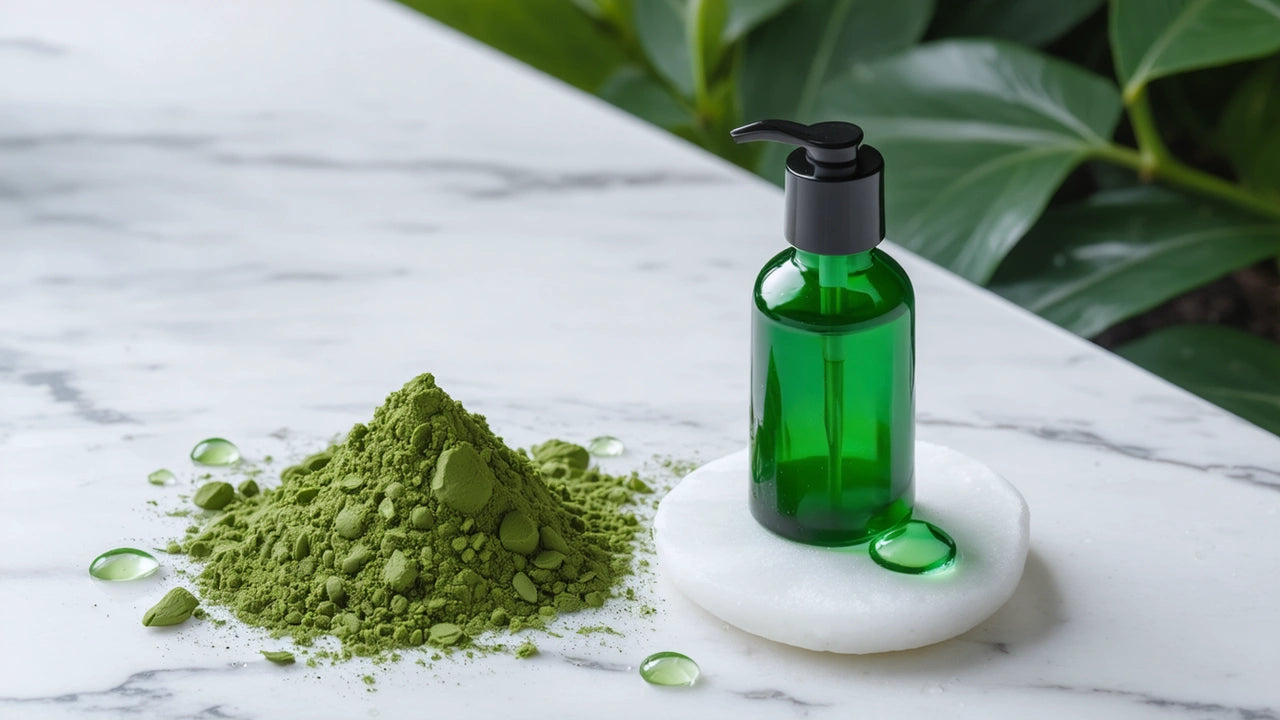
Start with a gel cleanser powered by Matcha Green Tea. The catechins in matcha (specifically EGCG, or epigallocatechin gallate) are potent antioxidants that calm inflammation and help regulate sebum oxidation — the process that turns fresh oil into the clogged, blackhead-forming gunk in your pores. A matcha face wash for monsoon rinses off pollution, sweat, and excess oil without stripping the barrier, which is critical because over-cleansing triggers rebound oiliness within hours.
Step 2 – Lightweight serum, not heavy moisturiser
This is the step most people get wrong. Skip the cream entirely on humid days and replace it with a water-light clarifying serum. The Birch Please Clarifying Serum is built around Birch Water and Niacinamide — it hydrates without occlusion, refines pores, and helps regulate the very sebum overproduction that humidity triggers. If you need extra hydration, our guide to lightweight hydration in humid Indian climates explains why Hyaluronic Acid serums outperform creams from June through September.
Step 3 – Oil-free SPF even on cloudy and rainy days
UVA rays — the ones that cause pigmentation, photoageing, and worsen post-acne dark spots — penetrate cloud cover at up to 80% intensity. That means SPF 30 to 50 with PA+++ or PA++++ is non-negotiable, even when the sky is grey. Pick an oil-free, gel or fluid sunscreen that won't pile on top of the day's humidity. For deeper detail on choosing the right formula, see our SPF guide for oily, acne-prone Indian skin.
Step 4 – Tea Tree spot treatment for monsoon breakouts
The moment you feel a bump forming, act fast. Tea Tree oil (INCI: Melaleuca Alternifolia Leaf Oil) has well-documented antimicrobial activity against Propionibacterium acnes, and a hydrocolloid patch infused with calming Cica creates a sealed, sterile environment that draws out fluid overnight while preventing you from picking. This is the easiest, lowest-effort step in the entire monsoon routine.

Ingredients to Avoid During Indian Monsoon for Oily Skin
What you don't put on your face matters as much as what you do. The wrong ingredient on humid Indian skin can trigger a week of fungal acne or a tide of clogged pores.
Heavy oils and thick creams that trap heat and humidity
- Coconut oil, shea butter, and cocoa butter: highly comedogenic on oily Indian skin and a known food source for Malassezia yeast.
- Cream-based "nourishing" night moisturisers: create an occlusive seal that traps sweat and sebum under the skin's surface.
- Most facial oils with fatty acids longer than C13: feed fungal acne directly. Swap for squalane or MCT-based formulas if you must use an oil.
Alcohol-heavy toners that trigger rebound oiliness
Toners loaded with denatured alcohol may feel mattifying for ten minutes, but they damage the barrier and provoke compensatory sebum production within hours. If you love the toning step, choose a hydrating essence with Rice Water or Green Tea instead — your pores will thank you by November.
Weekly Monsoon Skin Rituals: Masks and Actives
Beyond the daily routine, two weekly rituals dramatically improve how oily Indian skin behaves through the rainy season. Think of these as the deep-clean reset your pores need every Sunday.
Matcha bubble sheet mask: once-weekly pore detox
A Bubble Sheet Mask with Matcha Green Tea creates a gentle oxygenating foam that lifts congestion from inside the pore. The matcha catechins deliver antioxidant defence while the bubbling action gives a deep — but non-abrasive — cleanse. Use once a week, ideally on Sunday night before the work week begins.

Cherry Blossom clay mask for blackheads and sebum control
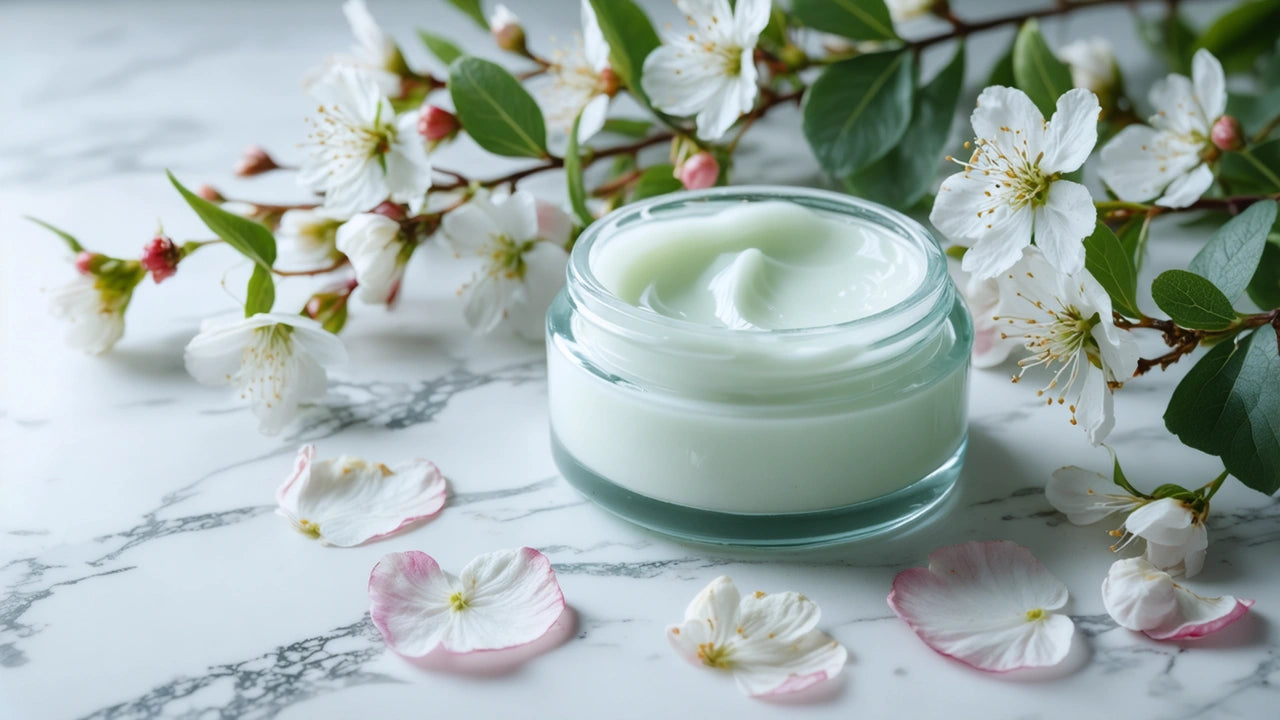
For the T-zone specifically, the Brightening Pink Clay Mask with Cherry Blossom absorbs excess sebum, lifts blackheads, and brightens monsoon-dullness in 10 minutes. Cherry Blossom extract (Prunus Serrulata) is rich in flavonoids that help even out tone — particularly helpful for Indian skin prone to post-inflammatory hyperpigmentation after monsoon breakouts.
| Monsoon Concern | Hero Ingredient | Product Format |
|---|---|---|
| Midday oiliness & dullness | Matcha Green Tea (EGCG) | Gel cleanser, bubble mask |
| Active breakouts | Tea Tree + Cica | Hydrocolloid patches |
| Clogged pores & blackheads | Cherry Blossom + Pink Clay | Weekly clay mask |
| Pore congestion, no occlusion | Birch Water + Niacinamide | Water-light serum |
Frequently Asked Questions About monsoon skincare routine oily skin India
Should you change your skincare routine during monsoon in India?
Yes, your skincare routine should shift when the Indian monsoon rolls in. Humidity levels above 70% make oily skin produce more sebum, while sticky air traps sweat, sunscreen and pollution on the skin barrier. Swap heavy creams for gel textures, introduce a gentle BHA or niacinamide to keep pores clear, and double down on lightweight hydration. Continue cleansing twice daily and never skip SPF. Think of monsoon skincare as a 'lighter, smarter' version of your usual routine — same steps, breathab
Can oily skin skip moisturiser during the monsoon?
No, oily skin should not skip moisturiser during the monsoon, even when the air feels heavy and damp. Humidity hydrates the surface of the skin but doesn't replace the moisture lost through cleansing, sweating or active ingredients like BHA. Skipping moisturiser triggers rebound oiliness, where your skin overcompensates by producing more sebum. Choose a featherlight, water-based gel moisturiser with humectants like hyaluronic acid, panthenol or Centella. It locks in hydration without clogging po
Which face wash is best for monsoon season for oily skin?
The best monsoon face wash for oily skin is a gentle, low-pH gel or foam cleanser with ingredients like salicylic acid, green tea, tea tree or Centella asiatica. These help dissolve excess sebum, sweat and sunscreen without stripping the barrier — a common mistake that triggers more oil. Avoid harsh sulphates, alcohol-heavy formulas or scrub-based washes, which leave skin tight and reactive. Cleanse twice daily, and on heavy-sweat days, do a quick midday rinse with plain water rather than re-was
Is sunscreen needed during monsoon and rainy days in India?
Yes, sunscreen is absolutely needed during the Indian monsoon, even on cloudy and rainy days. Up to 80% of UVA rays — the ones responsible for pigmentation, tanning and premature ageing — penetrate through clouds and humidity. Skipping SPF during monsoon is one of the biggest reasons oily, acne-prone skin develops stubborn dark spots and uneven tone by September. Choose a lightweight, gel or fluid SPF 50 PA++++ that's non-comedogenic and sweat-resistant. Reapply every 3–4 hours if you're steppin
How do you prevent fungal acne during the Indian monsoon?
To prevent fungal acne during the Indian monsoon, keep your skin clean, dry and free from heavy oils that feed Malassezia yeast. Change out of sweaty clothes and wash your face immediately after getting caught in the rain. Avoid coconut oil, olive oil and most fatty acids (C11–C24) in skincare, as these trigger fungal flare-ups. Use a gentle salicylic acid cleanser 2–3 times a week, switch to clean cotton pillowcases often, and choose oil-free, fungal-acne-safe moisturisers. Tiny, itchy, uniform
Shop Quench Botanics
Monsoon-ready skin starts with two non-negotiables: a Matcha gel cleanse that respects your barrier, and a weekly bubble mask that resets your pores. Begin with the Clear Skin Serum with Matcha Green Tea for daily antioxidant defence and layer in the Matcha Bubble Sheet Mask (Pack of 3) as your Sunday-night ritual. Lightweight, fungal-acne-safe, and built for Indian humidity — your skin will feel the difference before the first week of July is over.