
Lotus root benefits for skin centre on one beautiful promise: a brighter, more even, healthy-looking glow without harshness. Lotus root is the edible, antioxidant-rich underwater stem of the lotus plant (Nelumbo nucifera), naturally packed with vitamin C, polyphenols and minerals that help refine the look of pores, fade tan and lift dullness. Loved across both Ayurveda and modern K-beauty, this gentle botanical brightener works with your skin rather than stripping it — making it a quietly brilliant addition to any glow-focused routine. If you've been searching for a kinder way to even out tone, lotus root deserves a place on your shelf.
What Is Lotus Root and Why Does Skin Love It?
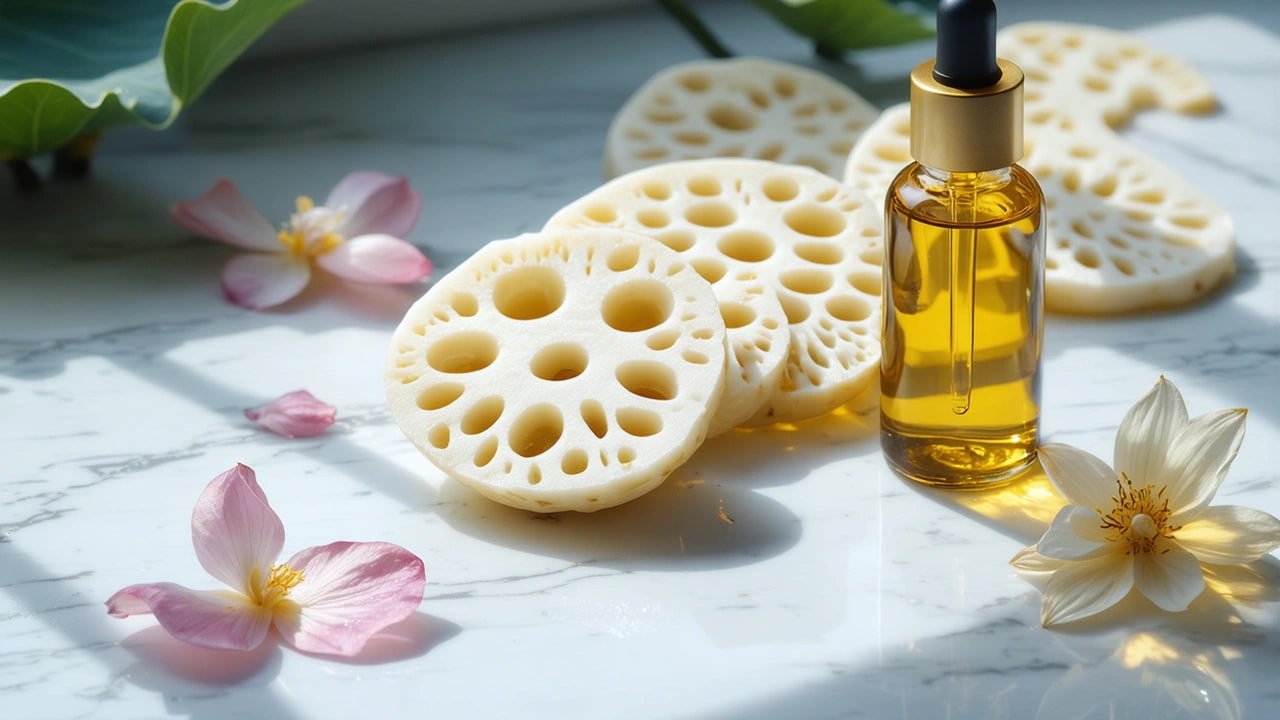
Lotus root is the crisp, pale rhizome that grows beneath the water, anchoring the famous lotus flower above. In skincare, its extract is prized for a naturally high content of vitamin C, B-vitamins, and plant antioxidants called polyphenols — all of which support a clearer, more luminous complexion.
The Botanical Behind the Bloom
While the lotus flower gets all the poetry, the root is the powerhouse. It holds water, fibre and a generous dose of vitamin C — the same antioxidant your skin relies on to look bright and bouncy. Because lotus root delivers this vitamin C in a gentle, plant-buffered form, it tends to be far better tolerated than high-strength synthetic acids, which can feel tingly or drying on sensitive complexions.
It's also a humble ingredient with deep roots in Indian kitchens and apothecaries, which makes it feel both familiar and exciting in a skincare context. You already know it as kamal kakdi — now meet it as your skin's quiet brightening ally.
Where Ayurveda Meets K-Beauty
The lotus has been revered in Ayurveda for centuries as a cooling, soothing botanical. Modern K-beauty formulators love it for the same reasons, layering it into brightening essences and serums where gentle, glow-giving actives matter most. This is exactly the kind of cross-cultural ingredient story we love at Quench Botanics — Korean skincare science meeting plant wisdom your grandmother would recognise. If you're curious about how this blend shapes everything we make, our story behind our K-beauty roots explains the philosophy in full.
What Are the 5 Lotus Root Benefits for Indian Skin?
For Indian skin — typically Fitzpatrick types III to V, which tan easily and are prone to uneven tone and stubborn pigmentation — lotus root offers brightening without the irritation risk of aggressive actives. Here are the five benefits that make it shine in our humid, sun-rich climate.
1. Natural Brightening From Vitamin C
Lotus root's vitamin C content is its star quality. Vitamin C helps interrupt excess melanin production, the pigment responsible for dark patches and dullness. Research published in the Journal of Clinical and Aesthetic Dermatology found that topical vitamin C visibly improves skin radiance and evens tone over consistent use. Because lotus root delivers it gently, you get the glow with less of the irritation that pure ascorbic acid can cause.
2. Pore-Refining and Mattifying
The astringent, mineral-rich nature of lotus root helps tighten the look of enlarged pores and balance excess oil. For combination and oily skin types battling midday shine — a daily reality in tropical Indian summers — this translates to a smoother, more refined canvas.

3. Antioxidant Defence Against Pollution
Lotus root's polyphenols act like tiny shields, neutralising the free radicals generated by UV exposure and urban pollution. This antioxidant defence is crucial for Indian city-dwellers, where daily pollution accelerates dullness, dark spots and early fine lines. Cosmetic scientists note that pairing antioxidants with daily SPF is one of the most effective long-term strategies for keeping skin bright and resilient.
4. Tan and Dullness Fade
Lotus root brightens skin with its natural vitamin C and antioxidant content, helping refine pores, fade tan and even out dullness for a healthy glow. Gentle yet effective, it works gradually to lift surface discolouration and restore radiance — making it a kind, everyday brightener well suited to Indian skin and its tan-prone, sun-exposed tendencies.
5. Soothing and Hydrating Comfort
Beyond brightening, lotus root has a cooling, calming quality that helps soothe skin stressed by heat and sun. Its mild hydrating minerals keep the complexion comfortable, which means you can brighten without the tight, parched feeling that some active routines leave behind.
How Do You Use Lotus Root Botanicals in Your Routine?
Lotus extract skincare slots in beautifully at the serum and essence stage — after cleansing and toning, before moisturiser. Because it's gentle, you can use it morning and night, layered under SPF in the day for added antioxidant support. The Quench Botanics Method is all about building a routine of compatible, plant-powered actives rather than overloading your skin, so think of lotus root as a calm, supportive base for your other brighteners.
Layering Lotus With Vitamin C
Lotus root and a dedicated vitamin C serum are natural partners — both target dullness and uneven tone through complementary pathways. Apply your lightest, most water-like product first, then build up to richer textures. When recommending botanical brightening serums for daily glow, our Bravocado Brightening Serum is a beautiful avocado-powered option that layers seamlessly with lotus-infused steps for a fresh, lit-from-within finish.
Pairing Lotus With Niacinamide
Niacinamide (vitamin B3) is one of the friendliest actives in skincare — it strengthens the skin barrier, controls oil and fades dark spots. Pairing lotus brightening with niacinamide for even tone gives you a powerful yet gentle duo. Our Intense Brightening Serum with Niacinamide partners beautifully with botanical brighteners, targeting stubborn pigmentation while keeping skin calm and balanced.

If you're building a full glow routine from scratch, our glass skin routine for Indian skin walks you through layering brighteners without congestion — the perfect home for lotus-powered steps.
How Does Lotus Root Compare to Other Brightening Botanicals?
Lotus root isn't the only plant-powered brightener in the K-beauty toolkit. Here's how it stacks up against two other favourites so you can choose what suits your skin.
| Botanical | Key Action | Best For |
|---|---|---|
| Lotus Root | Gentle vitamin C brightening + pore refining | Sensitive, tan-prone, dull skin |
| Yuzu Vitamin C | Punchy antioxidant brightening + glow boost | Targeted radiance and dark spots |
| Rice Water | Soothing, smoothing, mild brightening | Barrier support and softness |
Lotus Root vs Yuzu Vitamin C
Both deliver vitamin C, but yuzu brings a more concentrated, citrus-powered punch of radiance, while lotus root is the softer, more soothing option. Many people use them together for layered brightness. Comparing lotus root with yuzu vitamin C in detail? Our Yuzu Vitamin C serum guide breaks down how plant-based vitamin C differs from pure ascorbic acid.
Lotus Root vs Rice Water
Rice water leans more towards soothing and smoothing than active brightening, making it ideal for barrier comfort. Lotus root, with its higher vitamin C content, edges ahead when your main goal is fading tan and reviving dull, tired skin. The good news? They coexist happily in one routine.
Frequently Asked Questions About lotus root benefits for skin
Is lotus root extract safe for sensitive skin?
Yes, lotus root extract is generally well-tolerated by sensitive skin thanks to its naturally soothing, anti-inflammatory profile. Rich in flavonoids and vitamin C, it brightens gently without the sting often associated with stronger actives like high-percentage acids. That said, every skin barrier is unique, so it's wise to patch-test a new lotus-based product on your inner forearm for 24 hours before applying it to your face. If you have reactive or compromised skin, introduce it slowly — two
What is the difference between lotus root and lotus flower in skincare?
Lotus root and lotus flower come from the same plant but offer slightly different skincare strengths. Lotus root, the underwater rhizome, is prized for its high vitamin C and mineral content, making it a powerhouse for brightening, evening tone, and supporting collagen. Lotus flower extract, drawn from the bloom, leans more toward soothing, hydrating, and antioxidant protection with a calming aromatic quality. Many K-beauty formulas combine both to deliver a complete brighten-and-calm effect, bu
How long does it take to see results from lotus root skincare?
Most people notice a fresher, more radiant complexion from lotus root skincare within two to four weeks of consistent daily use. Because lotus root works gently to brighten and even tone rather than aggressively exfoliating, results build gradually and look natural. For deeper concerns like stubborn dark spots or post-acne marks, give it six to eight weeks, since skin cell turnover takes roughly 28 days. Consistency matters more than intensity — applying your lotus root product morning and night
Can I use lotus root with vitamin C and niacinamide?
Yes, lotus root pairs beautifully with vitamin C and niacinamide, making it a versatile addition to a brightening routine. Lotus root naturally contains vitamin C, so it complements an added vitamin C serum to amplify radiance and antioxidant defence. Niacinamide works alongside it to refine pores, strengthen the barrier, and fade discolouration — a gentle, harmonious trio. Apply your lightest textures first, typically serum before moisturiser, and always finish with sunscreen during the day. If
Does lotus root help with acne and oily skin?
Lotus root can be a helpful ally for acne-prone and oily skin because of its astringent and anti-inflammatory properties. It helps calm redness, soothe active breakouts, and may support a more balanced oily complexion without over-drying or stripping the skin. Its antioxidant content also helps fade the dark marks and uneven patches left behind after blemishes heal, which is a common concern for Indian skin tones. While lotus root isn't a standalone acne treatment, it works well within a gentle
Shop Quench Botanics
Ready to let your natural glow shine through? Botanical brighteners like lotus root work best as part of a kind, consistent routine — and it all begins with clean, glow-ready skin. Start your brightening ritual with our gentle Foaming Face Wash with Yuzu Vitamin C, then layer in your favourite plant-powered serums for that lit-from-within K-glow. Brighter, more even, healthy-looking skin is closer than you think — and Quench Botanics is here to help you get there, one botanical at a time.