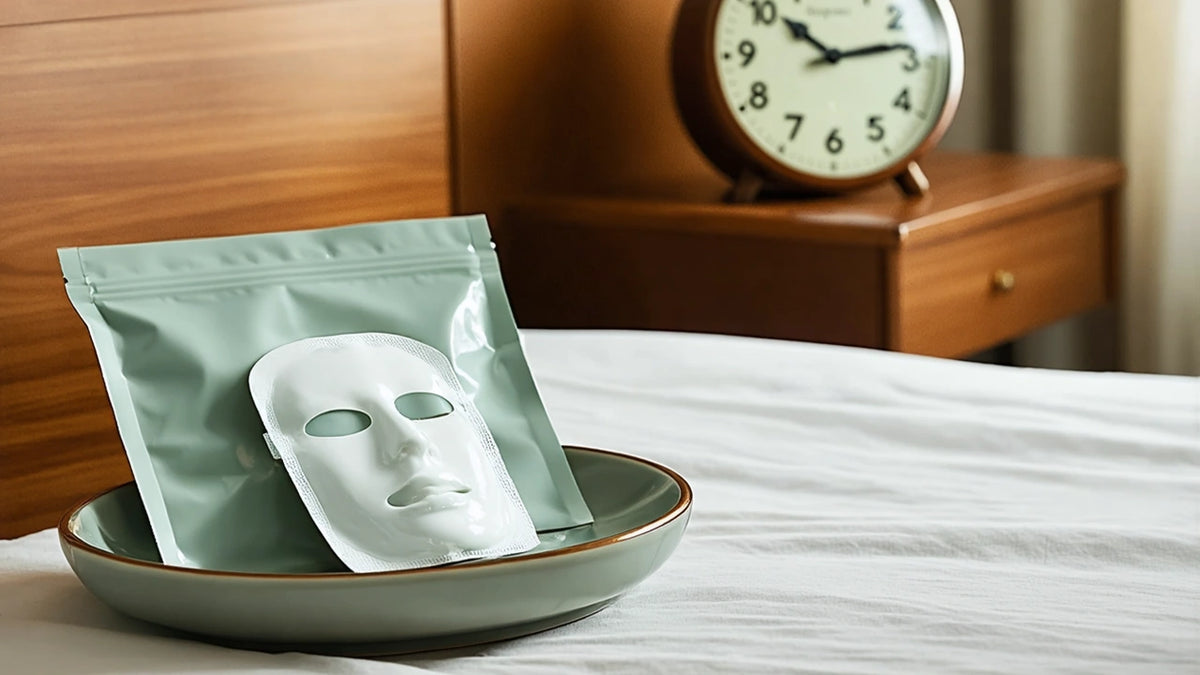

How often should you use a collagen sheet mask? It depends on your skin type and the season. Oily skin in humid weather usually needs fewer masks. Skin that the AC or winter has dried out can usually take them more often. A collagen sheet mask is a soft fabric or gel sheet soaked in a hydrating essence. You leave it on your face for a short time, and your skin feels plumper and bouncier afterwards. For wear time, always follow the pack, never guesswork.
Quick Answer: How Often Should You Use a Collagen Sheet Mask?
Think of a sheet mask as a treat that tops up your routine. It doesn't replace your routine. Here's a simple guide for how often to use one by skin type.
Oily vs dry vs combination: how often to use a sheet mask
- Oily or breakout-prone skin: once a week is usually enough. Lots of essence on already shiny skin can feel heavy, so keep it light.
- Combination skin: once or twice a week. Watch your T-zone. If it gets greasy the next day, cut back.
- Dry or dehydrated skin: two or three times a week works for many people, as long as your skin stays comfortable and calm.
- Sensitive skin: start with one mask, patch-test on your jawline first, and only build up if your skin is happy.
Why season changes the answer
The same face can need very different care in the July monsoon and in a Delhi January. Humid air and monsoon sweat keep skin feeling damp, so extra masks often feel like too much. AC offices and winter air pull moisture away from skin, which is when a mask feels most welcome. Indian skin is often Fitzpatrick types III to V and lives through humidity, strong sun and dry indoor air, sometimes all in one day. Let the weather decide how often you mask, not a fixed rule. If you live somewhere sticky, our guide to a breathable K-beauty routine for Mumbai humidity shows how to keep layers light.
Step-by-Step: How to Use a Collagen Sheet Mask (and Does It Go Before or After Serum?)
To use a collagen sheet mask, cleanse your face, mist on toner, then smooth the mask on and leave it for the time printed on the pack. Remove it, pat the leftover essence into your skin, and seal with moisturiser. Oily skin usually needs a mask once a week, combination skin once or twice, and dry or AC-dried skin two or three times.
-
Cleanse and mist
Start with clean, slightly damp skin. Wash off sunscreen, sweat and commute grime with a gentle cleanser, then pat your face mostly dry. Mist on a hydrating toner so your skin is a little damp. That way the essence spreads easily instead of sitting on dry patches. -
Unfold, smooth and wait per pack directions
Put the mask on and follow the pack timing. Unfold the sheet, line up the eye and mouth holes, and press it outward from the centre of your face to push out air bubbles. Leave it on for the time printed on the pack. Lie back, play a song, do nothing, and enjoy it. -
Pat in the leftover essence
Don't waste the extra serum. Peel off the mask and gently pat the leftover essence into your face, neck and the backs of your hands. No need to rinse. Wait until it feels mostly absorbed, not sticky. -
Seal with moisturiser
Lock everything in. Finish with a moisturiser that suits your skin: a gel-cream if you're oily, a richer layer if you're dry. Moisturiser helps slow down water loss, so the bounce from the mask lasts longer.
Our favourite mask for bounce is the Snail Mucin Collagen Boost Mask. It's made for nights when your skin feels flat and thirsty. Snail mucin is a slippery, humectant-rich ingredient, which means it helps hold water on the surface of skin. The sheet also covers your face and slows evaporation while you wear it. Together, that's why skin tends to look plumper and feel softer afterwards. To be clear, that's a hydration feel. It isn't a promise to change your skin's structure.

So, does a sheet mask go before or after serum? Put the mask on after toner. A serum afterwards is optional. If your skin is dry, a few drops of a hydrating serum after the leftover essence can help. If you're oily, the mask essence is usually enough. Our snail mucin serum guide for Indian skin explains how to layer a serum without overloading your skin.
A Weekly Collagen Sheet Mask Calendar for Indian Weather
Rotating masks keeps things fun and gives your skin what it actually needs that night. Here's how three masks compare.
| Mask | Reach for it when | Best weather match |
|---|---|---|
| Snail Mucin Collagen Boost Mask | Skin feels tight, flat or tired | AC offices, winter, post-travel |
| Instaglow Sheet Mask with Yuzu Vitamin C | Skin looks dull before an event | Festive season, any city |
| Mama Cica Mud Dipping Sheet Mask | Skin feels oily and congested | Humid summers, monsoon |
Humid-city week
In Mumbai, Chennai or Kolkata in the monsoon, oily skin types can try one mask a week. On sticky, shiny days, choose the Mama Cica Mud Dipping Sheet Mask. It pairs soothing cica with a mud-style formula, so it feels fresh rather than heavy. Follow it with a light gel moisturiser, and save the snail mask for a day when your skin feels dehydrated under the shine.
AC-office and winter week
If you spend your workday under the AC, or winter is making your cheeks feel tight, try two or three masks spread across the week. Use the snail mucin mask on your driest nights, and add the yuzu mask once if you're looking dull. Leave a rest night between masks so you can see how your skin is responding.
Commute-pollution night reset
After a long auto or metro ride, start with a thorough but gentle cleanse, mist your toner, then use the snail mucin mask and moisturiser. One rule: don't wear a clay mask, like a pink clay mask, and a sheet mask on the same night. Doing both in one go can leave your skin feeling stripped and then overloaded. Put them on different nights.
How Do You Plan a Pre-Diwali Glow Night With a Sheet Mask?
A pre-Diwali glow night is a calm evening of skincare the night before the diyas, rangoli and photos. Keep it simple, and don't try any new actives that week.
Night-before routine
Cleanse, mist your toner, then use the Instaglow Sheet Mask with Yuzu Vitamin C for a fresh, bright-looking glow. Pat in the leftover essence and finish with a light moisturiser. Late nights making sweets and late-night card parties can show under your eyes. A gentle eye serum tapped in with your ring finger is a nice last step.

Morning-after makeup prep
In the morning, use a light moisturiser, then apply sunscreen generously. Daytime festive sun still counts. Your skin should feel smooth and bouncy, so makeup sits better. Skip the heavy primer if your skin already feels hydrated.
What Are the Most Common Sheet Mask Mistakes (and How Do You Fix Them)?
Wearing it until it dries
Leaving a mask on past the pack time can backfire. As the sheet dries out, it can start pulling moisture back off your skin instead of adding it. Take it off on time, while it still feels damp.
Reusing the mask
Sheet masks are single-use. Once the pack is open and the sheet has touched your face, toss it, even if there's essence left in the pack. Use that extra essence on your neck the same night instead.
Skipping moisturiser
The essence alone can evaporate, especially under the AC. Always seal it in. For the full picture of the ingredients behind the bounce, here's what a collagen mask really does for Indian skin.
Frequently Asked Questions About collagen sheet mask how often to use
What is a collagen sheet mask?
A collagen sheet mask is a thin cloth, hydrogel or bio-cellulose sheet soaked in a hydrating essence that usually lists collagen among its ingredients. It sits on your face for about 15 to 20 minutes, helping skin feel plump, soft and dewy. Topical collagen molecules are large, so they mostly sit on the surface and hold moisture rather than rebuild collagen deeper down. Think of it as a hydration treat that preps your skin for the rest of your routine, not a replacement for sunscreen or daily care.
How do you know if a sheet mask is too much for your skin?
If your skin feels stinging, tight, itchy or looks red after a sheet mask, it is telling you to slow down. Other signs include new small bumps, a sticky film that will not rinse off, or oily patches that feel congested. Pause masking for a week, stick to a gentle cleanser, moisturiser and sunscreen, then reintroduce one mask at a time. If irritation lingers, check with a dermatologist. Always patch test a new mask on your jawline before using it on your whole face.
Can I use a collagen sheet mask with retinol or vitamin C?
Yes, but keep them on separate nights or at separate times of day to avoid irritation. Vitamin C works well in the morning, so a calm hydrating mask can follow it on a weekend. Retinol is best at night, so skip the mask on retinol nights, or use it on off nights to soothe and rehydrate. Avoid layering a mask right after strong exfoliating acids. If your skin is sensitive, choose one active per evening and let the mask be the gentle, hydrating step.
Is a collagen sheet mask safe for sensitive skin?
Many people with sensitive skin can use a sheet mask, but it depends on the formula, so patch testing first is essential. Pick a fragrance-light, alcohol-free option and keep the wear time short, around 10 to 15 minutes. Skip it if your skin is currently broken out, sunburnt or reactive. Start with one mask a week and watch for redness or stinging. Quench Botanics follows a clean beauty approach, but any new product can still trigger a reaction, so test a small patch before a full-face application.
What is the difference between a sheet mask and a wash-off face mask?
A sheet mask is a pre-soaked cloth that you leave on and pat in, while a wash-off mask is a cream or clay you apply and rinse away. Sheet masks focus on hydration and a quick glow, and need no rinsing. Wash-off masks, especially clay ones, target oil, pores or texture and can feel drying if overused. For Indian weather, many people use sheet masks for hydration and a clay mask less often for deep cleansing, rather than stacking both on the same night.
Shop Quench Botanics
Your next step: pick one mask that suits your skin type this week. Go for the snail mucin mask if you're dry, the yuzu mask if you're dull, or the cica mud mask if you're oily. Patch-test it first, and then seal it with our 92% Snail Mucin Collagen Boost Moisturizer with Niacinamide & Hyaluronic Acid. Tell us your skin type and city in the comments, and we'll help you plan your mask week.