
A bridal skincare routine 1 month before the wedding should be short and a little boring on purpose: patch-test in week 1, add nothing new after week 2, and spend the last fortnight repeating what already suits you. A one-month bridal routine is a stripped-back plan of cleanser, serum, moisturizer and sunscreen that you test early and then freeze, so your skin has nothing new to react to once the functions begin. A patch-test cutoff is the last day you let a new product into your routine. It's set early enough that if your skin reacts, the reaction has time to calm down. In this calendar, the cutoff is the end of week 2. Four weeks is enough time to steady your skin, keep it hydrated and get comfortable with your kit. It isn't enough for big changes, and that's fine. If you still have two months, the 60-day bridal countdown gives slower concerns like the look of dark spots more time.
What does a one-month bridal skincare calendar look like?
A one-month bridal skincare calendar works like this: in week 1, add sunscreen, one serum and patch tests; in week 2, add only a final facial or mask, then stop anything new; in weeks 3–4, keep the same routine plus two sheet masks weekly; on function days, add under-eye patches and keep pimple patches on standby.
| Phase | What to add | What to stop | What to keep |
|---|---|---|---|
| Week 1 | Gentle cleanser, one serum, moisturizer, SPF 50 sunscreen; optional tranexamic acid at night | Harsh scrubs, lemon or toothpaste hacks, anything that stings | Patch-testing every product before it goes on your full face |
| Week 2 | One trial sheet mask; a final facial only if it's one you've had before | Introducing anything new after this week ends | The week 1 routine, with sunscreen every single morning |
| Weeks 3–4 | Nothing new | New actives, first-time peels, new salon services | Same routine, two sheet masks a week, a steady bedtime |
| Function days | Under-eye patches 10–15 minutes before makeup; pimple patch on a surfaced spot | Picking, scrubbing, switching to an untested makeup base | Sunscreen, lip balm, a light moisturizer under makeup |
Count the weeks back from your first function, not from the wedding date. If the mehendi is three days before the pheras, week 4 ends on mehendi morning, and that's the date your plan should work towards.
Week 1: how do you patch test and set your pre wedding skincare base?
Cleanse, serum, moisturizer, SPF: nothing more
Week 1 is about choosing four steps and using them every day. If your shelf has eight products on it, keep the four your skin already likes and put the rest away until after the wedding.
Your morning routine:
- Cleanse: use a gentle, non-stripping face wash. A cream cleanser like our Rice Water Hydrating Cream Face Wash suits most skin types. Your face shouldn't feel tight afterwards.
- Serum: two or three drops of one lightweight serum, pressed in while your skin is still slightly damp so it spreads easily.
- Moisturizer: a gel-cream if you live in a humid city, or something richer if you sit in AC all day or it's a north Indian winter.
- Sunscreen: two finger-lengths for face and neck as the last step. Reapply if you're outdoors for venue visits, fittings or market runs.
At night, skip the sunscreen and do cleanse, serum and moisturizer, with the optional tranexamic acid step below. If you're picking a serum now, the Cherry Blossom Glass Skin Serum combines niacinamide and hyaluronic acid, so one bottle covers both tone support and hydration.

Here's what each ingredient does, in plain terms. Niacinamide is commonly used to support the skin barrier and help even out the look of skin tone. Hyaluronic acid holds onto water in the upper layers of skin, so your face looks plumper and less dull. Neither one is harsh, which makes them sensible choices for a short timeline.
Daily sunscreen is the one step in this calendar you can't skip. An ultra-light SPF 50+ sunscreen sits better under makeup trials than a heavy, chalky one, and it won't feel sticky through monsoon humidity or summer sweat. In peak heat, carry a mini and reapply every couple of hours when you're outside.
Where tranexamic acid fits (PM, after cleansing)
Tranexamic acid is a skincare ingredient used to even out the look of tone, especially the patchy areas that sun and old breakouts leave behind. It's generally understood to interrupt some of the signals that tell skin to make extra pigment after triggers like UV or irritation. That's why it's considered one of the gentler options for uneven tone.
Gentle doesn't mean fast, though. In a four-week window, think of tranexamic acid for uneven tone as quiet support, not a fix. If you want to use it, apply it at night on dry skin straight after cleansing and wait about a minute. Then layer your niacinamide serum and moisturizer on top, thinnest texture first. It usually sits comfortably with niacinamide. Start it in week 1 only, so it gets tested before your cutoff. If your skin is sensitive and you've never used it, you can skip it. It's optional.
Most Indian skin sits in the Fitzpatrick III to V range. On these skin tones, sun and irritation can leave marks that last much longer than the redness did, so a tone step without daily SPF is mostly wasted effort.
How to patch test properly
- Pick the spot: a coin-sized area on the side of your jaw or behind your ear. That skin behaves more like the rest of your face than your inner arm does.
- Use it normally: apply the product the way you would on your face, once or twice a day, for at least three days in a row.
- Watch closely: look for stinging beyond a brief tingle, itching, redness or tiny bumps, both during the test and the day after.
- One at a time: test products one after another, not all together, so you know which one caused a reaction if you get one.
If something stings or itches, wash it off and drop it. There's no time this month to wait out a reaction.
Week 2: when should you stop new products before the wedding?
The end of week 2 is your hard cutoff. Anything you haven't tested by then stays in its box until after the wedding.
The reason is simple: a reaction can take a few days to show up and longer to settle. Starting something in week 3 means you could be dealing with it on mehendi morning.
Book facials now or skip them
If you get facials regularly and know how your skin responds, week 2 is the last sensible slot for one. Tell the salon it's pre-wedding and ask for a simple hydrating clean-up, not a peel, heavy extractions or a machine you haven't tried before.
If you've never had a facial, this month isn't the time for your first one. The same goes for face waxing, face bleach or threading at a new parlour. Stick with the people and services your skin already knows.
Settle on one hydrating mask
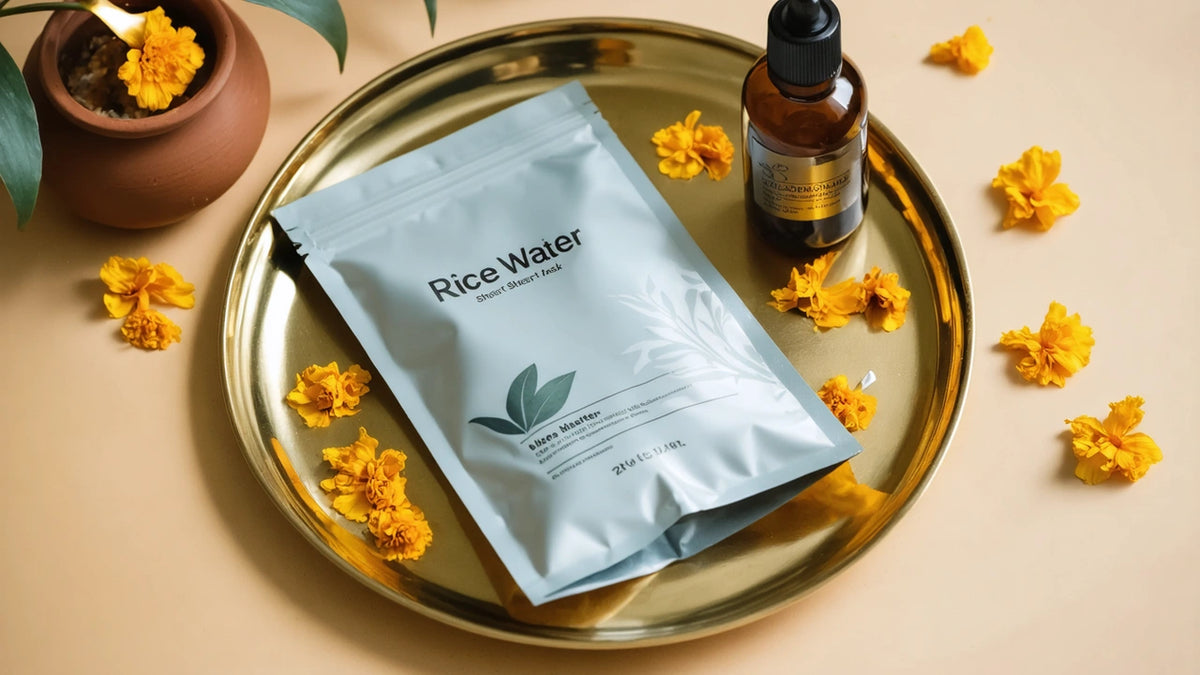
Pick one sheet mask and do a trial run this week on an ordinary evening. That way the masks you use in weeks 3–4 are already tested. Rice water, snail mucin and cherry blossom are all good hydration-focused choices, so go with whichever your skin has liked before.
If your wedding falls in May or June, sweat and stickiness change the plan a little. Our four-week summer bride skin prep has heat-specific swaps for textures and timings.
Weeks 3 and 4: why should your bridal routine stay the same?
From here on, you just repeat the week 1 routine. Your skin stays calmest when nothing changes.
Weeks 3 and 4 are also when the stress builds: guest lists, outfit alterations, late nights with family. That's another reason to keep skincare on autopilot.
Masking schedule: 2 sheet masks a week
Two sheet masks a week is plenty. Something like Wednesday and Sunday evenings works for most people.
- Timing: leave the mask on for 15 to 20 minutes, not longer, because a mask that starts drying out can pull moisture back out of your skin.
- After: pat the leftover essence into your face and neck, don't rinse, then seal it in with moisturizer.
- Summer or monsoon: keep masks in the fridge. A cool mask feels good in humid heat and helps with the look of puffiness.
- Last mask: the evening before your first function is a good slot. Some makeup bases slide on skin that's still slippery from a morning mask, so check with your makeup artist.
If a pink clay mask is already part of your routine and your T-zone gets oily, keep it to once a week on that area only. Don't use it within two days of a function.
Sleep and screen-time reality check
Nobody gets eight hours of sleep during wedding prep. Aim for a steady bedtime instead of a perfect one.
Put your phone down about half an hour before you sleep. Wedding group chats can wait until morning.
If you wake up puffy, try an extra pillow and lighter, less salty late-night dinners. For the food, water and hair side of things, our 30-day pre-wedding glow routine goes into more detail.
What goes in your function-day kit for mehendi, sangeet and the wedding?
Pack one small pouch and take it to every function: chilled under-eye patches, pimple patches, a lip balm, a mini sunscreen and a face mist for AC-heavy halls. Everything in it should already be tested.
Under-eye patches 10–15 minutes before makeup
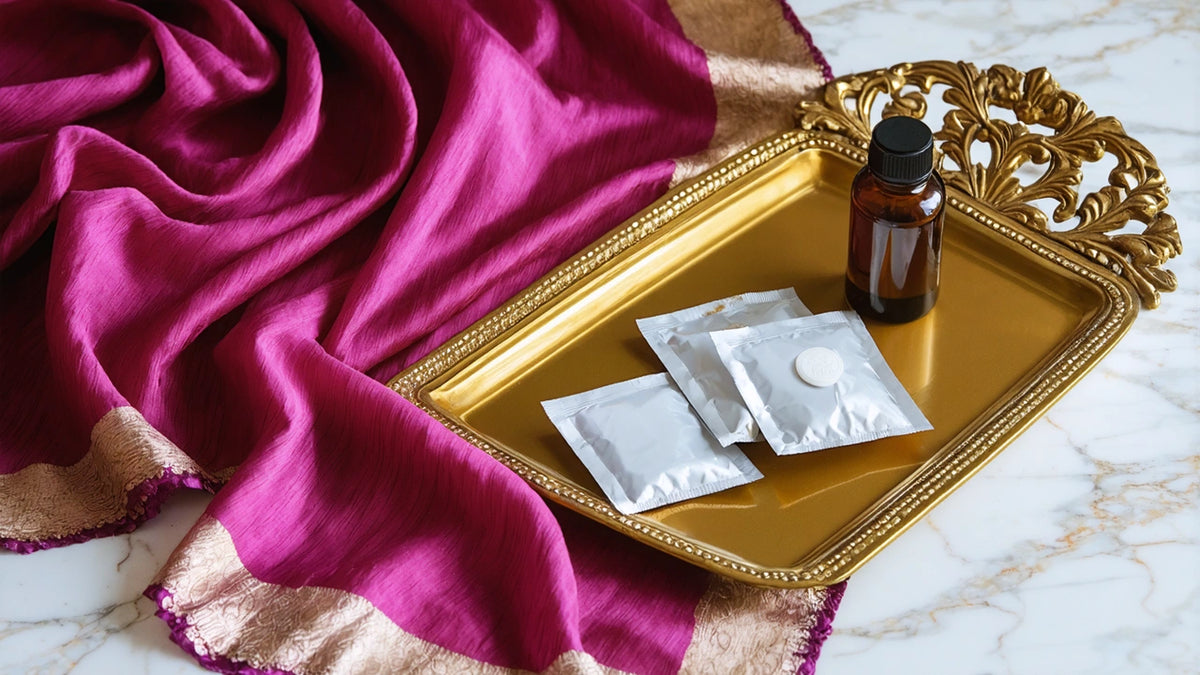
For puffy, tired-looking under-eyes before sangeet makeup, put chilled hydrogel patches on clean skin for 10 to 15 minutes. Take them off, tap the leftover essence in and let it settle before concealer goes on.
Keep the under-eye hydrogel patches in the fridge, not the freezer. Put them on while your hair is being done so you don't lose any time.
After the patches, a thin eye serum helps concealer go on smoothly instead of settling into fine lines. The Quench 92% Snail Mucin Collagen Boost Eye Serum is light enough to go under makeup if you use just a rice-grain amount.

Patches help with the look of puffiness and dehydration on the day. Under-eye dark circles that come from genetics or pigment need a slower, steadier approach, which we cover in what actually works for under-eye dark circles.
Pimple patch on a surfaced spot, removed before makeup
A pimple patch works best on a spot that has come to a head. Hydrocolloid patches soak up fluid from a surfaced spot and keep it covered, so your fingers stay off it.
Put one on the night before or a few hours ahead. Take it off at least 30 minutes before makeup, gently cleanse the area, add a little moisturizer, then let your makeup artist conceal it.
A deep, sore bump under the skin won't respond to a patch. Hold a cold compress wrapped in a soft cloth on it for a few minutes, then leave it alone. Squeezing it only makes it bigger and redder.
Lip prep under lipstick
The night before, put on a thick layer of lip balm. In the morning, reapply it while your skin prep is happening, then blot it off about ten minutes before lipstick so the colour holds.
Skip lip scrubs on function day. For outdoor haldi or mehendi, our Brightening Lip Balm SPF 60 doubles as sun protection. Between functions, dab a little balm in the centre of your lips if matte lipstick starts to feel tight.
How should wedding guests prep skin for back-to-back functions?
Wedding guest skincare follows the same rule on a smaller scale: keep your normal routine and add only patches. If it's your cousin's wedding week and you have four functions in five days, this is all you need.
Night: balm cleanse, then moisturizer
Long-wear foundation and sunscreen need two rounds of cleansing. Massage a cleansing balm or oil onto dry skin for about a minute, add water until it turns milky, rinse, then follow with a gentle face wash.
Skip actives that night and go straight to moisturizer. If hours in an AC banquet hall have left your skin tight, a richer cream like the Quench Avocado Barrier Repair Moisturizer helps. Do this even if you get home at 2 am.
Morning: patches, SPF, makeup
- Cleanse and patch: wash your face, then wear under-eye patches for 10 to 15 minutes while you have your chai.
- Moisturize and protect: apply a light moisturizer, then sunscreen, and wait a few minutes before makeup so your base doesn't pill.
- Mist through the day: a few spritzes of face mist toner over makeup helps when the AC hall leaves your skin feeling dry.
Frequently Asked Questions About bridal skincare routine 1 month before wedding
What skincare routine should a bride follow a month before the wedding?
A bride should follow a simple, steady routine a month before the wedding: gentle cleanser, moisturiser and sunscreen in the morning, and cleanser, a hydrating serum and moisturiser at night. Add one active, like a mild exfoliant, only once or twice a week. The aim is calm, hydrated skin, not a transformation. Drink enough water, sleep well, and avoid switching products now. In humid, hot Indian weather, choose lightweight textures; in AC rooms, add an extra layer of moisturiser at night.
When should I stop trying new products before my wedding?
Stop trying new products at least two to three weeks before your wedding. Skin reactions like breakouts, redness or peeling can take days to show and more days to settle, so you need a buffer. Anything new should be patch tested on your jawline or behind the ear for 24 to 48 hours first. After the cutoff, stick only to products your skin already knows well. If something irritates you late, go back to a basic cleanser, moisturiser and sunscreen instead of adding fixes.
How do I reduce puffy under-eyes after late-night sangeet rehearsals?
Reduce puffy under-eyes by using something cool and gentle for a few minutes after you wake up. Press a chilled metal spoon or a cold, clean cloth lightly under the eyes for two to three minutes, then dab on a hydrating eye cream or gel. Sleep with your head slightly raised, and go easy on salty snacks and alcohol late at night. Drink water before bed and after waking. Avoid rubbing the area, as it is thin and easily irritated. If puffiness is constant, it may be allergies or dark circles from other causes.
How should a wedding guest prep skin for back-to-back functions?
A wedding guest should keep skin prep minimal: cleanse gently, moisturise, and apply sunscreen every morning, even on indoor days. Remove makeup properly each night, since heavy function makeup and sweat can clog pores. Skip new facials, peels or actives in the week before the events. Carry blotting papers, a small moisturiser and lip balm for hot venues or AC halls. Drink water between functions, and use a sheet mask or an extra layer of moisturiser on the night between events to help skin recover.
Is it safe to get a facial a week before my wedding?
A facial a week before your wedding is only safe if it is gentle and your skin already knows the treatment. Avoid peels, extractions, strong exfoliation or anything new, as these can cause redness, purging or sensitivity right before photos. A hydrating, soothing facial is a safer choice. Tell the therapist about your skin type and any allergies, and ask for a patch test. Ideally, do a trial facial a month before. Then schedule the final one about a week out, so any reaction has time to settle.
Shop Quench Botanics
If your wedding is a month away, keep your routine simple and only use what you've tested. A stack of rice water deep hydration sheet masks covers your weeks 3–4 masking schedule, and it makes a thoughtful gift for a bride-to-be in the middle of planning. If you're the early planner in the group, the 60-day countdown linked at the top gives you twice the time.